INSIDE JURA’S TIMELESS WINE WORLD

Stuti Khetan
Independent Spirits Consultant
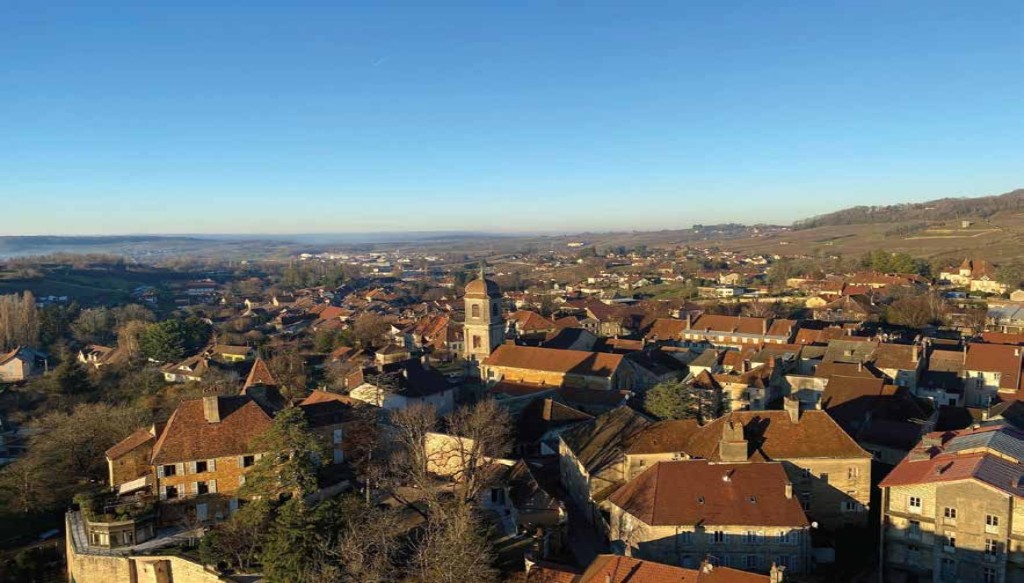
Arriving in the town of Arbois early in the morning felt like stepping into a living ecosystem, built on one shared identity: Jura Wine.
Nestled between Switzerland and Burgundy, the Jura region is a hidden wine gem of France. Here, wine runs through every vein, from the cellar doors tucked into cobbled lanes, to quaint merchants, curated wine bars, and humble boutiques that all speak the same language of terroir.
But Jura is more than its wine; it is a place where history, culture, and terroir converge. The very soil beneath your feet seems to hold centuries of knowledge; its significance defined by the life that grows here.
The Collective Brand
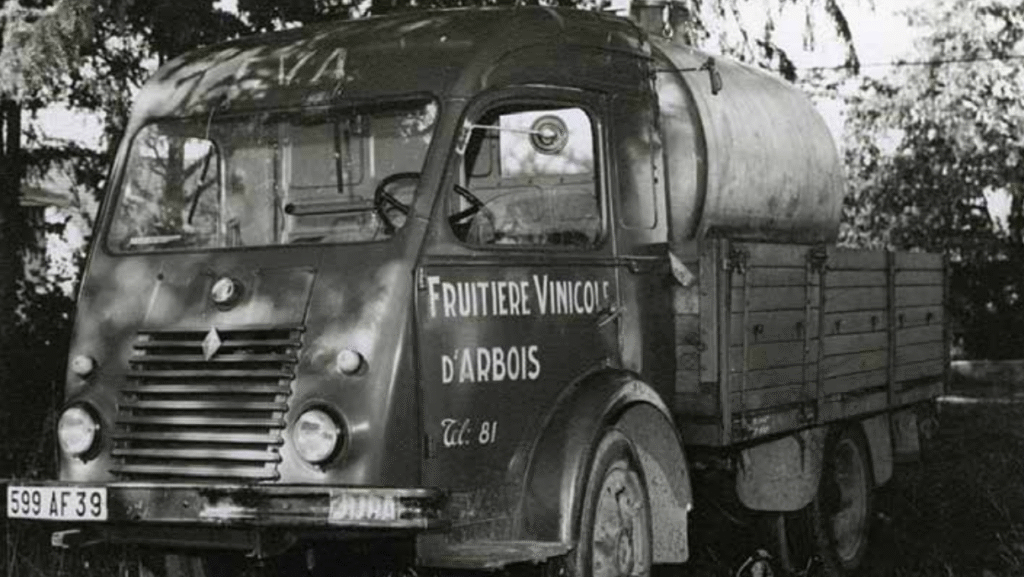
My journey started at Fruitière Vinicole d’Arbois, where the cooperative model of Jura’s winemaking culture became immediately evident. Here, the region itself becomes the brand. Growers, vintners, and merchants work together to protect quality and reputation, pooling resources and sharing strategies to ensure that Jura’s identity remains strong.
My journey started at Fruitière Vinicole d’Arbois, where the cooperative model of Jura’s winemaking culture became immediately evident. Here, the region itself becomes the brand. Growers, vintners, and merchants work together to protect quality and reputation, pooling resources and sharing strategies to ensure that Jura’s identity remains strong.
Sitting with the team, you sense how aligned they are in defending the region’s character, with great emphasis placed on how deeply the cooperative is woven into the region’s policies and decisions; a collective heartbeat guiding both agriculture and tourism.
The Unexpected
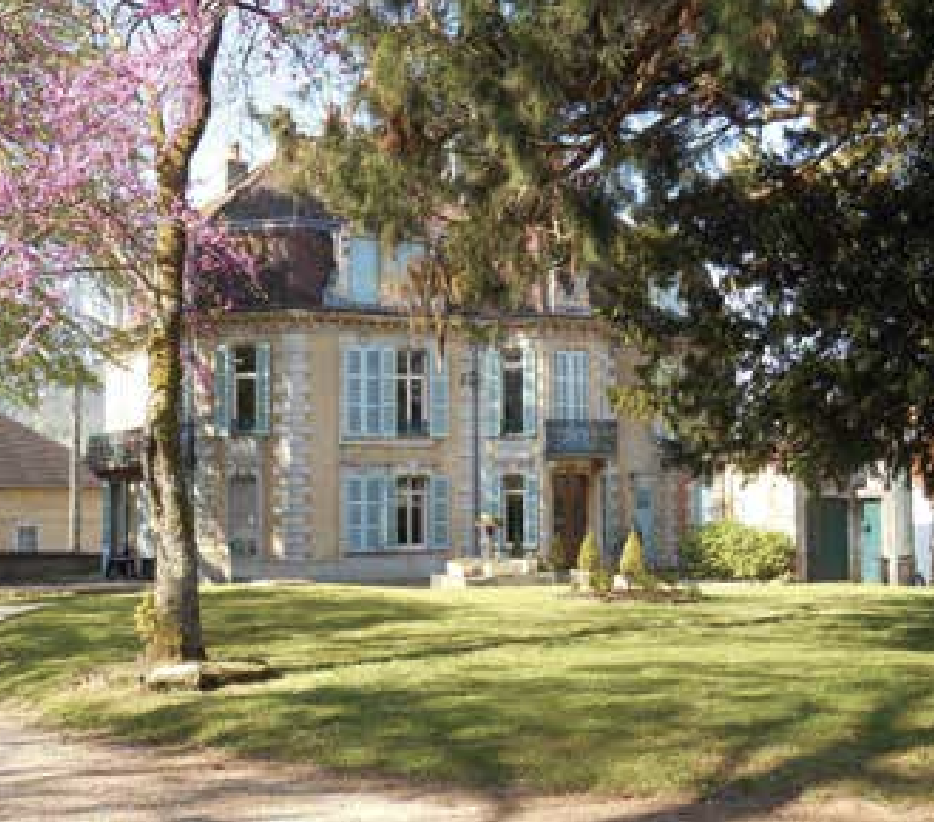
Walking through their cellar, I was struck by the centuries-old stone walls, the cool, hushed air, and the quiet rhythm of wines ageing on lees and developing complex notes over time. The floor smelled faintly of yeast and chalk. Wooden barrels sat shoulder to shoulder like guardians of time. But just alongside this deep-rooted history were cans of wine adorned with a modern, striking label. This was a playful, unexpected innovation that signalled Jura’s willingness to evolve. It was a perfect example of how tradition and modernity can coexist. You can feel a great respect for the past, yet there is a subtle wink toward the present, inviting new audiences to discover the wines in their own way.
Walking through their cellar, I was struck by the centuries-old stone walls, the cool, hushed air, and the quiet rhythm of wines ageing on lees and developing complex notes over time. The floor smelled faintly of yeast and chalk. Wooden barrels sat shoulder to shoulder like guardians of time. But just alongside this deep-rooted history were cans of wine adorned with a modern, striking label. This was a playful, unexpected innovation that signalled Jura’s willingness to evolve. It was a perfect example of how tradition and modernity can coexist. You can feel a great respect for the past, yet there is a subtle wink toward the present, inviting new audiences to discover the wines in their own way.
Passing by the vineyards in the late
afternoon, touching the leaves still warm
from the sun, and smelling the mineral-rich
soil, it became evident that these varieties
are not just crops; they are storytellers. Each
vine seems to whisper the history of the land,
the care of generations of winemakers, and
the nuanced interplay between climate,
geology, and human attention.
Facing the Reality of Climate
Despite its beauty and charm, Jura is not immune to the challenges of climate change. In recent years, frost in 2017, 2019, 2021, and 2024 created some of the smallest harvests since 1945. The region’s small, irregularly shaped vineyards make some common solutions, like candles or large protective fences, prohibitively expensive and impractical. Instead, growers have turned to late pruning as a practical defence against frost, while the cooperative model ensures that major disasters impact the community collectively rather than individually.
Despite its beauty and charm, Jura is not immune to the challenges of climate change. In recent years, frost in 2017, 2019, 2021, and 2024 created some of the smallest harvests since 1945. The region’s small, irregularly shaped vineyards make some common solutions, like candles or large protective fences, prohibitively expensive and impractical. Instead, growers have turned to late pruning as a practical defence against frost, while the cooperative model ensures that major disasters impact the community collectively rather than individually.

A Community Effort
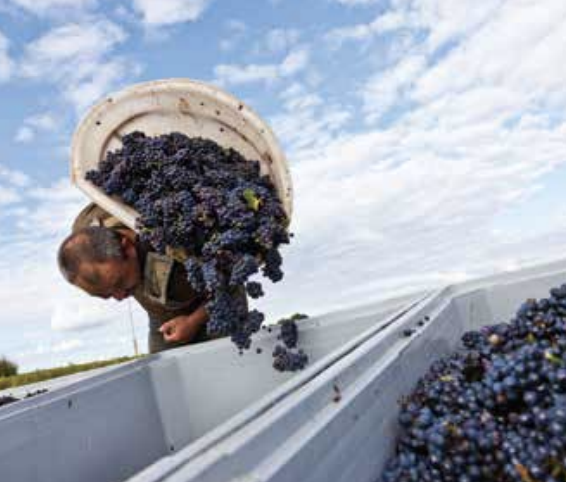
It was then uncovered that La Fruitière d’Arbois participates actively in organisations like the Comité Interprofessionnel des Vins du Jura and Société de Viticulture du Jura. Through these platforms, growers collaborate to maintain high standards, protect native grape varieties, and develop tourism sustainably. Most of Jura’s economy remains locally owned, ensuring that growth and innovation are guided by those who are intimately connected to the land. Tasting rooms, local markets, guided tours, and artisanal workshops, all reflect a community that values heritage and sustainability. Even the ‘Made in Jura’ label acts as a symbol of regional craftsmanship, uniting everything from watches to cheese to glassmaking under one shared identity.
It was then uncovered that La Fruitière d’Arbois participates actively in organisations like the Comité Interprofessionnel des Vins du Jura and Société de Viticulture du Jura. Through these platforms, growers collaborate to maintain high standards, protect native grape varieties, and develop tourism sustainably. Most of Jura’s economy remains locally owned, ensuring that growth and innovation are guided by those who are intimately connected to the land. Tasting rooms, local markets, guided tours, and artisanal workshops, all reflect a community that values heritage and sustainability. Even the ‘Made in Jura’ label acts as a symbol of regional craftsmanship, uniting everything from watches to cheese to glassmaking under one shared identity.
The Philosophy of the Table
I moved on to Domaine Rolet, where the tasting conductor insisted that we think about food pairings with each glass.
I moved on to Domaine Rolet, where the tasting conductor insisted that we think about food pairings with each glass.
This philosophy, deeply embedded in French culture, elevates every dining experience into a reflection of place, time, and tradition.
The tasting room itself was bright and welcoming, with bottles lining the walls like a quiet archive of vintages.
We tried a range of styles from Savagnin, to Poulsard, and Trousseau. Savagnin, often used to produce the region’s famed Vin Jaune, exudes nutty, oxidative aromas, a taste that is distinctly Jura. Poulsard lends delicate red fruit notes to light, translucent reds, while Trousseau brings depth, spice, and structure to more robust wines.
Even Chardonnay, known locally as Melon d’Arbois, carries a sense of place that transforms a familiar grape into something completely unique.
Talk About Wholesome Meals
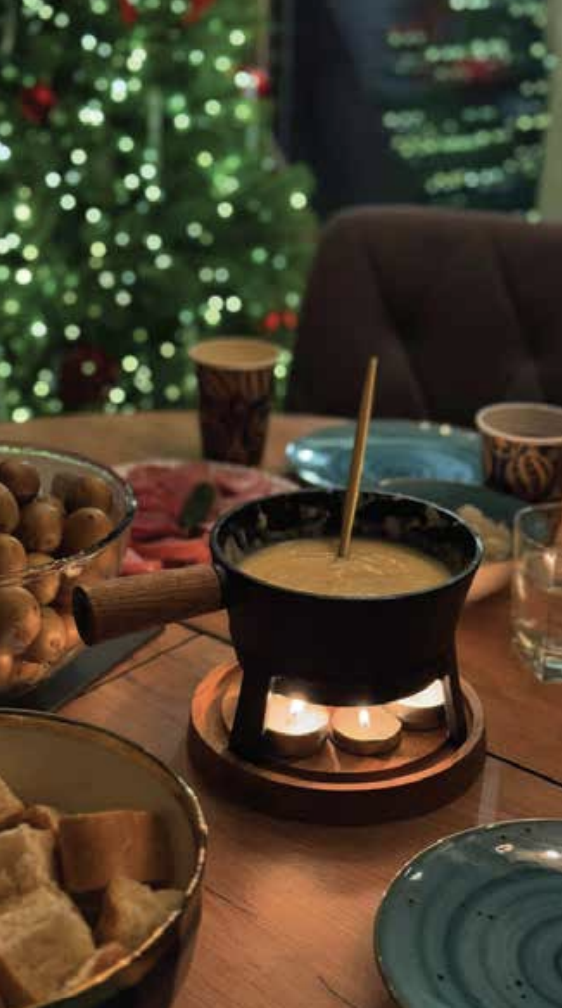
Here’s where the cooperative’s relationship with local artisans becomes impossible to ignore. Their wines aren’t paired with cheese by accident; they are part of the cheese, literally. Fruitière supplies white wine to one of the region’s major cheese companies to make fondue. We headed to Restaurant La Finette for some of that cheesy fondue and had a meal I can only describe as wholesome.
Here’s where the cooperative’s relationship with local artisans becomes impossible to ignore. Their wines aren’t paired with cheese by accident; they are part of the cheese, literally. Fruitière supplies white wine to one of the region’s major cheese companies to make fondue. We headed to Restaurant La Finette for some of that cheesy fondue and had a meal I can only describe as wholesome.
The pot arrived bubbling and aromatic; dipping bread into its soft, wine-kissed acidity, in that warm, wood-panelled room, felt like participating in a regional ritual. The vineyard shapes the cheesemaking, the cheese shapes the meals, and the meals shape the region’s hospitality.
Exploring Château-Chalon
We caught the sunset over Château-Chalon, an AOC dedicated exclusively to Vin Jaune from the Savagnin grape. The sky washed the hilltop village in gold as the vineyards glowed beneath it. The scene captured the region’s extraordinary quality despite the small production area. Every sip was rich, nutty, and complex, reflecting decades of careful maturation.
We caught the sunset over Château-Chalon, an AOC dedicated exclusively to Vin Jaune from the Savagnin grape. The sky washed the hilltop village in gold as the vineyards glowed beneath it. The scene captured the region’s extraordinary quality despite the small production area. Every sip was rich, nutty, and complex, reflecting decades of careful maturation.
Although we did not reach L’Étoile, locals describe it as a village nestled among five hills, forming a star; its vineyards scattered with star-shaped fossils, a geological quirk that adds yet another layer to Jura’s unique terroir.
Conclusion
Speaking with local producers reinforced that this region is not just about bottles on a shelf; it is about people, place, and the stories that connect them. I cannot wait to return, explore L’Étoile, and indulge again in the region’s Vin Jaune. Jura remains for me a living ecosystem where tradition, creativity, and community come together in perfect harmony.
Speaking with local producers reinforced that this region is not just about bottles on a shelf; it is about people, place, and the stories that connect them. I cannot wait to return, explore L’Étoile, and indulge again in the region’s Vin Jaune. Jura remains for me a living ecosystem where tradition, creativity, and community come together in perfect harmony.