
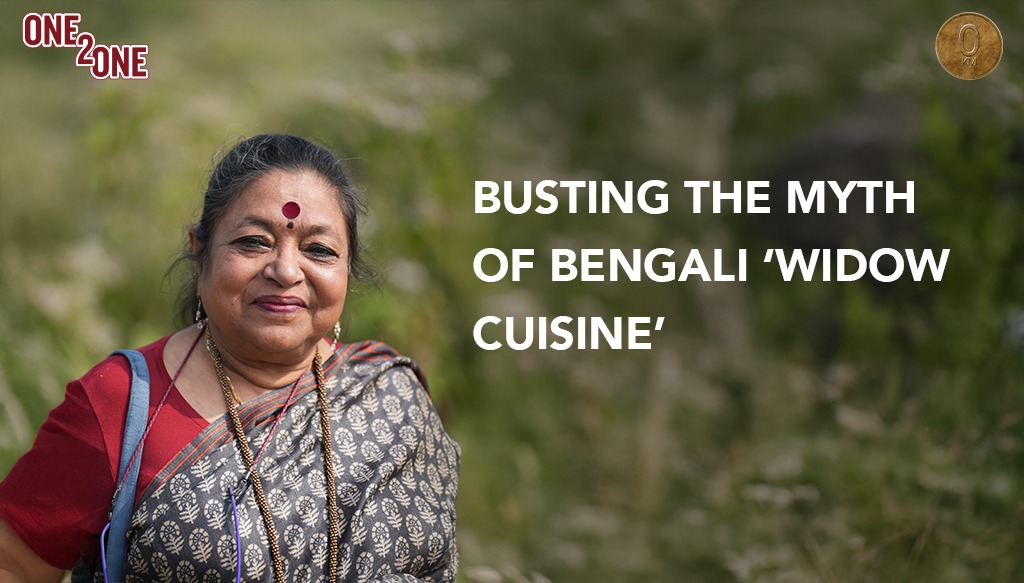
BUSTING THE MYTH OF BENGALI ‘WIDOW CUISINE’

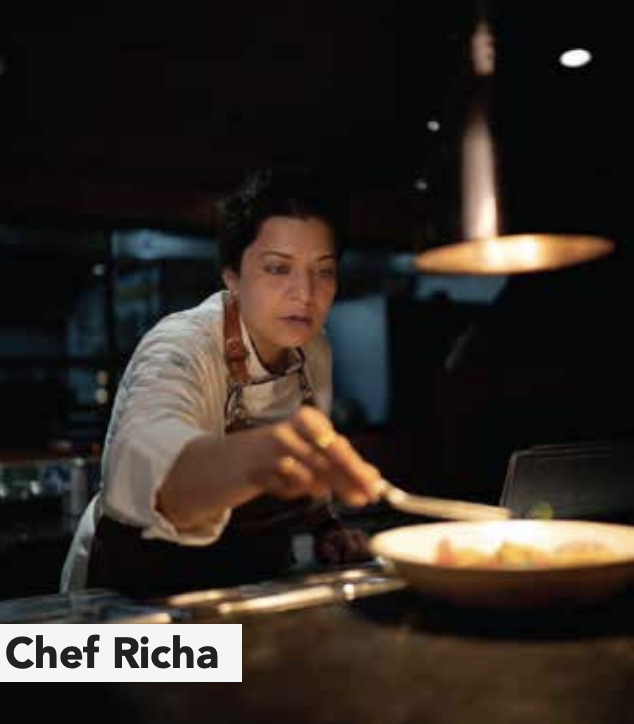
Chef Richa Johri
Culinary Director
With 23 years of experience, Chef Richa is shaping modern cuisine through her inventive use of overlooked ingredients, reimagined recipes, and revived forgotten flavours. For her, cooking is a form of storytelling where memory and culture inform every dish she creates. She is also on an intriguing mission to bring sub-regional and community cuisines, especially those lovingly prepared by Women who are either professional chefs or home cooks, into the spotlight and onto mainstream restaurant menus. She regards dining as a ritual that connects people to history, tradition, and the magic of food, ensuring that her culinary vision continually shapes the dining experience.

Pritha Sen is a chef consultant and one of India’s leading food historians, widely regarded as an authority on the regional cuisines of eastern India, with a special focus on Undivided Bengal. A pioneer across platforms, including social media, she has played a significant role in creating awareness around India’s culinary wisdom through warm, engaging storytelling. For Sen, food is identity, each dish carrying narratives of nutrition, local produce and cultural memory.
She has showcased what she terms Indigenous Heritage Cuisine at acclaimed culinary events across India and internationally, including Gurgaon, Delhi, Kolkata, Mumbai, Goa, Jaipur, Hyderabad and Singapore. As a consultant, she curated the menus for Mustard, the first Bengali restaurant in Goa, as well as its Mumbai and Chennai outposts, which won multiple awards and featured among India’s best new restaurants across leading platforms. Her consultancy work also includes assignments with The Oberoi, ITC Sonar and Royal Bengal
in Kolkata and Gormei in Hong Kong.
Between 2022 and 2024, she created the
menus for Yantra, a fine-dining Indian
restaurant in Singapore, widely acclaimed
and featured in Time Out Singapore and
Tatler dining guides. She was also featured
on the cover of Cuisine and Wine Asia in
October 2022.
A prolific writer, Sen has contributed extensively to leading publications on Bengali cuisine. Her work spans journalism and strategic knowledge initiatives with national and international organisations, alongside extensive work in sustainable livelihoods with marginalised communities in regions such as Ladakh and Nagaland. Among her notable literary contributions are Calcutta, the Living City (OUP) and The Great Padma: The Epic River that Made the Bengal Delta (2023). She began her career as a teacher of History and English.
Q: What is the much talked about Widow Cuisine of Bengal? When did it come into existence?
A: Widow Cuisine is an urban legend, created by media. There were severe unfortunate restrictions regarding diet for widows but no such thing as a special genre of cuisine created by them. It is a disservice to the Bengali culinary legacy and a case of people having not done their homework, in the rush to create sensational content.
A: Widow Cuisine is an urban legend, created by media. There were severe unfortunate restrictions regarding diet for widows but no such thing as a special genre of cuisine created by them. It is a disservice to the Bengali culinary legacy and a case of people having not done their homework, in the rush to create sensational content.
Q: Why do you call it an urban legend? Is it a fact that widows invented the dishes that uses peels and stems or mainstream vegetarian dishes, like ‘Dhokar Dalna’ or Shukto or vegetarian paturi?
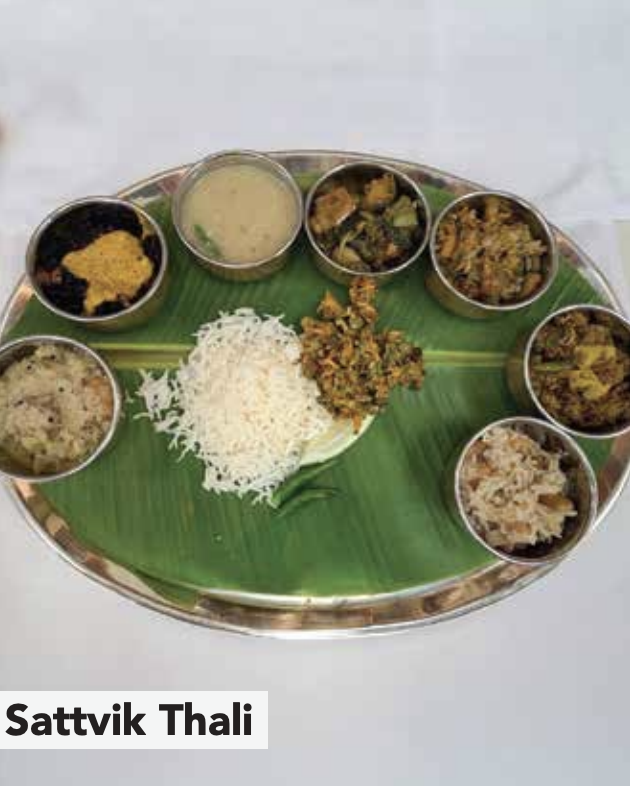
A: I call it so because it started from someone memories of a widowed grandmother cooking very tasty sattvik (no onion or garlic) vegetarian dishes. If you are aware of our social history, widows in all Indian communities, particularly upper caste ones, had to survive on rudimentary sattvik food. Their condition was especially severe in 19th and early 20th century Bengal, when the region was impoverished due to several exploitative reasons and finally economically destroyed by colonial rule. Most widows were poverty-stricken, having been stripped of any property or source of income. They simply fell back on a means of basic sustenance that has always existed in our culinary culture such as cooking with peels and stalks. They did not create afresh. Some definitely added their own skilled touches and innovations but by no means could they afford to create some of the dishes you mention. Also, traditional Bengali vegetarian cuisine is cooked without onion and garlic. So it wasn’t exclusive to the widows.
A: I call it so because it started from someone memories of a widowed grandmother cooking very tasty sattvik (no onion or garlic) vegetarian dishes. If you are aware of our social history, widows in all Indian communities, particularly upper caste ones, had to survive on rudimentary sattvik food. Their condition was especially severe in 19th and early 20th century Bengal, when the region was impoverished due to several exploitative reasons and finally economically destroyed by colonial rule. Most widows were poverty-stricken, having been stripped of any property or source of income. They simply fell back on a means of basic sustenance that has always existed in our culinary culture such as cooking with peels and stalks. They did not create afresh. Some definitely added their own skilled touches and innovations but by no means could they afford to create some of the dishes you mention. Also, traditional Bengali vegetarian cuisine is cooked without onion and garlic. So it wasn’t exclusive to the widows.
Q: In that case, can you elaborate on the history of the evolution of Bengali vegetarian cuisine to support your arguments?
A: To tell you briefly, the Bengalis as a homogenous people, evolved from tribal communities. We belong to proto-austroloid stock, drawing our ancestry mainly from tribes like the Santhals, Oraons, Mundas and Pundras mixed with other ethnicities like Mongoloid. Food-wise it was then a foraging culture, something that is stamped deep into our DNA. We owe our famous zero-waste legacy to them because the little that was foraged had to feed many mouths. The use of all parts of an edible plant, traditions like steaming, dry roasting, and grinding using little fuel, oil or spices and eco-friendly techniques of cooking in leaves, bamboo tubes or coconut shells are still present among tribals as in mainstream Bengali cuisine. This style came as a boon for the people, not just for widows, for it provided sustenance during times of distress such as famines and other natural disasters.
A: To tell you briefly, the Bengalis as a homogenous people, evolved from tribal communities. We belong to proto-austroloid stock, drawing our ancestry mainly from tribes like the Santhals, Oraons, Mundas and Pundras mixed with other ethnicities like Mongoloid. Food-wise it was then a foraging culture, something that is stamped deep into our DNA. We owe our famous zero-waste legacy to them because the little that was foraged had to feed many mouths. The use of all parts of an edible plant, traditions like steaming, dry roasting, and grinding using little fuel, oil or spices and eco-friendly techniques of cooking in leaves, bamboo tubes or coconut shells are still present among tribals as in mainstream Bengali cuisine. This style came as a boon for the people, not just for widows, for it provided sustenance during times of distress such as famines and other natural disasters.
Q: That’s interesting. Can you tell us about a few dishes that were created to enrich the vegetarian repertoire?
A: Few know that Bengal is home to more-than-a-100 edible leafy greens, 10-12 different kinds of gourds and innumerable other vegetables and tubers. It is then natural for a layered vegetarian repertoire to have evolved. People think we eat only fish curry and rice. In reality our meals comprise several vegetarian courses before we arrive at fish. The Mangalkavyas, which were epic poems written between the 15th and 18th centuries, give elaborate descriptions of vegetarian foods including the shukto. The momentum created by the sattvik Vaishnav Movement in Bengal founded by Sri Chaitanya Mahaprabhu further fuelled the repertoire. Shukto, it seems, was the saint’s favourite dish. Dishes you mention like a Dhokar Dalna (lentil cakes in gravy) were created to compensate for fish and protein. Daily multi-course sattvik bhogs cooked for family deities provided further incentive.
A: Few know that Bengal is home to more-than-a-100 edible leafy greens, 10-12 different kinds of gourds and innumerable other vegetables and tubers. It is then natural for a layered vegetarian repertoire to have evolved. People think we eat only fish curry and rice. In reality our meals comprise several vegetarian courses before we arrive at fish. The Mangalkavyas, which were epic poems written between the 15th and 18th centuries, give elaborate descriptions of vegetarian foods including the shukto. The momentum created by the sattvik Vaishnav Movement in Bengal founded by Sri Chaitanya Mahaprabhu further fuelled the repertoire. Shukto, it seems, was the saint’s favourite dish. Dishes you mention like a Dhokar Dalna (lentil cakes in gravy) were created to compensate for fish and protein. Daily multi-course sattvik bhogs cooked for family deities provided further incentive.
It would be better to say that the vegetarian repertoire was enhanced in most Bengali homes because of the presence of widowed family members; it was not by them. The common people, who could barely afford fish every day resorted to the basic fare like boiled Indian figs mashed with rice and mustard oil or a parwal peel roasted and ground with chillies into a chutney or crispy potato peels fried with poppy seeds, eaten by the widow and family members alike. Alu Posto (potatoes in poppy seeds) for example, happened because the British discarded huge quantities of dry poppy seed shells after extracting the opium from it for trade with China. The starving peasantry,
after their cultivable lands were planted with
cash crops, chanced upon these edible dry
pods and need turned a waste product into
the iconic dish it is today.
In more affluent kitchens the daughter-in -law vied to please the widowed mother-in-law, who hardly cooked, by creating elaborate and rich dishes, mimicking the non-vegetarian fare of kormas and kaliyas of urbanised Bengal, namely the zamindars of Kolkata. Dolmas or stuffed vegetables were borrowed from the Armenian and Jewish settlers who arrived in Calcutta in the 18th century. Another celebrated dish Palong Chhanar Kofta, was first created in the famous canteen, run by destitute women rescued by the All Bengal Womens Union, in the wake of the horrors of Partition in 1947. So, it was a mix of deep-seated indigenous traditions, political conditions, economics, religion and influences of the invading or ruling classes like the Afghans, Turks and Mughals, the Portuguese and the British and immigrant settlers which contributed in large measure to the Bengali cuisine we see today.
Q: Are these dishes still in vogue and part of restaurant menus?
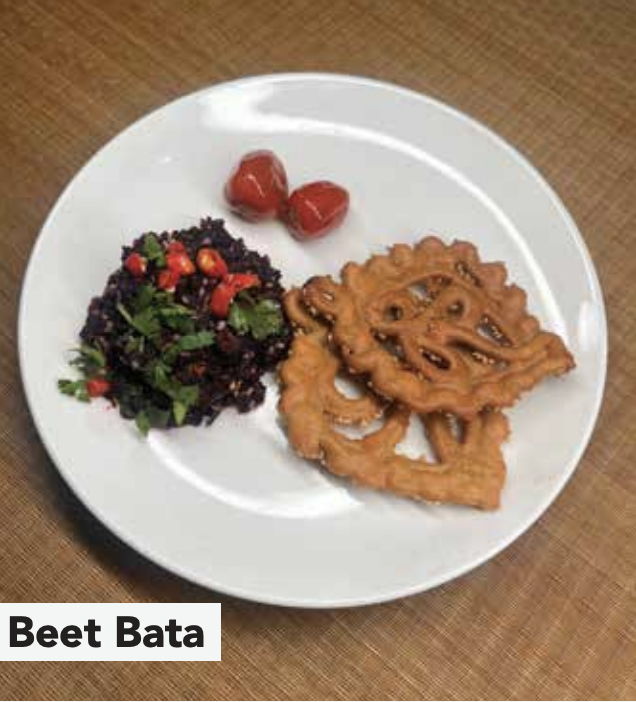
A: Yes, very much so. For instance a Potol Pora (roasted parwal), Maan Kochu Bata (ground taro root) or Phulkopir Pata Bata (ground cauliflower leaves) are as much part of restaurant menus as a Phulkopir Roast (cauliflower roast), Potoler Dolma (stuffed parwal) or Thorer Paturi (banana stem in banana leaves).
A: Yes, very much so. For instance a Potol Pora (roasted parwal), Maan Kochu Bata (ground taro root) or Phulkopir Pata Bata (ground cauliflower leaves) are as much part of restaurant menus as a Phulkopir Roast (cauliflower roast), Potoler Dolma (stuffed parwal) or Thorer Paturi (banana stem in banana leaves).
Q: What is that one dish that you are proud to have put on a restaurant menu?
A: I am very proud of the Bengali Mezze Platter I had created for Mustard, a restaurant doing Bengali and French cuisine. It showcased all the indigenous techniques of Bata (ground), Pora (roasted) and Makha (steamed) as mezze dips, had with baked biscuits like the Bengal Bakarkhani.
A: I am very proud of the Bengali Mezze Platter I had created for Mustard, a restaurant doing Bengali and French cuisine. It showcased all the indigenous techniques of Bata (ground), Pora (roasted) and Makha (steamed) as mezze dips, had with baked biscuits like the Bengal Bakarkhani.