
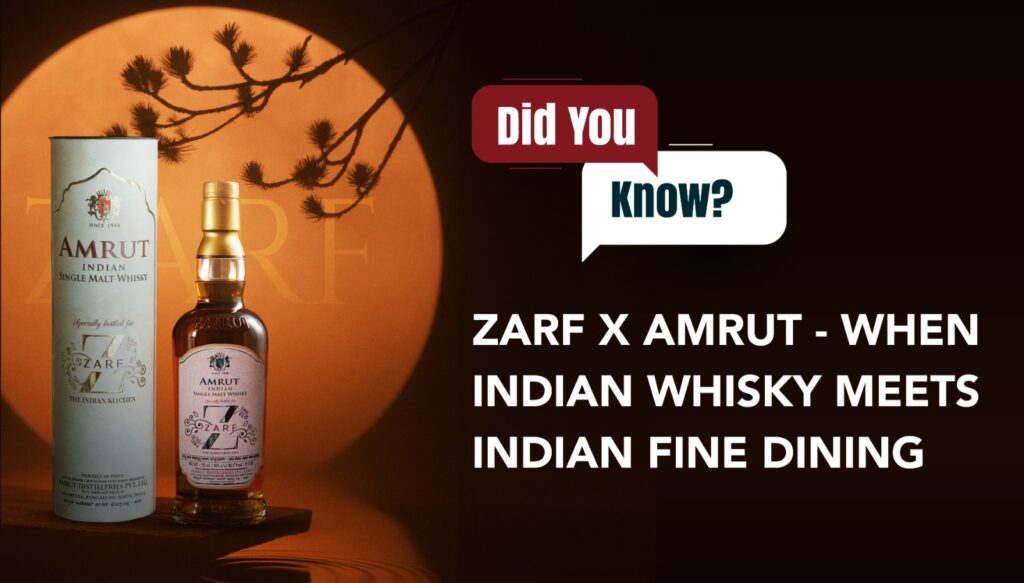
ZARF X AMRUT - WHEN INDIAN WHISKY MEETS INDIAN FINE DINING
Q1. What makes the ZARF x Amrut single malt a landmark release for Indian whisky?
This release is significant on multiple counts. It marks Amrut Distilleries’ 50th single malt, a milestone few Indian distilleries have achieved. More importantly, it is the first Indian single malt crafted exclusively for a restaurant, making it a pioneering private-label expression designed around a specific dining experience rather than mass consumption.
Q2. Why was Zarf at Sheraton Grand Bengaluru Whitefield chosen for this collaboration?
The demographic change goes beyond numbers. It is closely tied to socio-economic realities. India’s median age is below 30, far younger than ageing populations in China, Europe or Japan. A fast-expanding middle class with rising disposable income is part of this picture. At the same time, social norms around alcohol consumption are shifting. Urban areas have seen growing acceptance of social drinking. Participation among women is increasing, and evolving attitudes among Gen Z and millennials are broadening the appeal of the category.
Q3. How was the whisky crafted to suit Indian fine dining?
The whisky is distilled using Indian six-row barley and matured for over six years in refill virgin American oak casks. This cask selection was intentional, allowing the whisky to develop depth and complexity without overwhelming the palate, ensuring it complements nuanced Indian flavours instead of competing with them.
Q4. How does the whisky interact with Zarf’s menu?
The single malt was paired with a specially curated menu featuring dishes such as galouti kebabs, lamb chops and Dal-e-Zarf. Each pairing was designed to create a seamless dialogue between the whisky’s layered notes and the richness, spice and texture of the cuisine.
Q5. What does this collaboration signal for the future of Indian whisky?
The ZARF x Amrut collaboration reflects India’s growing confidence in experience-led luxury, where spirits, food, fashion, and culture intersect. It sets a new benchmark for how Indian single malts can be positioned thoughtfully, collaboratively and with global relevance.