Stuti Khetan
Independent Spirits Consultant
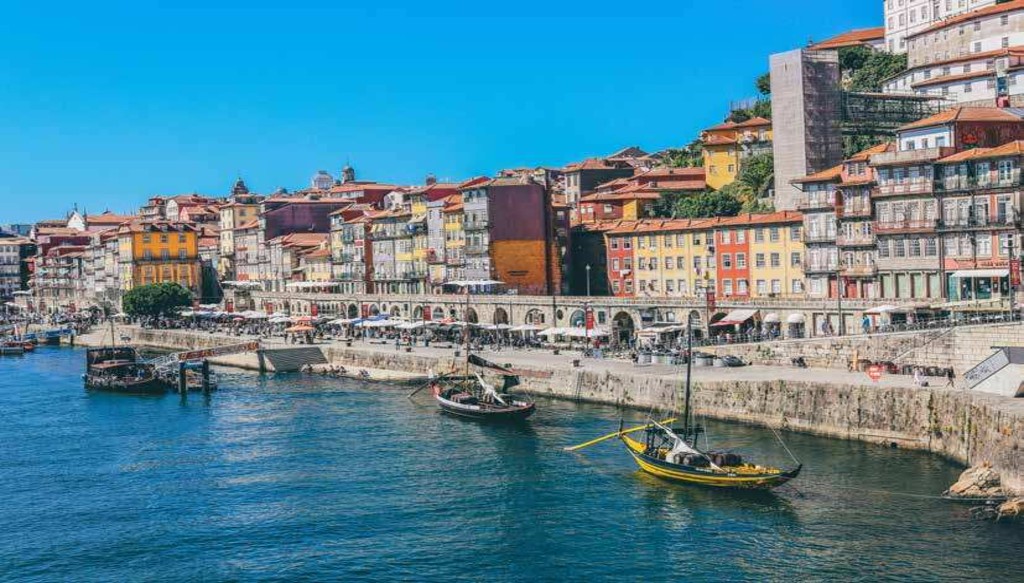
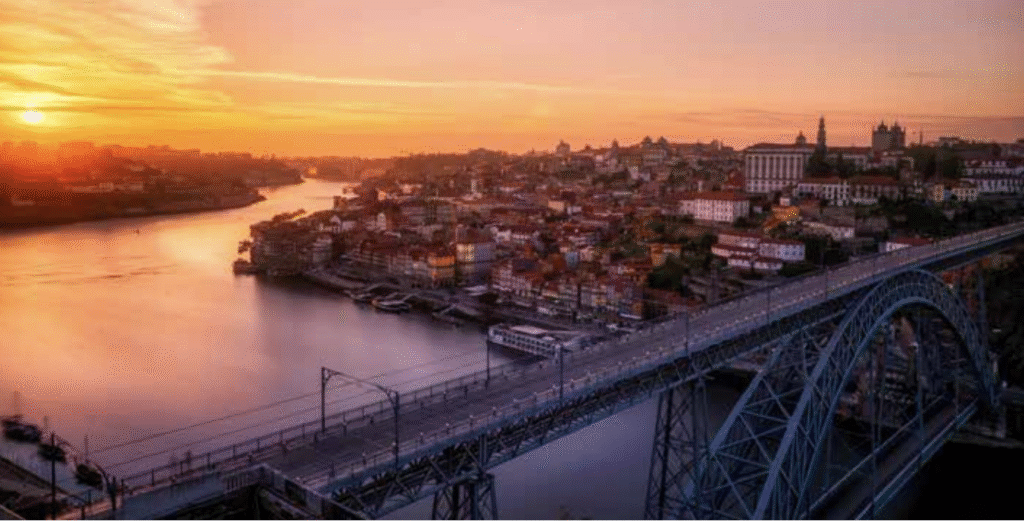
The day began in Porto, standing on one of its bridges as the sun rose slowly over the Douro River. The city came into view layer by layer, with tiled buildings catching the early light, boats moving quietly along the water, cafés just beginning to open their shutters; it felt like watching Porto stretch awake. I lingered longer than planned, long enough to nearly miss my bus to the Douro Valley, before finally pulling myself away and boarding, “chino” (coffee) in hand, the river still visible through the window as we drove on.
The slow drive out of Porto takes you through the lush Vinho Verde region with rolling green hills, narrow roads and mist that refuses to fully lift. This is one of the wettest wine regions in Portugal. The heavy rainfall and persistent humidity keep the landscape vividly green for most of the year. That same climate limits sugar accumulation in the grapes, resulting in wines that are naturally lower in alcohol, sharper in acidity and meant to be drunk young.
Vinho Verde wines are fresh and uncomplicated, the kind designed for everyday meals rather than cellars. They sit comfortably alongside fish, seafood, simple salads and long lunches that stretch into the afternoon. The region is known for grapes like Alvarinho (the same as the Spanish Albariño, a personal favourite), but what stands out more than the varieties is how integrated wine is into daily life here.
Historically, vines were trained high on pergolas around family homes. This allowed farmers to grow vegetables underneath, such as beans, cabbage, potatoes and herbs, while grapes ripened above. Fruit trees and other crops often shared the same space. Wine here was never separated from living. It was grown alongside food, meant to be consumed with it. That practicality still defines its character today.
World’s First Classified Wine Region
The Douro Valley announces itself all at once. Steep terraces carved directly into rock. The river cuts sharply through the valley floor. Summers here are intensely hot and bright. Winters can drop below freezing. It is a demanding environment, and it shapes the wines completely.
The Douro Valley announces itself all at once. Steep terraces carved directly into rock. The river cuts sharply through the valley floor. Summers here are intensely hot and bright. Winters can drop below freezing. It is a demanding environment, and it shapes the wines completely.
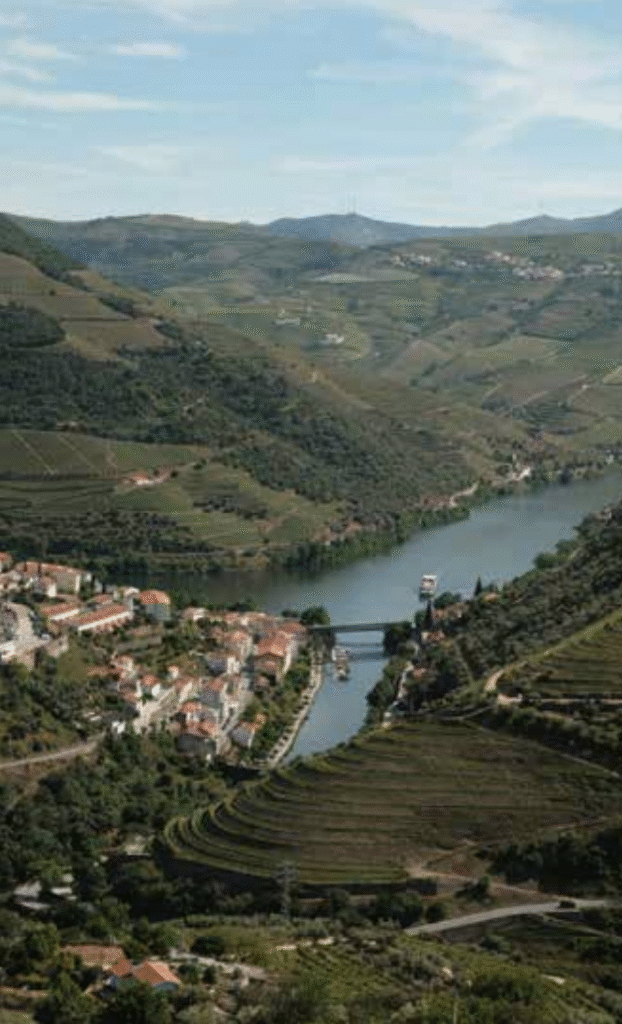
In the 17th and 18th centuries, British merchants turned to Portugal for wine as tensions with France grew. They needed wines that could survive long sea journeys without spoiling. The solution was fortification. By adding grape spirit during fermentation, the yeast was stopped before consuming all the sugar. The result was a wine that retained sweetness, gained higher alcohol and was stable enough to travel. Port was born out of necessity, not romance.
As demand increased, production surged. Exports grew rapidly, quality suffered, prices fell, and eventually phylloxera devastated vineyards across Europe, including the Douro. In response to this instability, the region was formally regulated in 1756, making the Douro the world’s first classified
wine region. Boundaries were drawn,
production rules enforced, and quality
protected; the structure that defines Port
today began there.
My first winery visit was to Quinta da Roêda, a historic estate in Pinhão owned by Croft, one of the oldest Port houses still in operation. The estate spans 109 hectares, its vineyards layered across steep schist slopes overlooking the river. Schist is unforgiving soil, but it drains well and retains heat, forcing vines to dig deep and concentrate fruit. The main grape varieties planted here are classic Douro varieties: Touriga Nacional, Touriga Franca, Tinta Roriz, Tinta Barroca and Tinto Cão, chosen for their ability to work together rather than shine alone.
At Roêda, traditional methods are still very much alive. Grapes are foot-stomped during harvest in granite lagares. The process is physical and precise; human weight extracts colour, tannins and aroma gently, without crushing seeds. After several hours, grape spirit is added, halting fermentation. Sugar remains. Alcohol rises. What emerges is not a finished wine but the foundation of Port, ready to be shaped by time.
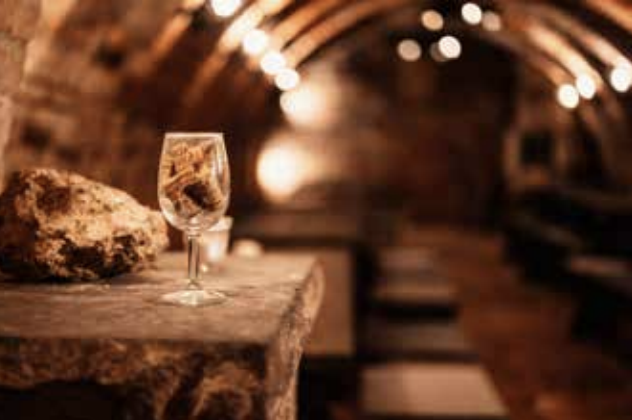
Port styles diverge based on ageing choices rather than ingredients. Tawny Ports mature in smaller barrels that allow oxygen exposure, slowly developing nutty, caramelised flavours over years or even decades. Ruby Ports are aged in larger vessels to preserve deep colour and bright fruit, with further ageing happening in bottles. Rosé Port is lighter and fruit-driven, fermented and aged in stainless steel, often serving as an entry point for new drinkers. A Colheita is a Tawny from a single harvest, aged for years before release. While most Ports are blends of multiple years, Colheitas tell a focused, vintage-specific story.
Cruising through the river
All that information overload called for a break, so we jumped onto a boat to relax, or at least that was the plan. What we saw from there was beyond mesmerising. The Douro reveals itself best from the water. For 45 minutes, we cruised along the river as the valley slowly unfolded around us. Vineyards rose in neat terraces along the slopes, wineries appeared and disappeared between bends, and the river became the easiest way to understand the scale of it all. The winter sun hit the hills just right, bringing out the lines of schist and the depth of the landscape. A cold wind moved across the deck, but no one seemed to mind. Most of us stayed quietly absorbed, looking around and taking in the view, aware that this was one of those moments that explained the Douro better than any map or tasting ever could.
All that information overload called for a break, so we jumped onto a boat to relax, or at least that was the plan. What we saw from there was beyond mesmerising. The Douro reveals itself best from the water. For 45 minutes, we cruised along the river as the valley slowly unfolded around us. Vineyards rose in neat terraces along the slopes, wineries appeared and disappeared between bends, and the river became the easiest way to understand the scale of it all. The winter sun hit the hills just right, bringing out the lines of schist and the depth of the landscape. A cold wind moved across the deck, but no one seemed to mind. Most of us stayed quietly absorbed, looking around and taking in the view, aware that this was one of those moments that explained the Douro better than any map or tasting ever could.
And then we sailed up to the second winery, Quinta da Avessada, located on the Favaios plateau and operating within a cooperative system. What started with just six wineries today brings together hundreds of growers from the surrounding area. The estate produces a wide range of Douro wines and fortified styles, reflecting both the diversity of the region and the scale that a cooperative model allows.
It is a place built around accessibility, education and continuity, offering a broader picture of how wine is made and shared in the Douro today.
Our welcome drink there was Muscatel, and it immediately stood out.
A portrait of Muscatel
Muscatel in the Douro is often single-varietal, intensely aromatic and deeply expressive. Floral, honeyed and layered, it leans more toward perfume and texture than power. At Quinta da Avessada, Muscatel wines are aged and periodically blended over time, creating continuity across decades. Some bottles here are over a century old, preserved as living records of the region’s history.
Muscatel in the Douro is often single-varietal, intensely aromatic and deeply expressive. Floral, honeyed and layered, it leans more toward perfume and texture than power. At Quinta da Avessada, Muscatel wines are aged and periodically blended over time, creating continuity across decades. Some bottles here are over a century old, preserved as living records of the region’s history.
One such Muscatel, aged for over 120 years, was sold at auction for 800 Euros, with proceeds entirely donated to cancer treatment initiatives in Portugal. It was a reminder that these wines exist not only as objects of rarity but as part of a wider social and cultural landscape.
Despite their age and complexity, Muscatel
wines are not treated with excessive
reverence locally. They are often enjoyed
casually, sometimes mixed with tonic or beer,
lime and mint, especially in warmer months.
It is a wine that moves easily between
tradition and everyday life.
Drinking local drinks
My days were immersed in studying Port and fortified wines, but my evenings were for markets, small bars and seasonal stalls. This story, however, is incomplete without the wider picture of Portugal’s rich everyday drinking culture.
My days were immersed in studying Port and fortified wines, but my evenings were for markets, small bars and seasonal stalls. This story, however, is incomplete without the wider picture of Portugal’s rich everyday drinking culture.
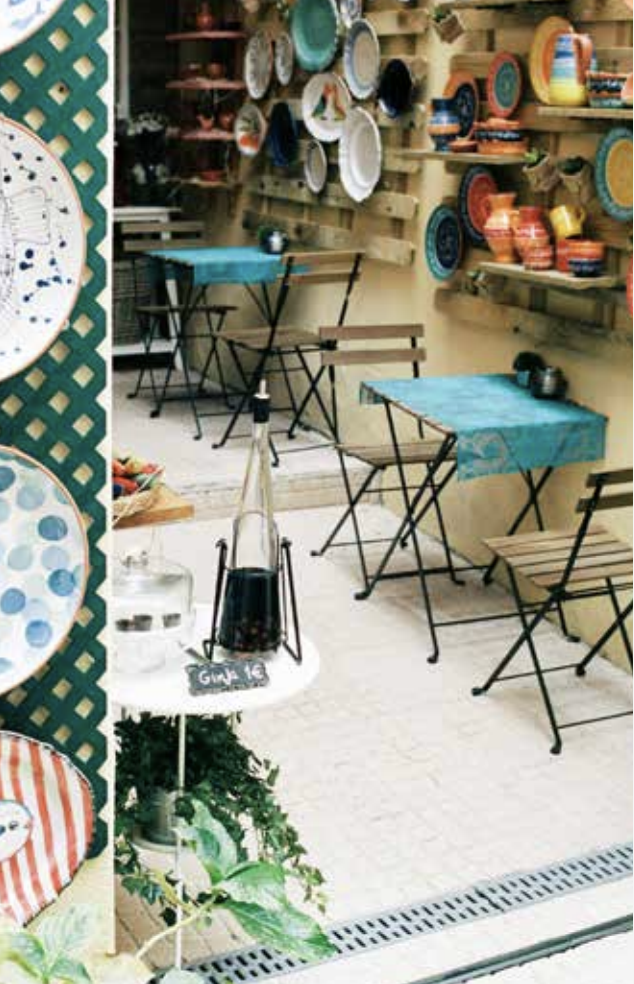
Ginja, a sour cherry liqueur served in small
cups, offered warmth in the winter. I tried it at
a Christmas market, standing next to stalls
selling hot wine, and found it to be sharp,
sweet and immediately comforting.
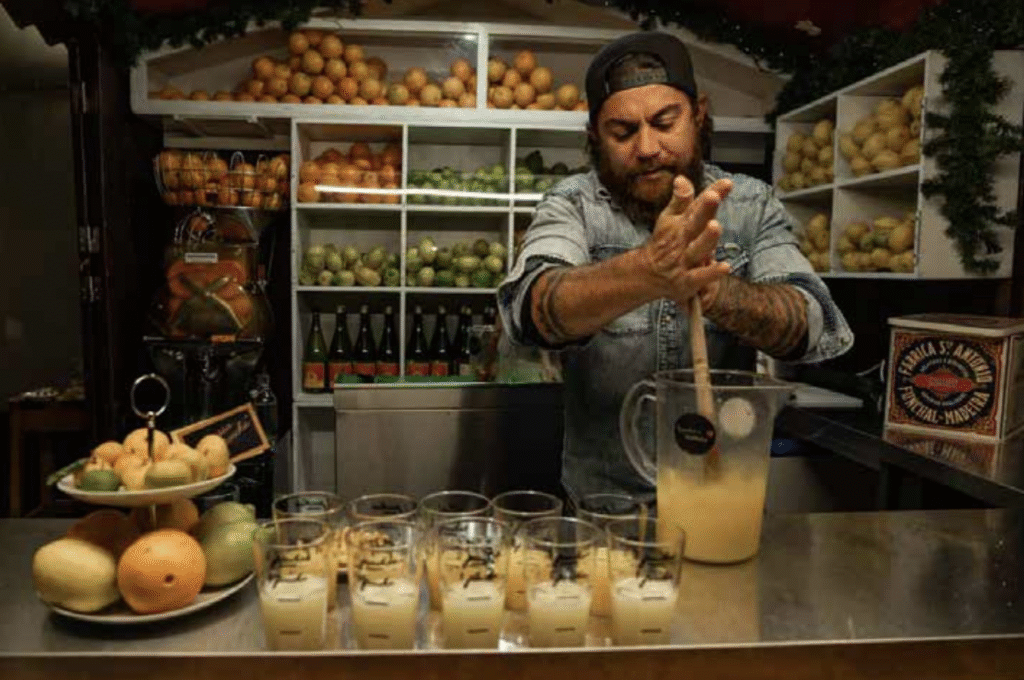
Poncha followed a bright, punchy mix of aguardente, citrus and sugar, known for its colour and strength. My favourite place to drink it was Banzeira, a small bar on the bridge of Seixal, where it felt less like a cocktail and more like a local ritual, with the village coming together every evening to celebrate vida.
Then there was Madeira rum, distinct from both Port and Madeira wine — rich, textured and versatile. My favourite was Rum O Reizinho, which was often used for Ponchas and other local cocktails. The owner offered a small distillery tour, generous tastings and stories that made the spirit feel personal rather than polished.
And thus goes my story with Portuguese drinks: sitting by a river, walking through a market, arriving with dusty shoes and staying longer than intended.