
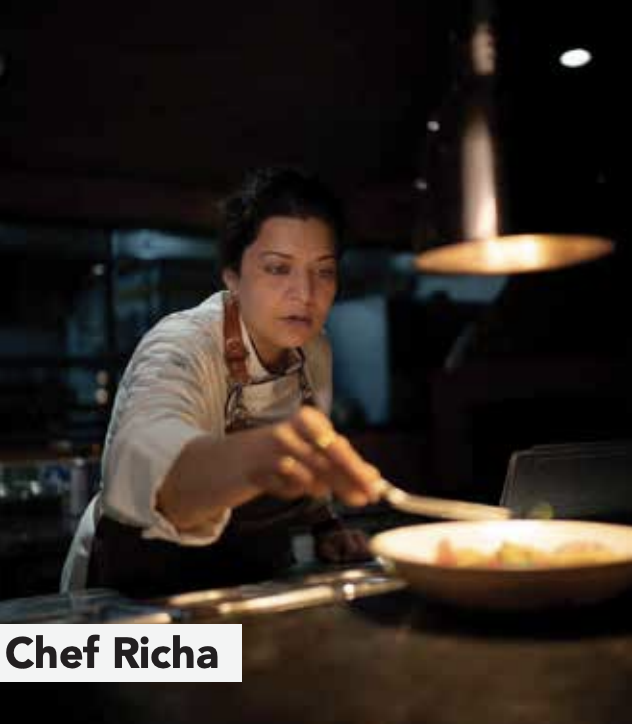
Chef Richa Johri
Culinary Director
With 23 years of experience, Chef Richa is shaping modern cuisine through her inventive use of overlooked ingredients, reimagined recipes, and revived forgotten flavours. For her, cooking is a form of storytelling where memory and culture inform every dish she creates. She is also on an intriguing mission to bring sub-regional and community cuisines, especially those lovingly prepared by Women who are either professional chefs or home cooks, into the spotlight and onto mainstream restaurant menus. She regards dining as a ritual that connects people to history, tradition, and the magic of food, ensuring that her culinary vision continually shapes the dining experience.
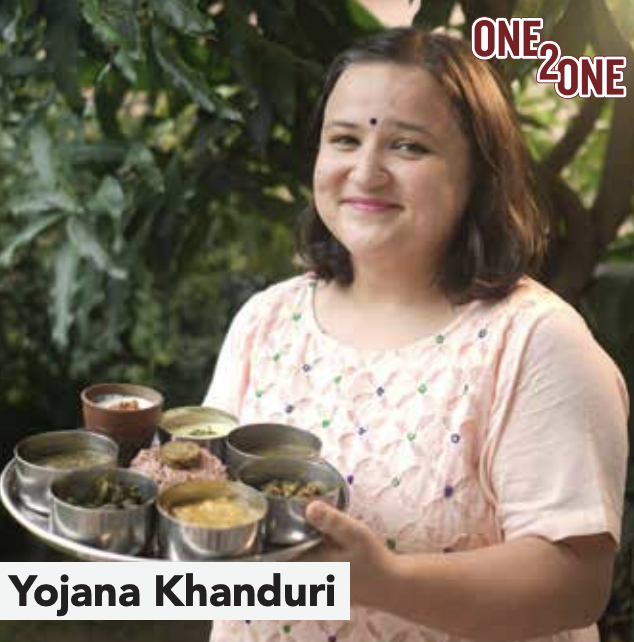
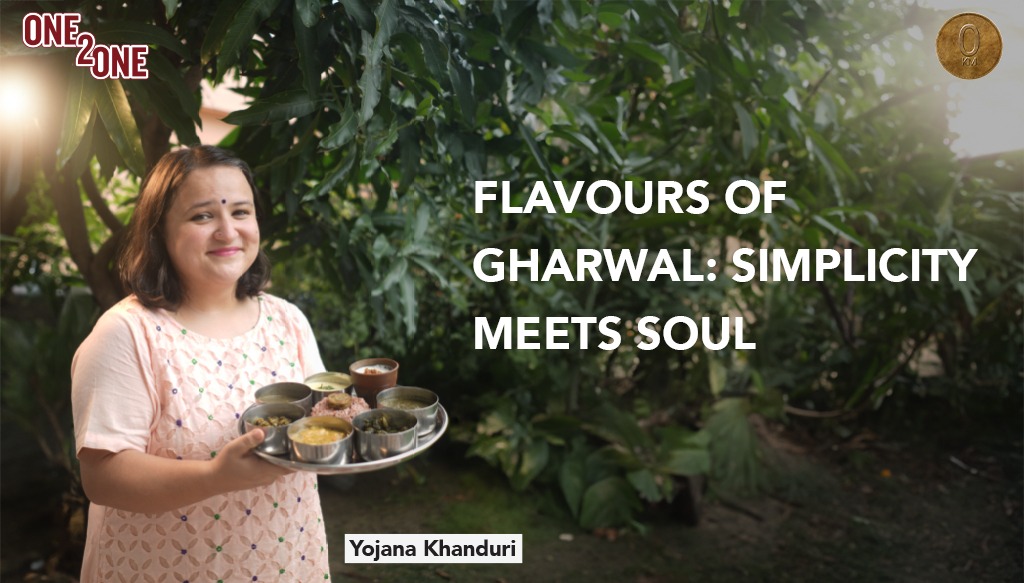
In a trend-driven culinary landscape, Yojana Khanduri is known for her committed work preserving the food traditions of Uttarakhand and regional India. A chef consultant and artisanal pickler, her practice is rooted in authenticity, seasonality, and indigenous knowledge. She curates story-led menus, standardises traditional recipes for professional kitchens, trains teams, and collaborates with hospitality platforms to create culturally rooted, sustainable culinary experiences across India.
Q:. Garhwali food feels more survival-driven than Celebratory. Would you agree?
A: Garhwali food is shaped more by survival than celebration, but that doesn’t make it lesser – it makes it meaningful. In regions where resources are limited and terrain is harsh, food represents gratitude, effort and continuity. Simple preservation methods evolved to prepare for long winters, using pulses, millets, grains, seeds and dried herbs. Seasonal vegetables, meat and lentils were sun-dried and stored and items like badiyan(vadis) were made in bulk when produce was available. These practices reflect resilience, planning and deep respect for food where every meal feels earned rather than excessive.
A: Garhwali food is shaped more by survival than celebration, but that doesn’t make it lesser – it makes it meaningful. In regions where resources are limited and terrain is harsh, food represents gratitude, effort and continuity. Simple preservation methods evolved to prepare for long winters, using pulses, millets, grains, seeds and dried herbs. Seasonal vegetables, meat and lentils were sun-dried and stored and items like badiyan(vadis) were made in bulk when produce was available. These practices reflect resilience, planning and deep respect for food where every meal feels earned rather than excessive.
Q: Village level authentic variations are compatible to city level cooking of women who are also working or using electric equipment instead of rustic sil batta or Jauntha?
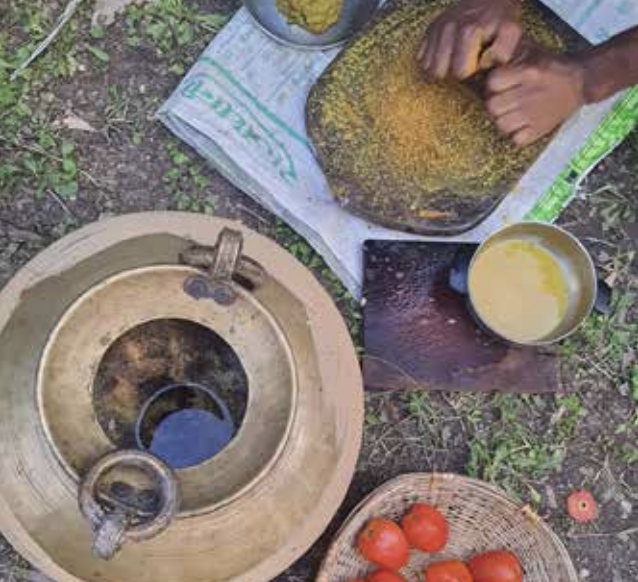
A: Authentic village food traditions can adapt well to city kitchens. Many working women consciously recreate heirloom recipes using modern equipment, preserving cultural memory and passing it on to the next generation. While electric tools make cooking practical, traditional vessels and methods like the sil batta, lohey ki kadhai and slow cooking add depth, texture and nourishment that are difficult to fully replicate. Factors such as mountain climate, water and altitude also shape flavour and appetite. Since food is deeply tied to geography and weather, not all traditional dishes suit every environment, which is why I curate menus mindfully for each place.
A: Authentic village food traditions can adapt well to city kitchens. Many working women consciously recreate heirloom recipes using modern equipment, preserving cultural memory and passing it on to the next generation. While electric tools make cooking practical, traditional vessels and methods like the sil batta, lohey ki kadhai and slow cooking add depth, texture and nourishment that are difficult to fully replicate. Factors such as mountain climate, water and altitude also shape flavour and appetite. Since food is deeply tied to geography and weather, not all traditional dishes suit every environment, which is why I curate menus mindfully for each place.
Q: What cooking knowledge or ingredients did you learn only after marriage and not from your mother?
A: Cooking has been my first love since childhood, shaped by watching my parents cook instinctively and growing up surrounded by familiar aromas. At the time, I didn’t fully realise how special our Garhwali cuisine from Uttarakhand was. It was only after moving to Rajasthan for college and later marrying into a Jat family in Ghaziabad that I began to see it with fresh eyes — simple, unpretentious, yet deeply rooted in flavour and memory.
A: Cooking has been my first love since childhood, shaped by watching my parents cook instinctively and growing up surrounded by familiar aromas. At the time, I didn’t fully realise how special our Garhwali cuisine from Uttarakhand was. It was only after moving to Rajasthan for college and later marrying into a Jat family in Ghaziabad that I began to see it with fresh eyes — simple, unpretentious, yet deeply rooted in flavour and memory.
Reconnecting with regional ingredients like the many varieties of rajma, jakhya used in tempering, and bhaang ke beej brought a deep sense of nostalgia. Dishes such as mooli ki thechwani, urad ka chainsoo, pindaloo ke gutke and rothana became reminders of home. After marriage, as I began cooking these foods on my own — sometimes failing, sometimes succeeding — I slowly grew into a proud custodian of my native micro-cuisine.
Q: How do festivals, weddings and pujas in Garhwal shape food practices and vegetarian/non-vegetarian preferences?
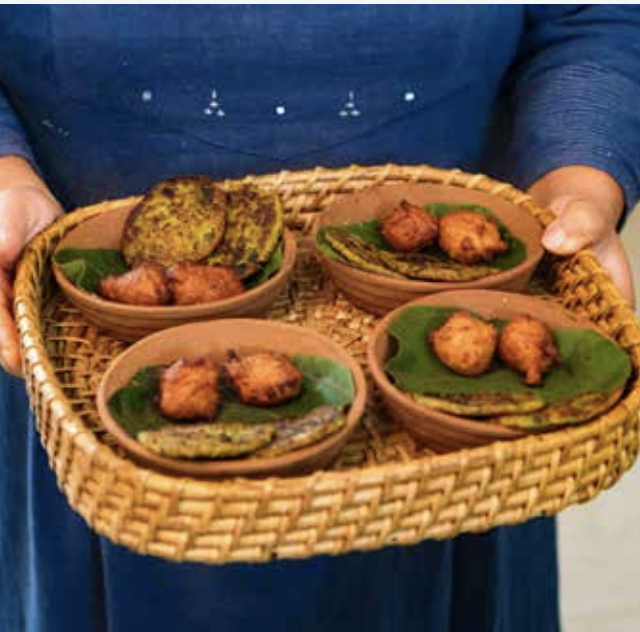
A: Festivals, pujas and celebrations in
Garhwal are traditionally marked by pakka
khaana-festive, mostly fried foods such as dal
ki pakodi, rothane, aarsey, swaaley and
halwa. Cooking during these occasions is a
deeply communal act, with men and women
sharing responsibilities. Women often grind
soaked lentils on the sil batta for pakodis,
while men prepare aarsa, the ceremonial
sweet made from rice and jaggery.
At weddings and large gatherings, the customary meal is simple yet soulful-dal-bhaat reflecting togetherness rather than display. Traditionally, this food was prepared by the Sarola Brahmins of Garhwal, a highly respected clan entrusted with cooking for royal and auspicious occasions. Food prepared by Sarolas, especially rice, was accepted by all communities, while they themselves followed strict dietary boundaries.
Non-vegetarian dishes are also part of wedding celebrations, especially on the day preceding the main pooja. Goat meat is cooked from head to tail in dishes like bhutwa, kachmoli and shikaar, reinforcing collective participation. Vegetarian dishes such as chainsoo, phanoo, dal-bhaat, kheer, and halwa remain equally central. Sweets like rothane and aarsey, along with items like utti, jhoonga, and regional salts, are lovingly prepared and sent home with guests as auspicious offerings.
Q: Which are the dishes which should be there in iconic restaurant across the country and dishes which cannot be recreated outside the mountains and why?
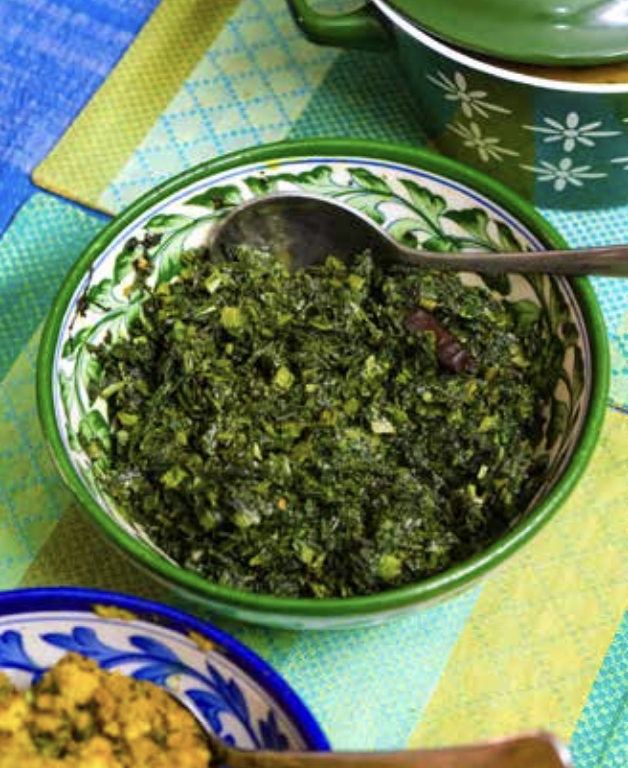
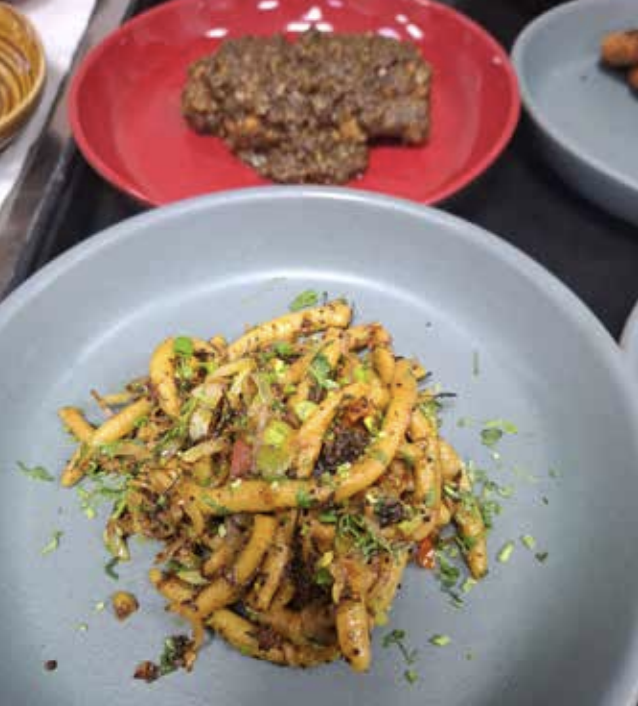
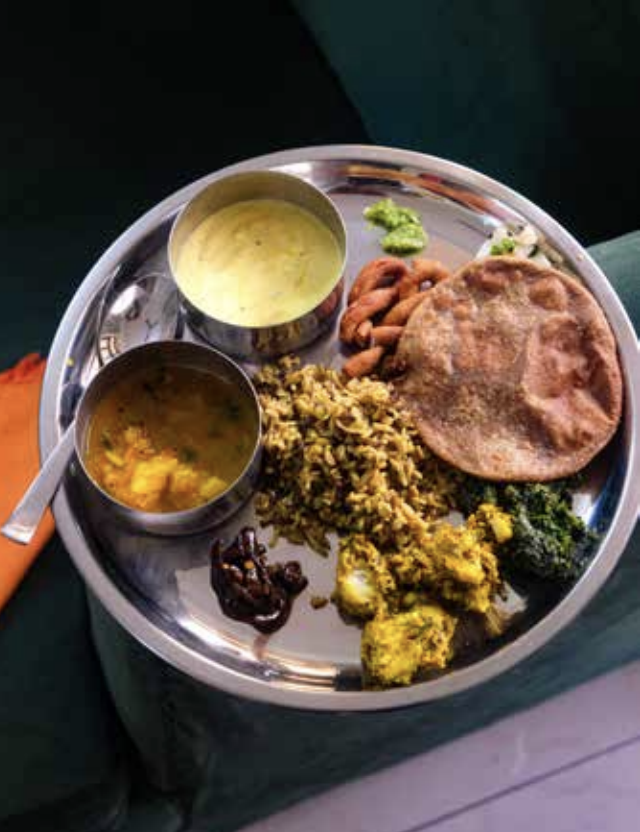
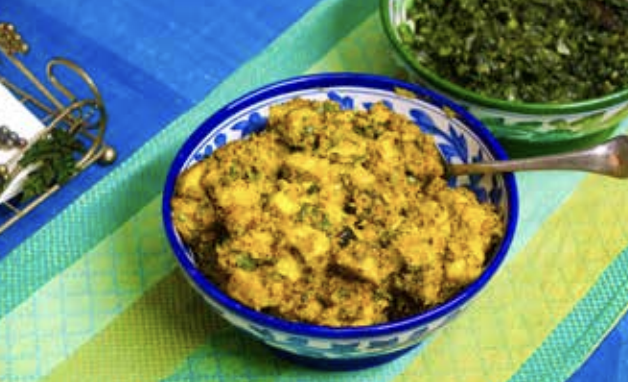
A: According to me, the dishes that should feature in iconic Garhwali restaurants include shikaar, nimbu ka saan, chachiya and pisyun loon, gehet ka phanoo, bedu roti, chullu ki chutney, and jhangore ki kheer. These dishes represent the true everyday and celebratory flavours of the region and can be recreated thoughtfully in restaurant kitchens while still retaining their authenticity. However, there are certain preparations that are deeply rooted in the mountains and are almost impossible to recreate outside that context. Kachmoli, for instance, requires pulled meat from a goat that is slow-cooked over an open fire, a process closely tied to traditional methods and community cooking. Bhutwa, made from goat offals, carries flavours and techniques that may not appeal to or be accessible for everyone outside the region. Similarly, aarsey can be prepared elsewhere, but the version made in the mountain, using hand-pounded rice, has a distinctly different taste and texture that is hard to replicate. Another such dish is bhaddu ki dal, which is cooked in a traditional bell-metal vessel called a bhaddu. Available in different sizes depending on the gathering, this vessel allows the dal to cook slowly for hours, imparting a depth of flavour that is unique and unmatched outside the mountains.
A: According to me, the dishes that should feature in iconic Garhwali restaurants include shikaar, nimbu ka saan, chachiya and pisyun loon, gehet ka phanoo, bedu roti, chullu ki chutney, and jhangore ki kheer. These dishes represent the true everyday and celebratory flavours of the region and can be recreated thoughtfully in restaurant kitchens while still retaining their authenticity. However, there are certain preparations that are deeply rooted in the mountains and are almost impossible to recreate outside that context. Kachmoli, for instance, requires pulled meat from a goat that is slow-cooked over an open fire, a process closely tied to traditional methods and community cooking. Bhutwa, made from goat offals, carries flavours and techniques that may not appeal to or be accessible for everyone outside the region. Similarly, aarsey can be prepared elsewhere, but the version made in the mountain, using hand-pounded rice, has a distinctly different taste and texture that is hard to replicate. Another such dish is bhaddu ki dal, which is cooked in a traditional bell-metal vessel called a bhaddu. Available in different sizes depending on the gathering, this vessel allows the dal to cook slowly for hours, imparting a depth of flavour that is unique and unmatched outside the mountains.
Q: What is your overall experience and
views about Garhwali food?
A: Garhwali cuisine is a self-sufficient and deeply sustainable food system shaped by generations of lived wisdom. Rooted in what was grown, foraged, preserved, and stored, it prioritised nourishment over recognition. There was little urge to commercialise this food, often due to the quiet belief that its simple, rustic nature might not appeal to outsiders a hesitation born of limited exposure, not limitation.
A: Garhwali cuisine is a self-sufficient and deeply sustainable food system shaped by generations of lived wisdom. Rooted in what was grown, foraged, preserved, and stored, it prioritised nourishment over recognition. There was little urge to commercialise this food, often due to the quiet belief that its simple, rustic nature might not appeal to outsiders a hesitation born of limited exposure, not limitation.
Ironically, while Garhwalis are widely
represented in the global hospitality industry,
their own cuisine remains largely unknown.
Yet Garhwali food is robust, nutritious, and
inherently wholesome, built on hyper-local,
seasonal ingredients such as lentils, grains,
foraged greens, fermented foods, and
preserved produce that sustain life in the
mountains. Though traditional methods
using the chulha and sil-batta are
time-intensive, the cuisine adapts well to
modern kitchens without losing its essence.
As packaged foods and artificial flavours
overshadow micro-cuisines, it is time to
reclaim and pass on this heritage.
Introducing children early to these real
flavours ensures they remain part of both
palate and identity for generations.