admin

MOFO: THE SPEAKEASY TAVERN SOUTH GOA DIDN’T KNOW IT NEEDED

MOFO, GOAFrom Features Desk There are bars, and then there are destinations, places that whisper of secrets, lure you in with a hint of rebellion, and reward the curious with unforgettable nights. MOFO, tucked into the lush embrace of South Goa, is one such place.Born from the vision of Gaurav Bhardwaj, the force behind BENO Hospitality, MOFO marks a daring new chapter for the brand. For this venture, Bhardwaj has partnered with Tobias Carvalho, blending their shared passion for irreverence and refinement, to create something that is unlike anything South Goa has seen.But MOFO is not for everyone. And that is precisely the point.A Bar You Can’t Stumble Upon Hidden off the beaten paths, MOFO doesn’t announce itself with neon or noise. There are no signs pointing the way. You won’t find it by chance after a beach crawl. Instead, entry comes with a sense of initiation: a direct message on Instagram, a whisper from someone who has already walked through its doors, or the good fortune of being invited. This exclusivity isn’t pretension, it’s a filter, ensuring that every face inside belongs to someone who gets the spirit of MOFO.An Attitude More Than a Space MOFO is less about what it is and more about how it makes you feel. Step inside and the mood shifts, retro nostalgia intertwines with industrial chic, shadows and light play across the walls, and the air hums with a playlist that drifts from indie to jazz to deep house. The tavern aesthetic feels familiar, but then twists into something sharper, cheekier, more daring.The food continues that narrative. Elevated tavern fare drawn from across the world lands on the table with Goan nonchalance and international swagger. Canadian poutine sits comfortably alongside keema pav, reminding you that indulgence is a universal language.And then there are the drinks, the true mischief makers. MOFO’s bar is a playground of mixology where milk washes, fermentations, and smoke infusions flirt with hyper-local ingredients. Signature cocktails are bold, unapologetic, and just the right amount of arrogant, because anything less wouldn’t suit the name.The Philosophy of the Unapologetic MOFO exists on a simple principle: break the rules, but do it beautifully. It’s irreverent without being careless, refined without being stiff. At its heart, MOFO is a space where contradiction becomes connection; a cheeky wink wrapped in sophistication. Guests leave feeling both like insiders and outlaws; part of something that will never be mass-produced, or watered down.

MOFO: THE SPEAKEASY TAVERN SOUTH GOA DIDN’T KNOW IT NEEDED Read More »

INDIA’S LEAD IN AIRPORT NON-COMMERCIAL REVENUE GROWTH

Sunil Tuli President of APTRASunil Tuli, President of the Asia Pacific Travel Retail Association (APTRA) & Group Chief Executive, King Power Group (Hong Kong) shares his perspective on the importance of travel retail within the Indian aviation industry.The Travel Retail and Duty Free market in India is the fastest growing in the global industry. The sector plays a critical role in the country’s aviation market, providing essential non-aeronautical revenue for airports and playing a pivotal role in the government’s ambitions for growth. The surge in the middle classes and in Gen Z constitute a powerful and appealing consumer target base for luxury brands, airlines and airports. The increasing demand for air travel from consumers keen to travel the world has also made India a priority source market for tourists in many countries who are keen to invest in-market to attract even greater numbers of Indian visitors.The number of operational airports across the federation has more than doubled from 74 in 2014 to 157 in 2024, and the government claims that this could increase to almost 400 by 2047.India’s Public-Private Partnership (PPP) model is further expanding the number of new airports and airport expansions, with over a dozen currently operating this model, and the Ministry of Civil Aviation is developing PPP modalities for the privatisation of 25 airports under the National Monetization Pipeline plan. The government’s long-term strategic planning programme is a comprehensive, joined-up approach that aims to develop transport infrastructure by recognising the interdependence of air, road, rail and water transport. Aviation is a key priority and is founded on the UDAN policy, rapidly expanding domestic air travel accessibility to the wider population. Building on the successful expansion of major airports, this policy has significantly increased connectivity to smaller Tier 2 and 3 cities and remote areas, making flying an everyday convenience accessible to a much larger proportion of the population. Traffic totalled 376.4m in FY2024 (domestic and international) Non-metro airports account for nearly 40% of total passenger traffic, with 146 million passengers in FY24. Outbound travel is projected to reach 52 million by 2029, with a CAGR of 11.5% The ambition to provide financially viable regional flight routes with capped airfares is inevitably complex in its influence on the market, but these routes aim to connect over 100 smaller airports in towns to India’s major cities. This also includes seaplanes and helicopter services. Similarly, the National Air Cargo Policy has aided the development and expansion of the country’s cargo operations, strengthening India’s position as a logistics powerhouse and, linking with the huge focus placed on the technology sector and education – especially in expanding the female workforce- is facilitating the rapid growth of e-commerce. One remarkable example of the success of the strategy is the fact that the comprehensive planning and new thinking behind India’s growth of its aviation system has resulted in 15% of India’s pilots being female, far above the global average of around 5%.Government initiatives like UDAN and regional airport privatisation are unlocking new markets, with non-metro airports now accounting for nearly 40% of total passenger traffic. Outbound travel is also surging, with international departures expected to reach 52 million by 2029, positioning India as the fastest-growing source market in South Asia. The expansion is unlocking new market access and bringing emerging traveller segments into the market and influencing retail trends from Dubai to Denpasar. While India’s growth is clearly impressive, it is rising from a relatively low base and, in everything from earnings per capita to annual passenger numbers and flights per capita, the country still has far to go to overtake China, for example – but it is a huge country with an increasingly affluent, young population that prioritises international travel and discovery. India’s airports – transforming capacity and the passenger experience Central to the country’s aviation focus is the positioning of India’s major airports as hubs connecting the East and the West. The international airport experience has been transformed in India, led by stunning locations such as Delhi Indira Gandhi International Airport (profiled in Airport World, Issue 2, 2025) where operator DIAL has developed what it describes as ‘a bigger, better, smarter, and future-ready’ airport by blending a capacity of 100 million per annum (with the potential to rise to 140 million) with quality in its ASQ award-winning passenger experience. The airport has a continuing programme of major developments planned for the next decade to strengthen its role as India’s ‘flagship hub’.Similarly, Bengaluru International Airport has created an even more expansive transformation, setting a global benchmark with new levels of customer service in the remarkable T2 – the ‘terminal in a garden’ – that shares a stunning celebration of the city’s culture, heritage and people. Major investment developments at Mumbai, Chennai, Bengaluru, Kolkata, and Hyderabad are also strengthening India’s ambition to be a competitive hub to the GCC. Leading the way for infrastructure essential to achieve India’s growth ambition is Navi Mumbai, the largest of seven major new population centre developments, supported by a new airport, Navi Mumbai International Airport, that will start operating commercial flights in the next few months following its official inauguration in June. With an initial capacity of 20 million passengers, it will expand to 50 million by mid-2029 following the addition of another terminal and runway. Subsequent planned phases will reach an eventual goal of 90 million pax by 2036. Jewar Airport, Noida, with six runways planned, is envisioned to become India’s largest airport and, though delayed, the first phase is scheduled to open soon and will help ease the pressures on capacity at Delhi Indira Gandhi International Airport.Airline growth In tandem with the country’s transport policy, India’s airlines leading the global industry in aircraft orders to utilise those airports, collectively placing orders for approximately 1,700 aircraft to be delivered by 2030. Last December, Air India augmented its existing mandate of 470 planes by an additional 100, reflecting its confidence in the long-term market. With new airports and new aircraft come new travellers – including an anticipated

INDIA’S LEAD IN AIRPORT NON-COMMERCIAL REVENUE GROWTH Read More »

FROM FARM TO FORK – UNICO’S VEGETARIAN VISION

Unico,Gurugram From Features Desk UNICO, meaning “the only one” in Spanish, began with the return of a young, well-travelled entrepreneur to India. He did not bring back souvenirs but ideas gathered from the world’s finest kitchens, extraordinary dining rooms and unforgettable hospitality experiences. He envisioned something India had not yet seen, a refined, plant-forward European Mediterranean restaurant that brought together luxury, purity and memory.The vision was personal. He wanted to create a place where the food was thoughtful and indulgent, where hospitality was heartfelt, and everything served was something he himself would love to eat. Not just another vegetarian restaurant but a bold reimagination of what plant-forward dining could look like in India.Crafting a Culinary Identity Soon, the vision attracted a team of like-minded pioneers who shared the same values. Among them were Sushant Vatsyayan, a passionate hospitality leader who believes food is only half the story and service is what makes it whole, and Chef Richa Johri, an award-winning chef known for her fearless and disruptive spirit in the kitchen.She is celebrated as one of the most influential chefs in India. Together, they formed the core of UNICO, a team not bound by trends but by a single conviction to create the only one. The team began by studying the bustling landscape of NCR, a region brimming with restaurants and cafés that open by the dozen every week. They observed a common thread. While good food and ambience were abundantly available, service was often treated as an afterthought. They also realised there was no high-end casual dining destination serving fully vegetarian European Mediterranean cuisine.These insights became the foundation. UNICO would stand apart as a luxurious yet approachable dining experience, fully vegetarian and built on impeccable hospitality.Designing the Experience After careful research and exploration of neighbourhoods, the team chose Global Foyer Mall on Golf Course Road in Gurugram as the ideal location.Surrounded by IT offices, luxury apartments and a cosmopolitan community, the location offered both visibility and accessibility. More importantly, it gave the restaurant a chance to become a central hub, a gathering space for food lovers, professionals and families alike.The next challenge was to design a space that truly embodied UNICO’s ethos. The team turned to the Mediterranean for inspiration, choosing Moorish architecture as the guiding style. Elegant and less explored, it resonated with the brand’s identity of rarity.The design brief was clear. The space had to look and feel like the only one. It had to feature a fully transparent kitchen to build trust and showcase artistry. Interiors needed to be warm, detailed and aligned with the European Mediterranean narrative. The design team’s early drawings laid the foundation. Slowly, the vision turned into blueprints and blueprints turned into reality. UNICO began to take shape not just as a restaurant but as a destination.A Kitchen with a Philosophy While the walls were being built, the menu, the heart of UNICO, was being crafted. The team rented a separate space where chefs could experiment, innovate and perfect dishes. For Chef Richa Johri, celebrated for her non-vegetarian creations, this was both an exciting challenge and an opportunity to redefine herself. She meticulously reimagined European Mediterranean flavours in a purely vegetarian format. The result was seasonal, unique and free from repetition. The kitchen philosophy was simple but demanding. Cooking had to be seasonal, respecting what nature offers at the time. All production was in-house, from milling flour and pressing oils to baking without eggs. Quality was uncompromising, with no shortcuts.The bakery became a revelation as eggless patisserie rivalled international benchmarks. The bar too was designed to challenge norms with no processed sugar, no waste and no ordinary drinks. Sweetness came naturally from ingredients, not additives.To anchor this philosophy, the bar was equipped with one of the world’s most precise coffee machines, the Black Eagle Maverick. Only six such machines exist in India. Guests at UNICO would therefore enjoy not only inventive cocktails but also some of the finest coffee in the country.Sustainability with Substance From day one, sustainability was not just a marketing line for UNICO. It was a cornerstone. The team had seen how many restaurants used sustainability as a trend to advertise without truly practising it. UNICO chose a different path.Farms at Sohna Road in Gurugram, just a few kilometres away, grow produce for the restaurant. A hydroponic system inside the restaurant provides fresh microgreens. In-house flour milling and oil pressing ensure purity and transparency. Over 850 live plants breathe life into the space daily, with partnerships ensuring fresh rotations of 1,200 plants every month. Dyson air systems maintain a pure dining atmosphere. All kitchen and bar waste is sent to the farm to feed cows, closing the loop of sustainability.This commitment made by UNICO is a future-forward model of what dining can and should be.What began as the vision of a young traveller has today evolved into a restaurant that redefines the vegetarian dining experience in India. UNICO is more than a restaurant. It is a celebration of European Mediterranean cuisine without compromise, a testament to great hospitality where service is as memorable as food and a commitment to sustainability where every detail reflects care for the future. It is a space of elegance and memory where every plate tells a story.UNICO opened its doors on Christmas Eve, December 24, 2024, not just as another dining option but as the only one. Today, it stands as a destination where tradition and modernity, luxury and sustainability, food and hospitality all meet in harmony.UNICO is more than a restaurant. It is a movement that insists food should not just be eaten but remembered.

FROM FARM TO FORK – UNICO’S VEGETARIAN VISION Read More »

MOLDOVA’S WINE STORY MEETS MUMBAI

Diana Moraru Architect of Indo – Moldovan Collaborations The story of wine in Moldova begins long before modern maps or trade routes. It begins in the soil, in the sun, in the gentle hills that cradle vines older than memory. Moldova is not just a wine-producing country – it is a wine country, where every bottle is a story, every cellar a cathedral of taste.For five thousand years, Moldovans have harvested grapes with the same reverence as one might write poetry – season after season, vintage after vintage, a dialogue between land and people.Here, wine is not just a drink. It is a ritual at family tables, a companion to song, a keeper of stories passed from grandparents to grandchildren. Local grape varieties (like Rară Neagră, Feteasca Regală, Viorica) have been cultivated alongside classics from Europe.Moldova’s vineyards have endured wars, changing borders, and forgotten centuries, yet they have always returned, stronger and more expressive Today, Moldova is writing a new chapter: modern cellars, award-winning wines and a growing place on the world wine map. And now, this story is crossing continents. A Land Shaped by Wine In this small country in Europe, every road seems to lead to a vineyard. Moldova has over 112,000 hectares of vineyards – the highest density of vines in the world. With over 50 indigenous grape varieties, alongside international classics, it is a treasure trove for explorers of taste.And then there are the cellars. Moldova is home to the largest wine collection in the world – Mileștii Mici, with nearly 2 million bottles stored in 200 kilometers of underground galleries. Cricova, another subterranean wonder, stretches for 120 kilometers and holds wines belonging to world leaders and royalty. Moldovan wines already travel to over 70 countries, winning awards at prestigious competitions from London to Tokyo. Yet, for India, this is a new frontier – a chance to be among the first in Asia to discover the depth and diversity of this ancient wine culture. Four Voices of a Nation’s Soul Every bottle of wine is a voice, and Moldova has many. But four of them are preparing to speak directly to India for the very first time. Cricova is a world beneath the earth. An underground city of wine, where sparkling wines are born in silence and cool stone. Its cellars hold treasures that have been guarded since World War II, including bottles rescued from Berlin. Purcari Wineries tells a story of nobility and resilience. Founded in 1827, Purcari was the first winery in Moldova to receive royal approval. Its legendary Negru de Purcari once delighted Queen Victoria and Nicholas II of Russia, and today it continues to win international gold medals. Novak Winery is the young rebel with an old soul. Novak is reviving grapes nearly lost to history – such as Alb de Onițcani, an indigenous variety unique to Moldova – offering Indian wine lovers the chance to taste something found nowhere else in the world. ExpertVin is a winery that embodies the broader spirit of Moldovan wine. An ambassador of everyday Moldovan wine culture, producing approachable blends that showcase the authenticity and warmth of Moldova’s terroir. The Journey to Mumbai Indian wine lovers will have the chance to experience this world of flavors and heritage firsthand. Cricova, Purcari, Novak and ExpertVin are coming together at ProWine Mumbai, on 31st October and 1st November 2025. This is more than a tasting, it is a cultural meeting. Indian consumers will taste sparkling wines born underground, heritage reds that once won medals in Paris, rediscovered native grapes given new life and fresh, vibrant blends designed for modern palates. Imagine: a crisp glass of Cricova’s sparkling to start the evening, followed by the velvet complexity of Purcari’s Negru de Purcari. Then, a Novak white made from a grape you’ve never heard of but will never forget, and finally, a warm, easy red from ExpertVin, the kind that turns strangers into friends.Wine, at its heart, is about connection. It connects us to the land, to the people who tend the vines, to each other across tables and borders. Moldova’s story is one of resilience, revival and pride and now, it seeks to connect with India’s vibrant community of wine lovers. A Toast to New Journeys Moldova has long been a hidden treasure of European winemaking. Now, its doors are opening wide. To the curious, to the explorers, to those who want to taste history and future in a glass- Moldovan wines are an invitation. So when you raise a glass at ProWine Mumbai, know that you are not just tasting wine. You are tasting a legend alive, a tradition reborn and the beginning of a friendship between two cultures.Here’s to Moldova, here’s to Mumbai, and here’s to the stories waiting in every sip.

MOLDOVA’S WINE STORY MEETS MUMBAI Read More »

TRADITIONALLY ROOTED GERMAN WINES – VDP SHOWCASING AT PROWINE MUMBAI 2025

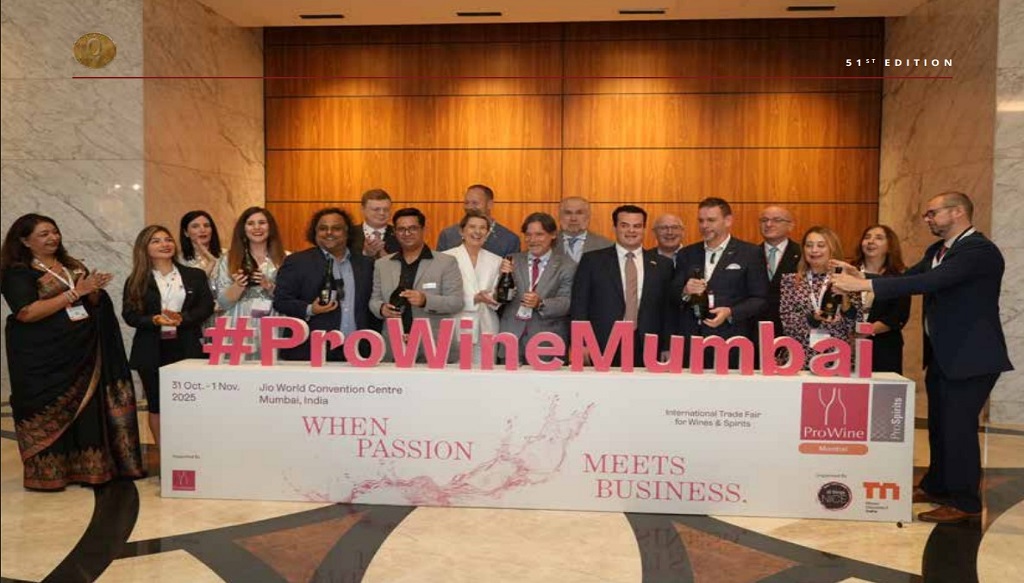
Malay Kumar Rout The founder of WSCI (Wine & Spirits Club of India) VDP.Die Prädikatsweingüter is the world’s oldest association of premium wine estates, uniting nearly 200 of Germany’s most skilled and dedicated winegrowers. Despite their diverse regions and winemaking philosophies, they share a common commitment to crafting wines that authentically express their unique origins. Each bottle is a distinct reflection of its maker’s passion and terroir, united under the globally revered symbol of the VDP.Eagle.Any wine bearing the VDP.Eagle signifies a promise to convey the specific vineyard character 18 and exceptional craftsmanship of one of the VDP’s elite members. This hallmark has elevated German wine to a position of international prestige and elite status, known for its unmistakable quality and individuality. Founded in 1910, the Verband Deutscher Prädikatsweingüter (VDP) represents about 3% of German wine production but includes up to 55% of Riesling vineyards, emphasizing sustainable viticulture and historic vineyard quality. The VDP’s private classification system, rooted in tradition and ecological stewardship, places rigorous quality standards on its members, shaping Germany’s global reputation for premium, terroir-driven wines.As the members prepare to showcase their finest selections at ProWine Mumbai 2025 being held on 31st October to 1st November at the Jio, World Convention Center, Mumbai, here the importers gain a unique opportunity to engage with a concentrated portfolio symbolizing authentic German quality and innovation. “I think it’s great that 10 wineries from our association (VDP.Die Prädikatsweingüter) will be present at Prowine Mumbai for the first time. They come from seven wine regions in Germany and thus offer a great overview of what makes German wines so special: exciting Rieslings from the best origins and terroirs, surprising Pinot Noirs, and sparkling wines that are still an insider tip. Despite the individuality of the VDP wineries, the eagle on each bottle provides guidance. It is a guarantee of craftsmanship, tradition, and pioneering spirit. And it is recognized around the world as a prime example of German wine culture. Now the VDP eagle is landing in Mumbai, and I am sure it will find many fans.” Hilke Dalhem Co-President, VDP LIST OF WINNERIES TO EXPECT AT PROWINE MUMBAI 2025 B L A N K E N H O R N (Est. 1847) Pinot Noir, Gutedel, Pinot Blanc, Pinot Gris + others 22.10 acres in Baden, Schliengen Wines: 2020 SONNENSTÜCK, Schliengen Pinot Noir VDP.GG / 2021 ÖLACKER, Schliengen Pinot Noir / 2022 SONNENSTÜCK, Schliengen Chardonnay VDP.GG / 2024 Schliengen Chasselas Present in : Netherlands, Denmark, Switzerland, Belgium, USA A young winery with a long tradition, blending modern architecture with classic wine maturation in large wooden barrels. Certified sustainable with focus on elegant wines. “We want to give the wines the time they need before they come onto the market. We work close to nature, certified sustainable according to Fair’n Green, and appreciate elegant wines that suit every occasion.” — Martin Männer Martin Männer – [email protected] F Ü R S T L I C H C A S T E L L ‘ S C H E DOMÄNE (Est. 1774 | VDP Since 1914) 41% Silvaner, 12% Müller-Thurgau, 9% Pinot Blanc, 8% Riesling + others 73.30 acres in Franken, Castell Wines: 2024 Fürst Castell Silvaner trocken/ 2019 SCHLOSSBERG Casteller Silvaner VDP.GG / 2024 Cas “tell me” white / 2023 Fürst Castell Alabaster Weißwein Cuveé SPITZENWEINWeißwein Cuveé SPITZENWEIN Present in :Netherlands, Belgium, Norway, Korea, Singapore One of Germany’s oldest estates, pioneering Silvaner since 1659, owning monopole top vineyards on gypsum marl soils with sustainable practices.”Our wines have a clear line and pronounced single-vineyard character. We vinify mainly dry and puristic white wines focused on Silvaner, with longevity and concentration influenced by our unique terroir.” Peter Geil, Elisabeth Finkbeiner – [email protected] BASSERMANN-JORDAN (Est. 1718 | VDP since 1910) Riesling plus Pinot Blanc, Pinot Gris, Pinot Noir, Chardonnay & others 51.90 acres in Pfalz, Deidesheim Wines: 2018 Pierre brut nature (Chardonnay) Sekt / 2019 Ruppertsberg Spätburgunder / 2024 Deidesheim Riesling Kabinett feinherb / 2024 Forster Ziegler Riesling trocken | VDP.ERSTES GEWÄCHS® Diverse Riesling vineyards with 1/3 in top sites. Committed to organic viticulture and producing terroir-driven, expressive wines. “Natural, organic viticulture is the indispensable prerequisite for the subsequent, gentle and individual vinification. This gives us mineral, sustainable, storable, and highly aromatic wines.” André Jankowski, Tamara Fränzle – [email protected] KARL SCHAEFER (Est. 1843 | VDP since 1935) Riesling plus Pinot Blanc, Pinot Gris, Pinot Noir 17.60 acres in Pfalz, Bad Dürkheim Wines : N.V. Blanc de Blanc Brut nature Sekt/ 2022 Dürkheimer Spielberg “Schöne Anna” Spätlese/ 2022 Wachenheimer Gerümpel trocken / 2021 WEILBERG Ungstein Riesling trocken Historic estate with terraced vineyards on diverse soils, emphasizing organic cultivation and long maturation on lees. “We highlight variations in soils and maintain vineyard authenticity with organic farming. Our wines are true to origin, handcrafted, and honest, reflecting the best sites.” Nana von Nell, Richard Menzel – [email protected] KARTHÄUSERHOF (Est. 1335 | VDP since 1910) Riesling, Pinot Blanc 28.00 acres in Mosel, Trier-Eitelsbach Wines: Karthäuserhof BRUT Sekt / 2023 Karthäuserhofberg Riesling / 2023 KARTHÄUSERHOFBERG, Eitelsbach Riesling Kabinett / 2003 KARTHÄUSERHOFBERG, Eitelsbach Riesling Spätlese Present in : Norway, USA, Czech Republic, Italy, Sweden Eighth oldest winery globally, sole owner of monopoly vineyard KARTHÄUSERHOFBERG with legendary Riesling tradition and unique neck loop label.”We cultivate our extraordinary vineyard in harmony with nature, upholding a unique Riesling tradition. Our wines focus on minerality, precision, and freshness—clear, transparent, and full of race.” — Albert P. Behler Kevin Kleu – [email protected] MAXIMIN GRÜNHAUS (Est. 1882 | VDP since 1921) Riesling, Pinot Blanc, Pinot Noir 37.40 acres in Mosel, MertesdorfWines: 2023 ABTSBERG Maximin Grünhaus Pinot Noir GG/ 2018 ABTSBERG Maximin Grünhaus Riesling GG / 2020 HERRENBERG Maximin Grünhaus Riesling Spätlese/ 2023 Schloss Riesling Kabinett Present in : Great Britain, Switzerland, Norway, USA, China Monopole vineyard Maximin Grünhaus with VDP.GROSSE LAGE® sites and nearly 2,000 years of wine tradition. Unique castle architecture and sixth family generation stewardship.”Living and tasting sustainable, elegant Maximin Grünhaus wines is our philosophy. Tradition, joy, and commitment to nature inspire everything we do.” Maximin von Schubert,

TRADITIONALLY ROOTED GERMAN WINES – VDP SHOWCASING AT PROWINE MUMBAI 2025 Read More »

SOARING CEILINGS OF BENGALURU DUTY FREE AT TERMINAL-2

From Features Desk Two years ago, Terminal 2 at Kempegowda International Airport opened its doors and instantly redefined what an airport could feel like called Terminal in a Garden for its architecture draped in greenery and inspired by the city’s botanical soul, it quickly became more than a point of transit. For Bengaluru Duty Free, it marked the beginning of a new chapter, one that has since unfolded with exclusive launches, bold campaigns, and an outpouring of appreciation from travellers across the world. International recognition has followed too. The Moodie Davitt Report spotlighted Bengaluru Arrivals Duty Free with the question of whether it might be the world’s best, a moment of pride that reflected both design excellence and retail innovation.From the moment a passenger steps into Terminal 2, the design sets the tone. The departures store, spanning 1100 square meters, feels like a glass pavilion with sweeping light and patterns that echo Lalbagh Gardens. The arrivals store, spread across 1200 square meters, borrows its character from Bengaluru’s skyline and urban buzz.Together, they have already welcomed and catered to over five million passengers in 2024 alone. This is not retail squeezed into a terminal, it is retail as a living, breathing extension of the city itself. Travellers often describe this space with a sense of pride. Online, many share how it feels to walk out of immigration and be greeted with the words “Welcome to Bengaluru” under soaring ceilings and local art installations. It is, as one frequent flyer put it, a place that gives you goosebumps.With Terminal 2 our attempt is to redefine the travel experience in India, and Bengaluru Duty Free is at the heart of this transformation. By placing Indian and global brands on the same stage, we are shaping a retail journey that is both aspirational and inclusive. Looking forward, our focus is on scaling this success and positioning BLR Airport as one of the world’s most admired travel hubs. – Airport Statement A key highlight of these two years has been the way Bengaluru Duty Free has placed Indian products on the global stage. While international spirits, perfumes, and chocolates remain a core part of the mix, Terminal 2 has given homegrown names the space to shine just as brightly. In 2024, Bengaluru Duty Free exclusive launches introduced Amrut Nativity on 14 February 2024, Paul John Single Cask on 30 May 2024, Rampur Vintage Select Casks on 11 September 2024, Indri City Series on 7 October 2024, and Yaksha Blue Moon on 11 December 2024. In 2025, travel exclusive first in India launches are led by Godawan Triple Cask Travel Exclusive on 15 June 2025 and Amrut Expedition on 21 August 2025, the latter being India’s most expensive single malt whisky release yet. By placing these offerings alongside global icons, Bengaluru Duty Free has not only expanded choice but also highlighted India’s evolving identity in the world of luxury and lifestyle.Bengaluru Duty Free brings together India’s finest award-winning spirits. Paul John shines with Nirvana, a Gold Medalist with 22+ global wins, and its ultra-rare Single Cask Exclusive. Amrut continues its legacy with Fusion, crowned “World’s Best Whiskey” 2024, and Triparva, a Gold Medalist in the USA. Indri adds prestige with its 50+ award-winning Triple Cask and the Bengaluru-exclusive City Series. Godawan has also made its mark internationally, winning Best Single Malt – Godawan at the 2024 International Taste Institute Awards, Gold for Single Malt F&S and R&R at the Spirits Awards 2025 by Monde Selection, and Triple Platinum at the MLSA Competition 2025.“BIAL and Avolta have created something truly unique—a duty free that not only sells but tells the story of Bengaluru and India. Looking ahead, our goal is to continue blending international excellence with local pride, introducing more homegrown products to the global stage and creating experiences that make every journey unforgettable” – David Grady The shopping journey here has been carefully crafted to go beyond transactions. The iconic elephant installation in the store has become a photo worthy symbol of Terminal 2, blending sense of place with retail storytelling. Technology plays a crucial role in making the journey immersive. Digital touchpoints guide travelers through categories and help them explore with ease, including Fragrance Finder, Whisky Finder, and Virtual Make up Try on. These devices understand customer requirements and suggest products based on customer profiling, so every traveller finds something personal and memorable. Campaigns have also played a major role in building excitement. The Q4 2024 Raining Gold campaign struck a chord with passengers and brought a festive sparkle to the duty-free experience. There were 16 total winners. The first prize was 200 grams of 22k gold, and the remaining 15 winners received 90 grams each. Building on this success, Q4 2025 is set to raise the bar further with multiple campaigns that offer customers more opportunities to win prizes, and that reinforce Bengaluru Duty Free as more than a store. It is an experience to look forward to.The response from passengers has made it clear that this balance resonates deeply. From reviews to enthusiastic posts on social media, travelers consistently highlight how refreshing it feels to see Indian products celebrated on such a visible platform. Many describe the experience as world class yet unmistakably local. Looking back, the milestone is not just about striking design or exclusive categories introduced. It is about the shift in perception that Bengaluru Duty Free has driven. By showcasing India’s own talent and products to millions of international and domestic travelers, it has placed the country’s brands firmly in the global spotlight.Two years on, it is clear that Bengaluru Duty Free has achieved something rare. It has created a destination inside a destination, an airport space that travelers actively look forward to visiting. It stands as proof that retail in India can be both global in sophistication and proudly local in soul. With year-on-year growth at an impressive pace, placeholder for growth percent year on year, and with more launches and campaigns in the pipeline, the journey ahead

SOARING CEILINGS OF BENGALURU DUTY FREE AT TERMINAL-2 Read More »

NEDERBURG SHINES WITH REGENERATIVE PURPOSE

From Features Desk Each year, Tim Atkin MW’s South Africa Special Report sets the tone for the global perception of Cape wines. Now in its 12th edition, the 2025 report is among his most comprehensive to date: a 319-page volume, drawn from tasting 2 000 wines across 397 wineries, and outlining ten key findings on the state of South African wine.This year, Atkin reserved special praise for the industry’s shift towards regenerative farming. He highlights how producers are embracing soil health, biodiversity, precision viticulture, and integrated pest management as essential tools to address climate challenges and secure long-term vineyard resilience.Nederburg – A Regenerative Leader Nederburg, a WWF Conservation Champion since 2020, has long been ahead of the curve. From pioneering water stewardship to extensive land rehabilitation, the winery views sustainability as a never-ending journey. Practices such as planting cover crops, farming with drought-resistant rootstocks, and applying precision irrigation tools have already delivered water savings of up to 40% since 2011.Beyond water, the team actively restores natural habitats, removes alien vegetation, harvests rainwater, and recycles winery wastewater through advanced systems. In the vineyards, insectary flora support natural pest control, while compost and biochar—produced from grape waste and plant matter—are used to enrich soils and accelerate carbon sequestration. Importantly, Nederburg extends these learnings to its grower partners, amplifying its impact across the supply chain.“For us, soil is life,” the team explains. “By nurturing the land, we not only lighten our footprint but also grow better fruit, leading to wines that truly express their origin.”Awarded Wines in the 2025 Report Nederburg’s commitment to vineyard and cellar excellence translated into strong results in Atkin’s 2025 report, with seven wines scoring 90 points and above.Our pick of the Nederburg wines: Heritage Heroes The Anchorman Old Vine Project Chenin Blanc 2024 – 90 points.Swartland “Fermented and aged in older wood and 30% amphoras, this is a welcome sign of some new ideas at Nederburg. Lightly wooded, textured and exotic, it has a pleasing combination of pineapple, guava and citrus fruit flavours, old vine concentration and supporting acidity.”Nederburg Private Bin Two R163 Cabernet Sauvignon 2022 – 93 points Paarl “My pick of the current line-up of Nederburg reds, this is a new-oak aged Cabernet Sauvignon from the slopes of Simonsberg-Paarl. Bold, dense and well-structured, it has appealing mocha and coffee bean aromas, plum, damson and blackcurrant pastille flavours and a sense of purpose and self-confidence.”Nederburg Private Bin Two Centuries Cabernet Sauvignon 2022 – 92 points Coastal “Based on grapes from Stellenbosch, with a small Paarl component, this is a structured red that has the concentration to carry its 100% new wood. Appealing dark chocolate and eucalyptus aromas lead you into a palate of damson, cassis and blood orange complemented by fresh acidity and firm tannins.”Nederburg The Winemasters Noble Late Harvest 2024 – 93 points Western Cape “Rich, sweet and complex, this is a 100% botrytis-affected blend of Muscat de Frontignan, Chenin Blanc and Weisser Riesling from Darling and Stellenbosch-Paarl. Exotic and intense, it has layers of passion fruit, honey and apricot, subtle volatility, supporting acidity and a clean, tangy, well-balanced finish.”A Path Forward Atkin’s 2025 report underscores that regenerative farming is no longer optional but central to the future of South African wine. Nederburg’s results confirm that sustainability and excellence go hand-in-hand—proof that wines made with care for the earth can shine just as brightly in the glass.

NEDERBURG SHINES WITH REGENERATIVE PURPOSE Read More »

DISTILLED WITH RAINWATER – THE STORY OF CHERRAPUNJI GIN

From Features Desk In the rain-soaked hills of Meghalaya, where clouds spill over cliffs and forests drip with monsoon memories, a quiet revolution is underway. It comes not in the form of policy or protest, but in a steel bottle filled with liquid craft. This is Cherrapunji Eastern Craft Gin, India’s first premium gin distilled from rainwater, and the country’s first spirit from the Northeast to be exported to international markets.Behind this remarkable creation is Mayukh Hazarika, a Shillong native and the founder of Raincheck Earth Co. His vision was deceptively simple: to create a gin that belongs to its place, both in flavour and in philosophy. “Our approach to distilling, bottling and sourcing is rooted in sustainability,” Hazarika says, “we wanted to show that craft can be innovative without being wasteful.”Rainwater in a Bottle Cherrapunji and nearby Mawsynram are known to be the wettest regions in the world, receiving an astonishing 11,872 mm of rainfall annually. For centuries, this abundance has been romanticised in postcards and geography textbooks. Hazarika chose to capture it in a glass, or rather, in steel. The gin is distilled from harvested rainwater and stored in 100-kilolitre tanks made of corrosion-resistant steel, ensuring purity and sustainability.Unlike most global brands that rely heavily on groundwater, Cherrapunji Gin embraces the idea of climate responsiveness. Its rainwater base is paired with a dozen native botanicals sourced within a few hundred kilometres of the distillery: the GI-tagged ‘Khasi mandarin’ and ‘Kaji Nemu’ (Assamese lemon) lend bright citrus notes, Himalayan juniper berries form the smooth base, and the addition of wild peppercorns, black and green cardamoms, and smoked tea from Mizoram’s Lushai Hills gives it layers of spice, warmth, and a smoky aftertaste. The result is a spirit that feels both local and world-class; rooted in terroir yet universal in appeal. Steel Over Glass Perhaps the boldest design choice lies not in the recipe but in the packaging. Cherrapunji Gin comes in a reusable, military-grade steel bottle weighing barely 158 grams, nearly two-thirds lighter than standard glass bottles of the same size. This reduces freight emissions, eliminates breakage, and turns packaging into a tool rather than waste. “There’s no reason packaging has to be discarded,” Hazarika insists, “If someone reuses the bottle every day, we’ve succeeded.”At a time when even premium global spirits are still wedded to ornate glass, this move signals a radical rethink. It’s not sustainability as a marketing claim; it’s sustainability as product design.From Shillong to the World Launched in 2021, Cherrapunji Gin has already carved a space in the global spirits conversation. It is available across the European Union and soon in Japan, Thailand, and the UK. The brand has collected 14 international medals in just two years, including a Double Gold Medal at the 2025 SIP Awards in California, the world’s only major spirits competition judged exclusively by consumers. Out of 1,200 entries from 60 countries, fewer than 2 percent earned the accolade. For Hazarika, this recognition is personal: “To have our gin, rooted in Meghalaya’s rain and local identity, resonate with everyday drinkers in California is a reminder that authenticity and craft can connect across cultures.”The brand’s innovative model has also caught academic attention. The Indian Institute of Management has developed a case study on Raincheck Earth Co., citing it as a pioneering example of blending sustainability with premium craft. More Than a Drink Cherrapunji Gin isn’t merely another entrant into India’s growing craft spirits market, it is a distilled story of its geography, rain bottled, biodiversity preserved, and culture celebrated. Its citrus-forward, smoky-earthy profile makes it versatile: enjoyable neat, with a tonic, or in cocktails where its complexity shines. As the global spirits industry grapples with sustainability, Cherrapunji Gin suggests a playbook that feels both Indian and forward-looking; local sourcing, climate-conscious design, and storytelling that doesn’t imitate but innovates. In a world often thirsty for authenticity, perhaps the wettest place on Earth has offered just the drink to quench it.

DISTILLED WITH RAINWATER – THE STORY OF CHERRAPUNJI GIN Read More »

DIAGEO’S WORLD CLASS INDIA: ELEVATING THE ART OF BARTENDING SINCE 2011.

From Features Desk Launched by Diageo in 2009, World Class was created to celebrate cocktail culture and elevate bartending into a true art form. More than a competition, it gives bartenders a global stage to showcase creativity, craftsmanship, and innovation, while championing diversity, sustainability and positive drinking. By placing Diageo’s World Class portfolio at the heart of exceptional drinking experiences, it inspires people to drink better, not more and drives a deeper appreciation for modern mixology. Since its debut in India in 2011, World Class has become the country’s most prestigious bartending platform treating bartenders like the rockstars they are and unlocking careers that transcend borders. The very first Indian winner, Hemant Pathak, is now General Manager at Junoon, a Michelin-starred restaurant in New York a testament to how this stage can transform talent into global success stories. The Competition: A Platform for Excellence World Class India remains the country’s only bartending competition that celebrates cocktail craftsmanship at the highest level. Each year, the program unfolds through citywide roadshows, training sessions and mentorships designed to nurture the next generation of mixology stars. In the last three years, World Class India has exploded with 120% year-on-year growth, a 30% rise in female participation and stronger, more diverse talent than ever before.The country’s only platform for World Class bartending now draws 700+ bartenders across 10 cities with 425+ entries distilled to a Top 100, then a thrilling Top 16, before the ultimate national final. More than a competition, World Class India champions creativity, inclusion, and innovation, welcoming rising female talent, fresh regional voices and bartenders with disabilities. With every shake and stir, it continues to elevate India’s cocktail culture – proving the nation’s bartenders are true world-class rockstars. Aashie Bhatnagar, 2023 World Class India Winner, reflects on her journey: “Preparation goes far beyond the glass. I spent months researching flavour profiles, understanding the history of spirits, and rehearsing every detail of my presentation. It’s about storytelling as much as it is about technique.” Minakshi Singh, World Class Global & India Jury adds: “World Class is not just about making the perfect drink it’s about vision. We want to see bartenders who can express culture, sustainability and personality through every cocktail. The true winners are those who can connect with people as much as they wow them with technique.” From Industry Stage to Consumer Festival Once the champion is crowned, the excitement spills beyond the trade into a full-fledged consumer spectacle. The World Class Cocktail Festival brings India’s top bars to life, offering cocktail enthusiasts a chance to sip, savour, and celebrate the finest serves from the country’s best talent. This energy culminates in the World Class Cocktail Festival a two day ticketed extravaganza where cocktail culture meets music, art, and culinary excellence. Here, consumers step into a world inspired by Diageo’s Reserve portfolio, enjoying: World Class Bar takeovers by past winners, alumni, and global icons. Interactive brand workshops where guests learn to craft their own elevated cocktails. A curated food experience featuring top restaurants pairing small plates with signature cocktails. Live performances from celebrated artists such as Edward Maya, Tech Panda x Kanzani, and more. The scale is staggering over 2500 attendees, 5800+ cocktails, a 19 million+ social media reach, and 1.8 million+ engagements. From intimate masterclasses like the Don Julio 1942 session with global ambassador Karina Sanchez to the debut of the World Class x Speed X Home Bar, every touchpoint is designed to inspire. The Legacy Continues This September, Bartender of the year Navjot Singh will carry the country’s pride to Toronto, competing against winners from 55 nations on the global stage. His journey is a reminder of what World Class India stands for celebrating cocktail culture, inspiring exceptional artisans and proving that India’s bartending talent is ready to take on the world. From its humble beginnings in 2011 to today’s record-breaking festivals, World Class India remains more than a competition it’s a cultural force, building credibility for Indian mixology and encouraging everyone to drink better, not more. Let’s Make It World Class!

DIAGEO’S WORLD CLASS INDIA: ELEVATING THE ART OF BARTENDING SINCE 2011. Read More »

VANAHA GIN – DISTILLED IN GOA, DESTINED FOR THE WORLD “FEATURE DESK”

From Features Desk Vaniitha Jaiin, one of India’s foremost voices in the premium and luxury alcobev space, widely recognised among the Top 10 Women of Wine in India and internationally celebrated as an authority on wines and spirits, has announced the launch of Revelry Distillery, a craft-driven distillery in Sattari, India, dedicated to creating small-batch, world-class spirits that honour depth, origin and detail. Located in the lush Sattari region of North Goa, Revelry Distillery is purpose-built to nurture spirits rooted in terroir, sustainability and precision. Designed with global sensibility and equipped with state-of-the-art distillation technology, Revelry is more than a facility, it is a creative sanctuary where botanicals meet science, and intuition meets intention. With a strong focus on scalability (approximately one million bottles annually), the distillery houses cutting-edge infrastructure, including a dedicated R&D lab and a meticulous spirits-making system. The five-step gin-making process includes Botanical Maceration, Copper Pot Distillation, Vapour Infusion, Cold Vacuum Distillation and Staging. With a customised Hagyo pot still from Hungary, Revelry ensures exceptional flavour consistency and scale. As one of the few distilleries globally to employ.Copper Pot distillation, Vapour Infusion and Cold Vacuum Distillation in tandem, it is elevated by advanced technologies enabling real-time monitoring and data-driven precision. From copper stills calibrated for gentle extraction to bespoke ageing and blending processes, every detail is curated to enable the creation of spirits with soul. “Revelry is built on a foundation of authenticity, storytelling and meticulous craftsmanship, paving the way for India to establish itself as a key contender in the premium global spirits market,” says Vaniitha Jaiin, Founder & Chief Evangelist of Revelry Distillery. Introducing Vanaha Gin: A Spirit with Soul At the heart of this new venture lies its debut creation — Vanaha Gin. Inspired by the tranquillity and biodiversity of Indian forests, Vanaha (Vana वन = forest; Aha आहा = epiphany) is a Sipping Gin that seamlessly combines bold character with nuanced depth and forest-born elegance.Distilled from the forest, made for the world, Vanaha is a 100% natural gin with no artificial flavours. It embodies the essence of the forest and presents a layered, expressive profile that celebrates India’s rich natural heritage while appealing to the modern connoisseur who seeks sophistication, whether in company or solitude. Vanaha is a unique ‘forest to bottle’ gin that builds a distinct identity by combining heritage, quality and complexity to create an aspirational presence in the market. Crafted with Precision and Purpose Crafted with deep reverence for nature, Vanaha holds the rhythm of the forest – rich, layered and alive. It features a rare blend of 24 handpicked botanicals, including Deodar Wood, Patchouli, Cacao Nibs, Palash Flowers, Pine Tips, Assam Lemons, Wild Berries, Sikkim Mandarin, Orris Root, Angelica Root and Juniper Berries. Each botanical is selected for purity, provenance and its contribution to the gin’s earthy, woody and aromatic profile. Free from artificial additives, Vanaha is distilled to its purest essence.Elevated by Cold Vacuum Distillation – the first of its kind in India – this method preserves delicate aromatic notes, allowing Vanaha to stand out in aroma, flavour and finish. The combination of three distinct distillation techniques results in a smooth, layered spirit with floral, earthy, woody and subtly spiced undertones. Vanaha is best enjoyed neat over ice or in cocktails, offering a versatile experience for those who value ritual over rush.Intended for discerning gin drinkers and collectors, Vanaha appeals to those who appreciate depth and nuance, as well as to global, evolved Indian consumers seeking terroir-driven spirits that reflect provenance and purpose. “With Vanaha, we are not just launching a gin — we hope to usher in a quiet revolution in Indian spirits, where provenance meets purity, craftsmanship meets consciousness, and indulgence meets intention. We wanted to create a spirit that speaks to the modern connoisseur — someone who seeks depth, not dazzle; ritual, not rush. At its core, Vanaha is a celebration of India — its richness, its roots, and its rising global presence. Our vision is to build a world-class gin that proudly embodies the Make in India spirit and stands shoulder to shoulder with the finest international brands,” says Vaniitha. India’s Premium Spirits Market Finds Its Moment Vanaha arrives at a pivotal time for India’s spirits market. The Indian gin sector is projected to be worth $1,789.8 million in 2025 and is expected to grow to $2,952 million by 2032, with a CAGR of 7.4%. The premium segment alone is anticipated to expand from 20% to 45% of the total market – driven by an audience that values authenticity, craftsmanship and experiential indulgence. “With Revelry, we’re building more than a brand — we’re crafting a platform for Indian excellence in spirits. The focus is on quality, authenticity and global readiness. We believe India deserves its place on the map of world-class craft distillation,” adds Navvin Jaiin, Director, Revelry Distillery. Design That Speaks the Language of the Forest Vanaha officially launches on May 16, 2025, in Goa, the heartland of its inspiration and origin. Following its debut, it will gradually roll out across key metro markets, beginning with Karnataka. Priced at ₹2,400 for a 750ml bottle in Goa, Vanaha is presented in exquisitely crafted glass bottles adorned with illustrated labels that evoke its deep connection to nature. Cloaked in forest-green hues, the distinctive bottle silhouette conjures the mystique of a rare botanical elixir. At its heart lies an embossed Woodpecker, a striking symbol of the vitality of India’s forests and a tribute to Vanaha’s artisanal ethos. From the iridescent green of the bottle to the copper foiling, embossed details and textured finishing, every design element is as refined and intentional as the gin within – an invitation to savour a truly immersive forest-to-bottle experience.Vanaha Gin is not just a product, it is a movement. It invites connoisseurs to experience gin as a poetic form of self-expression and a mark of cultivated taste. With its earthy, woody, aromatic signature and depth in every sip, Vanaha is set to become a collectable for aficionados and a

VANAHA GIN – DISTILLED IN GOA, DESTINED FOR THE WORLD “FEATURE DESK” Read More »