admin

AN ODYSSEY OF INDULGENCE AND INNOVATION – SLINK BARDOT, MUMBAI “FEATURE DESK”

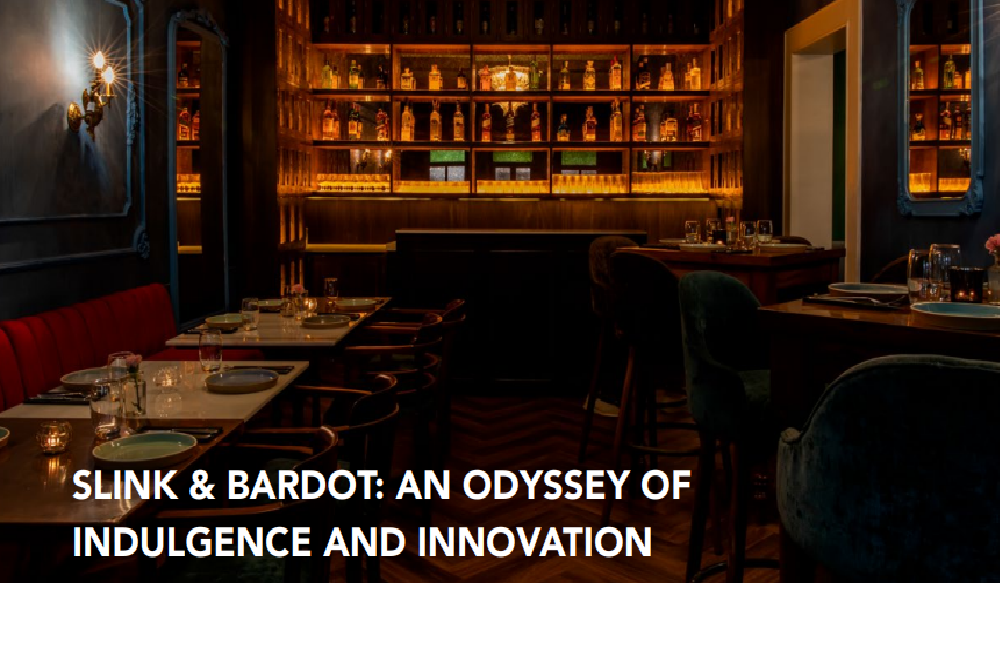
SLINK & BARDOT MUMBAI From Features Desk Slink and Bardot, tucked gently in the peaceful alleys of Worli Village, far from Mumbai’s traffic, there is a destination that’s more than just about food; it’s a lovingly created experience, a luxurious embrace with nostalgic warmth and a vibrant spark of unconstrained gastronomic skill. This cherished restobar has re-emerged with a brilliant new identity that elegantly blurs national boundaries and combines different customs to produce a moodboard of flavors that is both very familiar and excitingly broad. Slink and Bardot has established itself as Mumbai’s most delicious getaway with its redesigned worldwide fusion menu created by Executive Chef Ali Akbar Baldiwala and a cocktail program that opens like a series of fascinating travelogs. A Borderless Culinary Canvas The new menu at Slink and Bardot is essentially a wanderer’s journal, carefully recorded in the tongue of ingredients, novel processes, and strong gastronomic passion. Executive Chef Ali’s ideas rest on a basic balance, presenting an equally tempting range of vegetarian and non-vegetarian cuisine, each exploding with the sheer delight of discovery and commemoration of seasonal, quality ingredients, both local and imported.Start your culinary adventure with tiny dishes that tempt and surprise. Lacqued in a brilliant goji berry and fermented hot sauce, the Chicken Wings provide a mesmerizing dance of sweet and savory flavors. Glide beautifully to the Crumbed Feta, where the earthy richness of truffle honey and pistache cream contrasts vividly with fresh mint to create a harmonious symphony of flavors. For a taste of Mumbai’s soul crashing with a touch of Americana, the Philly Cheese Pav Sliders provide chopped steak hidden within truffled Emmental a really upgraded version of a classic. For people who have a taste for pleasant surprises, the Tummus a unique hummus made from green toor dal is elegantly ornamented with pickled grapes and sprouts to provide a revitalizing and unexpected twist. Using the team’s love of ingredient-led dishes often dried, cured, preserved, smoked, or pickled to maximum effect the Okra and Potato dish transforms basic vegetables into a plate of ponzu-laced poetry. A standout from the cold plates section, the Mud Crab Chawanmushi a delicate Japanese egg custard infused with ponzu-marinated crab and creamy avocado melts into the soul like a tranquil monsoon evening.The voyage goes on with a brilliant rainbow of color and taste on the big shared platters. The Miso Aged Steak, glistening in a Sichuan peppercorn sauce and presented with delicate oyster mushrooms and celeriac puree, is a testament to the chef’s superior control of strong combinations.Also, the Chateaubriand Steak with decadent chicken liver pate, potato mille feuille, and a rich true jus guarantees a genuinely extravagant experience. Chef Ali’s culinary creativity culminates in his desserts a stunning theatre of flavors not to be missed. The Porcini Toffee Pudding, topped with whipped ricotta and candied ginger, offers a warm embrace of sweet and earthy undertones. Crafted from goat’s milk, mango, and jackfruit, the Cheesecake provides a sophisticated and playful sweet treat for a really distinctive and reviving close. Every mouthful at Slink and Bardot whispers indulgence and roars innovation, grounded in knowledge of using basic flavors in strong mixes to create dishes that. The Award-winning Bar Program While the kitchen organizes the narrative, the bar drives the drama at Slink and Bardot.Bar Manager Mayur Tanpure’s excellent supervision – he was named among Diageo’s Top 100 Bartenders in India and won the World Bartender’s Day Winner title in 2023 – the bar menu is as intellectually stimulating as it is cheerfully irreverent. The signature menu “Evolution of Cocktails” provides an enthusiastic trip through time, reinventing legendary beverages from various periods with a special Slink twist. Take “Paanch”, for instance, a vivid tribute to 16th-century punch mixing raw turmeric-infused gin, ginger honey syrup, pepper, citrus, and tonic water. Organic Kashmiri honey with mezcal, smoked saffron syrup, and grapefruit bitters form the balanced, earthy-floral drink known as “Meloma”. The “Aeropress Negroni” for the discriminating coffee enthusiast re-imagines the 1919 classic, adding gin, vermouth, and Campari, the strong flavor of the coffee. On the other hand, “Jackfruit” is a tropical delight made with cashew feni, pineapple, lemongrass, and clarified coconut milk a light, clear, and tasty mix. But the real masterpiece is “Tales from the Shoreline”, an innovative cocktail collection very influenced by the Koliwada tribe’s close relationship to the ocean. These creative drinks salute Koli customs of using regional ingredients in cooking and brewing. “Sunset at Slink” combines mezcal and Aperol with a citrus-pink salt air to strikingly recreate the spectacular sunsets over Worli. Drawing inspiration from the Koli people’s knowledge of fermentation, “Jujube Sour” skillfully melds fermented jujube, pisco, and parmesan cheese liqueur. Finally, “Koli Echoes”, skillfully served in a sake carafe with frozen lychee, is a clear homage to the locally brewed spirits of Koliwada, mixing vodka, botanicals, and sake, ideal for sharing among pals. These cocktails are light, local, and expertly highlight seasonal ingredients, smoothly bridging the gap between the bar and the kitchen. Every component is used to its greatest potential as sustainability is kept front and center, therefore, producing a cocktail experience that is as conscious as it is unique. The talent behind these inventive blends goes to Guruprasad Tripathy, a 24-year-old sensation whose contributions to the bar program are nothing short of remarkable, bringing a forager’s sensibilities and a dreamer’s palette to every creation.A Pleasant Atmospheric Enticement Step off the black hallway into Slink and Bardot and find a cocooning paradise. Think of a carefully modernized ancient hacienda, where big leather sofas and soft crimson velveteen mix perfectly. Gold angelic lamps lightly illuminate the walls, a black and white checked floor grounds the area and a bright tropical wall painting sets the mood for an exquisite evening. Slink and Bardot stands as a lighthouse in a city of ephemeral trends, directing foodies back to the core of dining: an immersive, intimate, and happy experience. From enticing velvet shadows to energizing citrus-infused air, this is Mumbai’s perfect destination for daring palates and brighter

AN ODYSSEY OF INDULGENCE AND INNOVATION – SLINK BARDOT, MUMBAI “FEATURE DESK” Read More »
MACALLAN UNVEILS TIME: SPACE MASTERY IN INDIA, MARKS 200 YEARS OF CRAFT “FEATURE DESK”

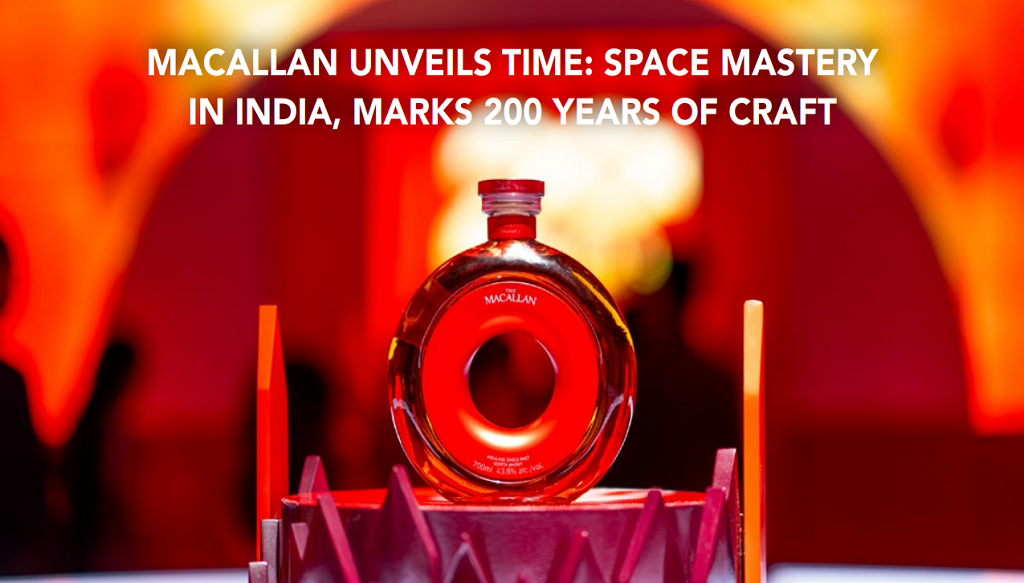
From Features Desk In a landmark moment that brought together heritage, artistry and innovation, The Macallan unveiled its most prestigious expression – TIME: SPACE Mastery – at an exclusive event in New Delhi. Designed as an immersive tribute to the brand’s “200 Years Young” legacy, the evening marked the India debut of this limited-edition single malt. Only 120 bottles have been allocated for the country. India on The Macallan’s Map The launch reflects how India, once seen as a price-sensitive whisky market, has steadily transformed into a destination for rare and collectable releases. The growing tribe of whisky connoisseurs, collectors, and younger enthusiasts – many with an eye for craftsmanship and heritage – has made such premium launches more frequent in recent years. For The Macallan, which has long positioned itself at the intersection of tradition and innovation, India’s inclusion on its limited-release map is both a business move and a recognition of changing consumer aspirations. A Portal into The Macallan’s World The evening was designed to transport guests into a world shaped by time, nature, and legacy. The venue was transformed into a layered, multi-sensory space where time ebbed and flowed, and nature stood as a guardian, protecting what is rare and precious. These themes, drawn from The Macallan’s “200 Years Young” identity, informed both the physical space and the emotional undertones of the evening. A sculptural installation inspired by the hedgehog, a motif associated with protection and quiet resilience, formed the central visual anchor. The red spiked form, drawn from the packaging of TIME: SPACE Mastery, carried through the design language of the event. The box itself features 200 individual sculpted spikes, signifying the brand’s 200-year legacy and symbolising the protection of the rare whisky it houses. Complementing this were understated references to the peacock, which for The Macallan, symbolises natural beauty and purity of colour, fitting, given the brand’s insistence on using only 100% natural colour in its expressions.The Whisky and The Moment Guests entered through an immersive tunnel that led them into a storytelling zone. Here, TIME: SPACE Mastery was brought to life through tactile displays and narrative segments that traced The Macallan’s history and the crafting of this expression. The whisky itself is a result of meticulous selection, drawn from 14 different cask types, including European and American oak sherry-seasoned casks, ex-Bourbon barrels, and American oak sherry-seasoned casks, ex-Bourbon barrels, and selected refill casks. The outcome is a layered, expressive malt that speaks to the quiet patience and exacting standards The Macallan has come to represent.   At the cocktail and tasting lounge, guests were guided by Madhu Rajigani, Brand Ambassador, The Macallan India, through the whisky’s first official tasting in the country. “This launch is not simply the unveiling of a whisky; it is the unveiling of a philosophy,” Rajigani said. “TIME: SPACE Mastery is The Macallan’s tribute to the continuum of craft where every dram tells a story of patience, purpose, and protection. Presenting this expression in India as part of our 200-year celebration is a privilege, and this evening has reflected the artistry and emotion behind it.” Pairing Precision and Pleasure The tasting was followed by a trio of signature cocktails – The Macallan Summer High Ball, The Macallan Sherry Sour, and The Macallan Old Fashioned, each designed to highlight a different facet of the whisky’s depth and complexity.Dinner was served as a four-course culinary journey. The menu included a seasonal mango and avocado salad with Asian chilli, and sesame-ginger dressing; burrata ravioli with spicy cherry tomato and aged Parmesan; and a main course featuring pan-seared chicken breast in fig and brandy jus, alongside marjoram- and sage-smoked lamb chop. Dessert offered a trio of berry textures berry cream, Belgian dark chocolate and berry cake, and a raspberry almond tart. Each course was curated to echo the whisky’s structural complexity and smooth finishes. A rare expression for a growing audience Presented in a circular sculptural vessel that merges ancient craft traditions with modern design cues, TIME: SPACE Mastery arrives not just as a collector’s whisky but as a statement. Its unveiling in India positions it as part of a broader shift: where luxury and legacy can now find an attentive audience beyond the traditional whisky centres of Europe and North America. For a new generation of Indian collectors, TIME: SPACE Mastery offers a rare chance to own a piece of The Macallan’s continuing story, crafted over centuries, presented with intent, and released at a moment when the market is ready to receive it.

MACALLAN UNVEILS TIME: SPACE MASTERY IN INDIA, MARKS 200 YEARS OF CRAFT “FEATURE DESK” Read More »

PERSONALITY OF THE MONTH – GANESH IYER, FIRST CERTIFIED WATER SOMMELIER

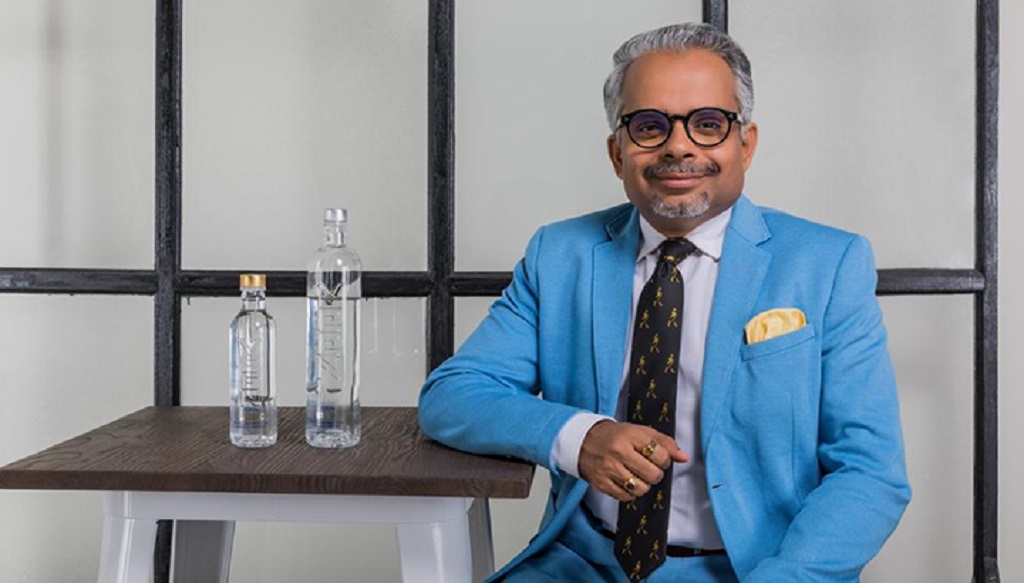
PERSONALITY OF THE MONTH Ganesh Iyer, India’s first certified Water Sommelier, brings nearly three decades of expertise in the fine waters industry. Having led global brands like Evian, Himalayan and Qua, he now spearheads VEEN in the Indian Subcontinent. Trained at Doemens Academy, Munich, he champions water as a sensory, culinary and cultural experience. Can you elaborate on how your professional endeavours contribute to your overall sense of fulfilment and happiness? For me, true happiness lies in doing what I genuinely love. Being stuck in a role without passion breeds demotivation, even depression. Purpose drives everything I do—supported by the financial stability it brings. When I became India’s first certified water sommelier nearly a decade ago, my mission was threefold: 1. Create awareness about the sanctity of water in daily life. 2. Highlight water’s role in fine dining and culinary experiences. 3. Showcase how water can enhance beverage revenues for restaurants. Achieving these objectives has given me both fulfilment and happiness. Reflecting on your career trajectory, what pivotal moment or decision stands out as a defining factor in your success? I see success not as a destination but as a journey, and my 30 years in the HoReCa industry have been truly fulfilling. A defining moment came in the late ’90s with the relaunch of Evian in India, when I realized how something as elementary as water could transform the culinary scene and impact every beverage, given that 90% of them are water-based. That curiosity became the turning point, leading me to explore the deeper role of water as a beverage. Which alcoholic beverage holds a special place as your favorite indulgence? Indulgence to me is an addictive word and carries a negative connotation and therefore would not like to term it as indulgence but yes a nice Islay in this kind of weather coupled with vintage music is always welcome. Share a behind-the-scenes glimpse into a memorable project or collaboration that brought together your passion for both beverages and another interest or field. One memorable project was launching VEEN-the first natural mineral water in premium glass packaging in India. At the time, we didn’t realize we were setting a trend, but that initiative paved the way for hotels and brands to adopt glass bottles. In hindsight, we became the torchbearers of India’s glass water bottle industry. Looking ahead, what legacy do you hope to leave behind in the industry, both personally and professionally? I don’t view legacy as something to chase—it feels like hubris to worry about being remembered after we’re gone. What matters to me is whether the initiatives I’ve launched spark meaningful conversations and create impact today. If those ideas continue to resonate beyond my presence, that’s legacy enough. My true gift is sharing knowledge and purpose while I have the privilege of being here.

PERSONALITY OF THE MONTH – GANESH IYER, FIRST CERTIFIED WATER SOMMELIER Read More »

MONIKA ALCOBEV LEADS HISTORIC LAUNCH OF AMRUT EXPEDITION AT BANGALORE DUTY FREE

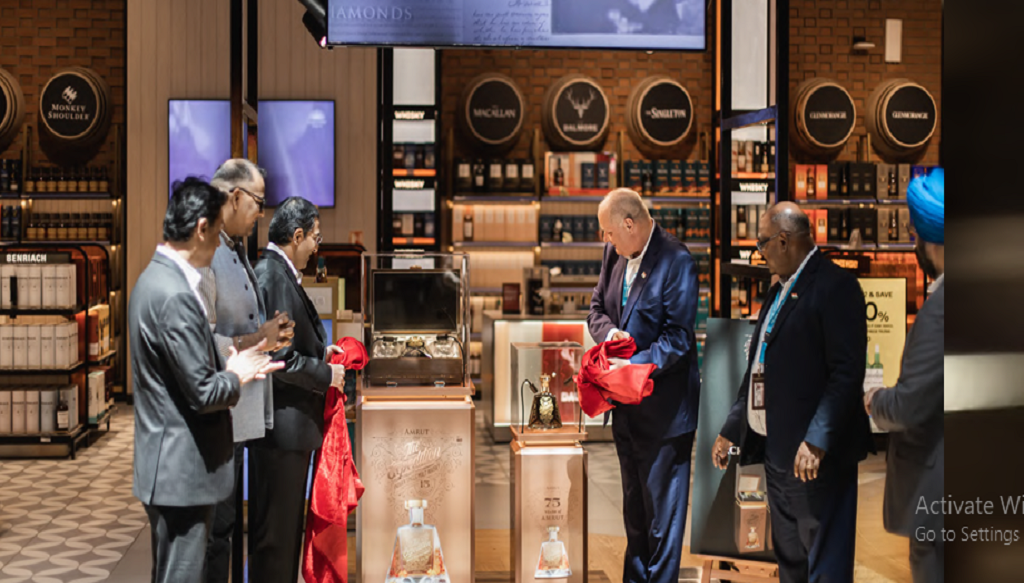
India’s luxury spirits landscape reached a defining milestone with the launch of Amrut Expedition, the country’s oldest and most expensive single malt whisky, unveiled exclusively through Monika Alcobev Limited at Bangalore Duty Free. As the preferred travel retail partner, Monika Alcobev has once again reinforced its leadership in shaping India’s premium alco-bev narrative. With a price tag of over USD 12,500 and a strictly limited release of just 75 bottles worldwide, Amrut Expedition represents a bold statement of Indian craftsmanship on the global stage. Only nine bottles are available in India, with a milestone three allocated to Bengaluru’s Kempegowda International Airport (BLR Airport). Crafted over 15 years, the whisky matured first in European sherry casks for eight years, followed by seven years in American ex-bourbon casks, resulting in a liquid of rare depth and elegance. Each collector’s edition is encased in a handcrafted wood-and-metal box, complete with a silver peg measure, authentication card, and NFC chip, underscoring exclusivity and authenticity.“Launching Expedition via travel retail with Monika Alcobev ensures it reaches discerning global consumers who value heritage and authenticity,” noted Rakshit N. Jagdale, Managing Director, Amrut Distilleries.For Kunal Patel, Managing Director of Monika Alcobev, the partnership reflects a broader vision: “Expedition is a truly rare release, one that showcases the finest in Indian whisky-making. At Monika Alcobev, we take pride in driving innovation and setting new benchmarks in the distribution of premium spirits.”Amrut Expedition marks a milestone in India’s alco-bev journey, and with Monika Alcobev leading its travel retail debut, Indian whisky enters a bold new era.

MONIKA ALCOBEV LEADS HISTORIC LAUNCH OF AMRUT EXPEDITION AT BANGALORE DUTY FREE Read More »

FROM CARIBBEAN CASTOFF TO DRINKER’S DARLING: INSIDE THE RUM REVOLUTION E&A SCHEER

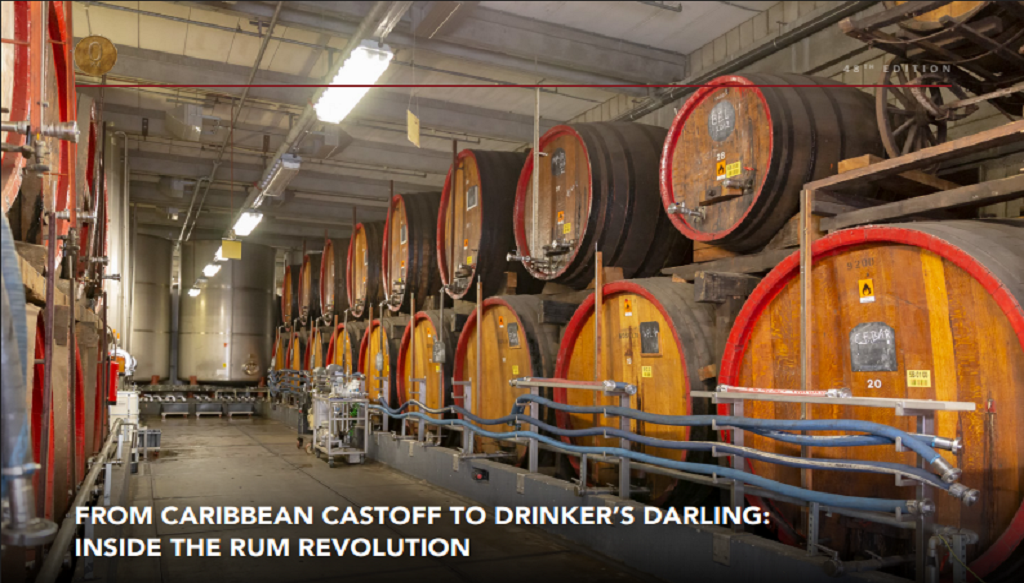
E&A Scheer Just a few years ago, telling a serious collector that rum could rival a premium single malt would have earned you a pitying look. Today, however, rums such as Holmes Cay’s Infinity, priced around £1,500, and The Last Drop 1976 Very Old Jamaica Rum, fetching over £3,000, showcase the category’s soaring value. No longer perceived as Rum pirates’ grog, we shall explore how Rum has been transformed into the liquor industry’s most dynamic, innovative, and exciting premium category. Far more than marketing hype, a fundamental reimagining of Rum is driving a continued revolution in the category. Innovative techniques, sophisticated flavours, sustainable production, and stunning packaging: rum is indeed stepping into the limelight, and market trends reflect this momentum. The global rum market is forecasted to grow from $14.6 billion in 2024 to $15.41 billion in 2025, representing a compound annual growth rate (CAGR) of 5.5%. (Source: Research and Markets) This growth can be attributed to seismic consumer and industry shifts. Rum is being taken more seriously than ever, and these days, the experience is as much about sipping and savouring as mixing and shaking. The trend to premiumisation is driving demand for quality, craft, and aged rums, especially among adventurous millennials open to new experiences and unique tastes. The Asia Pacific rum market hit $7.31 billion in 2024, with India leading the way at $2.53 billion (34.6% of sales), and according to IWSR, it is projected to grow by an impressive 35% CAGR by 2030. India is set to become APAC’s second-largest premium plus Rum market, fuelled by a large population with rising incomes, and booming craft distilleries catering to urban, affluent consumers. The playground of innovation Distillers have seized this opportunity, experimenting with heritage sugarcane varieties, wild fermentation and even multi-barrel maturation. The results are challenging traditional preconceptions with myriad expressions worthy of contemplation rather than mere consumption. Rum also stands to benefit from the premiumisation of sectors such as ready-to-drink (RTD). Its quality and sheer versatility make it an ideal alternative to tequila and vodka as a base for RTD products. And with sustainability high on the consumer agenda worldwide, rum producers are responding with smarter and more sustainable practices, ranging from recycled bottles to fair trade initiatives, and to minimalist packaging. Rum Goes Global Originating from molasses waste on Caribbean sugar plantations, the first Rums were rough, potent, and mostly valued for preserving sailors’ health rather than satisfying their palates. The British Navy’s legendary ‘daily tot’, a tradition that continued as late as 1970, whereby every sailor was entitled to one eighth of an imperial pint (71 ml) of rum as part of their daily ration, cemented the drink’s reputation as functional rather than finessed. Think liquid courage rather than liquid art. How times have changed… From Philippine cane fields to Indonesian spice islands, producers are crafting a world of tastes and styles. Today, rum is thriving in dozens of countries around the globe as new distillers in unexpected regions add to the diversity of styles and flavours on offer. Let’s take Britain as an example. A nation of Rum drinkers? Sure. But distillers? Perhaps not. Yet a new generation of distilleries is producing some serious contenders, with many following a model shaped by the more traditional gin production process. On the other side of the world, Australia has seen a rapid increase in the number of Rum brands on offer. The US is also getting in on the act, experiencing a resurgence in rum distillation and consumption; after all, rum distilling was an indelible part of the North American economy during the colonial era. Japan’s entry epitomises this revolution, bringing its renowned precision and fermentation expertise to the table. Early releases suggest that some Japanese Rums could become as coveted as the country’s whiskies, sooner rather than later. It is fascinating to witness how rum production has expanded far beyond its traditional Caribbean roots. Each region brings its own terroir, techniques and traditions to really enrich the diversity of the category. From a procurement perspective, this evolution opens up exciting opportunities to source distinctive Rum profiles and support local producers worldwide,” Marjon de Haan, Chief Procurement Officer at E&A Scheer, says. Rum’s global expansion has crystallised around three common styles, each reflecting distinct influences and production philosophies: Spanish-style rum: pursues elegance through column distillation and extensive filtration. Brands like Diplomático and Zacapa exemplify this style: smooth, approachable expressions that prioritise refinement over raw character. The Spanish approach treats rum as a fine spirit first, party fuel never. English-style rum: embraces controlled chaos. Pot distillation and extended fermentation create ester-rich, funky expressions that celebrate rum’s wild side. Jamaican heavyweights are known for their vibrant, ester-rich profiles, which often split opinion. Some crave that tropical intensity. Others steer well clear of it. French-style (Rhum Agricole): represents purist philosophy. Using fresh sugarcane juice rather than molasses, producers in Martinique and Guadeloupe create grassy, terroir-driven expressions protected by strict appellation controls. Rum’s answer to single malt whisky is uncompromising, distinctive, and occasionally challenging. Crystal Clear to Liquid Gold: A World of Variety Modern rum’s range of styles and flavour profiles defies easy categorisation. From crystal-clear ‘light rums’, with their clean sugarcane character ideal for sophisticated cocktails, to decades-old ‘Caribbean rums’ that develop cognac-like complexity through tropical barrel ageing, the spectrum is vast and endlessly fascinating.Regional specialities add even more depth. Indonesia’s Batavia Arrack, technically distinct from traditional rum yet sharing sugarcane ancestry, uses local red rice in fermentation to create funky, fruity notes. Brazilian Cachaça and Martinique’s Rhum Agricole, both made from fresh-pressed sugarcane juice, offer earthy, grassy, and vibrant profiles that stand apart from molasses-based rums. The sheer variety of rum styles is part of its allure. Light or silver rum, typically distilled from molasses in a column still, is versatile, neutral, and a favourite in cocktails. Heavy rums, also known as high-ester rums, are robust and aromatic, prized both in drinks and in the flavour & fragrance industries. Aged rums, matured in wooden barrels for

FROM CARIBBEAN CASTOFF TO DRINKER’S DARLING: INSIDE THE RUM REVOLUTION E&A SCHEER Read More »

TEQ TALES – A SPIRITED EVENING WITH TULLEEHO TEQUILA CLUB “FEATURE DESK”

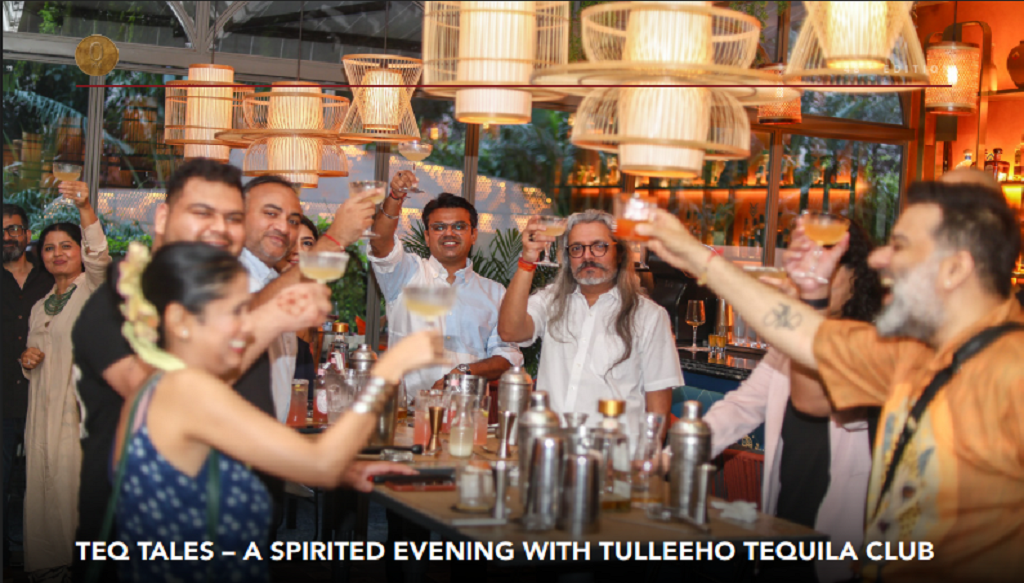
From Features Desk On August 10, the Tulleeho Tequila Club, the first Tequila Club in India, in collaboration with 1800 Tequila, held the first edition of Teq Tales: an immersive experience for tequila lovers, industry professionals and select members of the media. The event was hosted by Miss Margarita, a renowned fine dining Mexican restaurant and cocktail bar in Gurugram. As the evening began, guests were welcomed with a Blueberry Pickle Tonic, an unexpected but refreshing reinterpretation of the tequila highball. Latin music filled the air and true to the moment, elegantly prepared delicatessens like jackfruit quesadillas and guacamole & chips floated around among a sea of revelrous guests; the stage was set for an evening of discovery and camaraderie. The first session of the evening, titled: An Insight into 1800 Tequila, was led by Ajay Nayyar, an educator and veteran in the Indian hospitality and spirits industry. His talk guided the audience through the history and heritage of the craftsmanship behind 1800 Tequila, Mexico’s most celebrated spirit. This was followed by the eagerly awaited guided tasting session, where guests had the opportunity to appreciate tequila as a fine spirit with layers of complexity. During the session, guests explored the nuances of three varieties of 1800 Tequila: the crisp & citrusy 1800 Silver, the mellow & warm 1800 Reposado and the rich oak-aged 1800 Añejo. The highlight of the evening was a DIY cocktail session, where the guests rolled up their sleeves as Nayyar walked them through two cocktails: the bold & zesty Spiced Paloma and the timeless Tommy’s Margarita. Between sessions, Tulleeho’s signature version of the picante cocktail: the OTP (Our Tulleeho Picante) was served, adding a fiery and refreshing kick to the mix. As the evening proceeded, Miss Margarita’s kitchen delighted guests with a variety of expertly crafted tacos, infusing the evening with a satisfying culinary dimension. The balance of skilfully crafted drinks, gourmet food and delightful conversations created an atmosphere that was both intimate and festive. Among the tequila enthusiasts present were some of the city’s most respected voices in food & beverage, including Sahiba Gursahaney, Pallavi Singh, Amit Pahuja, Siddharth Jalan and Tanu Ganguly, whose presence added to the spirit of discovery and celebration. At the end of the evening, every guest carried home not just memories, but also a specially curated giveaway kit including: a bottle of OTP cocktail mix, a recipe card, coasters and a lapel pin; a perfect set of reminders and instructions if the guests were ever in the mood to recreate the evening at home. The first edition of Teq Tales was more than just an event; it was a celebration of tequila culture in India. By blending storytelling, tasting, hands-on cocktail making and social camaraderie, Tulleeho Tequila Club successfully displayed how tequila deserves a place on every discerning drinker’s shelf. For Tulleeho and 1800 Tequila, this was merely the beginning of a spirited journey that promises to grow bigger, bolder, and more flavourful with each chapter of Teq Tales.

TEQ TALES – A SPIRITED EVENING WITH TULLEEHO TEQUILA CLUB “FEATURE DESK” Read More »

GATAO COLLECTION – YOUR FAVORITE WINE FROM PORTUGAL BY NIVEDITA BHALLA

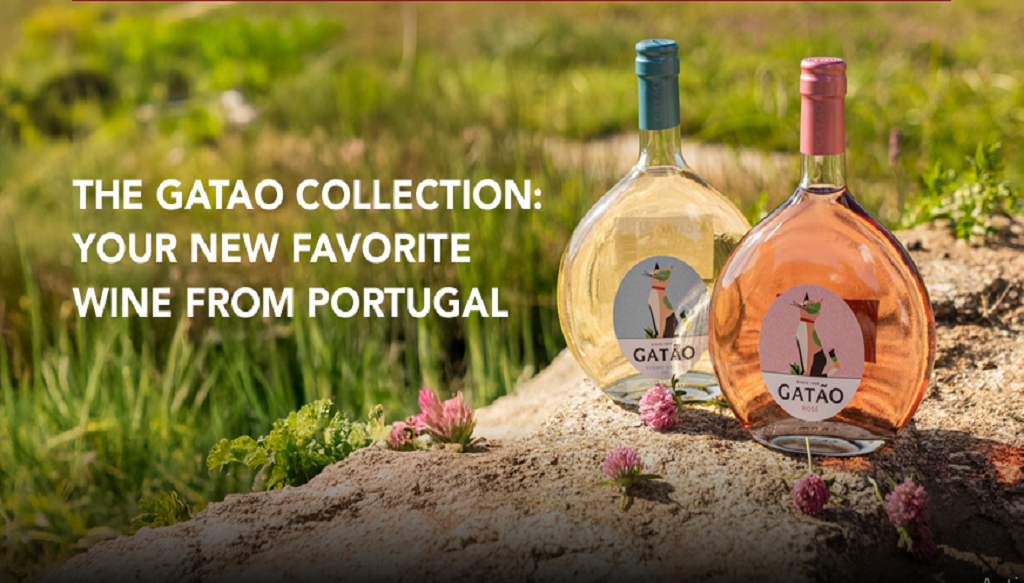
Nivedita Bhalla In house curator (WSCI) Wine & Spirits Club of India If you’re tired of giving your friend a bottle of sparkling wine to warm up at home, I have the perfect recipe: slushy, fruity and slightly carbonated, with pineapple and passion fruit notes. The Gatao white wine is a semi-dry variety produced in Portugal’s vinho verde region. A special combination of grapes defines the flavor of the wine: Azal, which has a crisp, tart taste because it is very acidic; Pedernã, which is also called Arinto, is the most important type of grape because it makes the wine taste fresh and like it has minerals; Loureiro is a grape that is often compared to Riesling because it smells like flowers and citrus. It makes the wine taste richer and like it has a bitter almond note; Trajadura is usually used in blends to give the wine a richer texture and smells like pear and citrus. In 2013, the Decanter World Wine Awards also gave it a Commended award, and in 2010 the International Wine Challenge awarded it a Silver medal.Brothers António and Francisco Borges established Sociedade dos Vinhos Borges in 1884. Starting as a trading firm, it quickly became one of Portugal’s most well-known wine makers and, by the late 19th century, it had achieved worldwide fame. Early success in Brazil and a focus on investing in vineyards and production quality saw Borges register several famous brands in the early 1900s, including Gatão (which is available in the Indian market), Pérola, Trovador, Fita Azul, Borges, and Lello, many of which are still successful today. The company has expanded its focus to Port and sparkling wines over the years, winning several awards, and has also moved into spirits. Borges joined the José Maria Vieira (JMV) Group in 1998 to update operations, concentrate manufacture at Lixa, and boost home and export markets. Borges is still well-known today for its quality-driven winemaking and ongoing contribution to Portuguese wine heritage.Some sparkling wines just refresh, while others carry you away, raising the senses with each pop of a bubble. Gatao Sparkling is in the latter group. Its pale straw-yellow color shines with expectation, and with the first pour, a stream of tiny bubbles rises like starlight flickering on water, a beautiful invitation to the delights to come. Gatão Sparkling is a symphony of Portugal’s local grape types.Gouveio’s vivid acidity and citrus edge help it to set the tone with brightness and vitality. Malvasia-Fina gives the palate a delicate roundness and floral notes while also softening the ensemble. Arinto, the backbone of Portuguese whites, provides strong acidity and a mineral backbone that guarantees freshness in every sip, while Côdega, which is aromatic and expressive, adds orchard fruit and subtle spice. Moscatel, the most fragrant of the bunch, ultimately crowns the wine with a perfumed lift of orange blossom and ripe grapes, giving a playful sweetness that stays but not overpowers. Delicate floral notes, a touch of white blossoms entwined with vivid citrus zest and a hint of ripe stone fruit start the scent. The wine opens out on the tongue with a velvety smooth texture, where freshness and softness combine beautifully to provide a sensation that is both vibrant and sophisticated. While a delicate mineral sweetness softens its strong acidity, the exquisite stream of bubbles improves its crisp character and results in a long, clean, and really satisfying finish. This expressive profile has been noted on the world scene. Gatão Sparkling has been awarded a Gold Medal at the International Wine Challenge and received a Seal of Approval in Japan, distinctions that prove what the senses already knew this is a wine of note. Its beauty makes it a great aperitif since it can shine alone but its adaptability lets it enhance pairings as well. Among the wines that narrate place and history, Gatão Red occupies a particular position on the table. It is a brand that has been a worldwide ambassador for Portuguese winemaking since 1905. It comes with more than just flavorit comes with history. The wine has a ruby tint in the glass, which suggests the freshness and vitality that is yet to come. Often hailed as Portugal’s noble grape, Touriga Nacional gives structure, floral undertones, and a hint of spice. Tinta Roriz (also known as Tempranillo in Spain) brings strong fruit, powerful tannins, and depth of earthiness. Tinta Barroca softens the mix with ripe berry notes, and Touriga-Franca, which is known for its elegance, gives it a soft body and a lift of red fruit fragrance. Together they make a wine that is rich but light, decadent but humble. Gatão Red meets with fresh red fruits, cherries, raspberries, and a hint of plum on the nose. Faint floral whispers and traces of spice also mix. The wine glides with amazing grace on the tongue, providing luscious fruit tastes. It moves with an airy lightness, its tannins well-integrated, giving the impression of silk lightly brushed across the tongue. It is full-bodied in nature but never heavy. From beginning to end, vivid acidity keeps the wine fresh; the finish is clean, rounded, and gratifying with graceful punctuation that hangs just long enough to inspire another taste.You might be wondering whether there is a tale behind that inquisitive cat on Gatão’s label; let me satisfy your curiosity. From its early 20th-century origins, the cat has wandered with the brand to become a clear sign of fun and charm. Designer Rita Rivotti gave this cat a contemporary stage in 2019, updating the packaging with clean geometry and old-school textures while maintaining the well-known emblem front and center. The outcome is a bottle appropriate for a rooftop party, a picnic blanket, or elegantly placed on a seaside table, both classic and modern.Still, Gatão Rosé’s appeal goes beyond looks. Inside the bottle is a careful statement of Portugal’s winemaking past, made from noble grapes Touriga Nacional, which is known for its floral depth, and Tinta Roriz, which is known for its vivid red fruit and

GATAO COLLECTION – YOUR FAVORITE WINE FROM PORTUGAL BY NIVEDITA BHALLA Read More »

FROM KICK TO CRAFT – THE CURIOUS CASE OF INDIAN BEER BY AJAY JHA

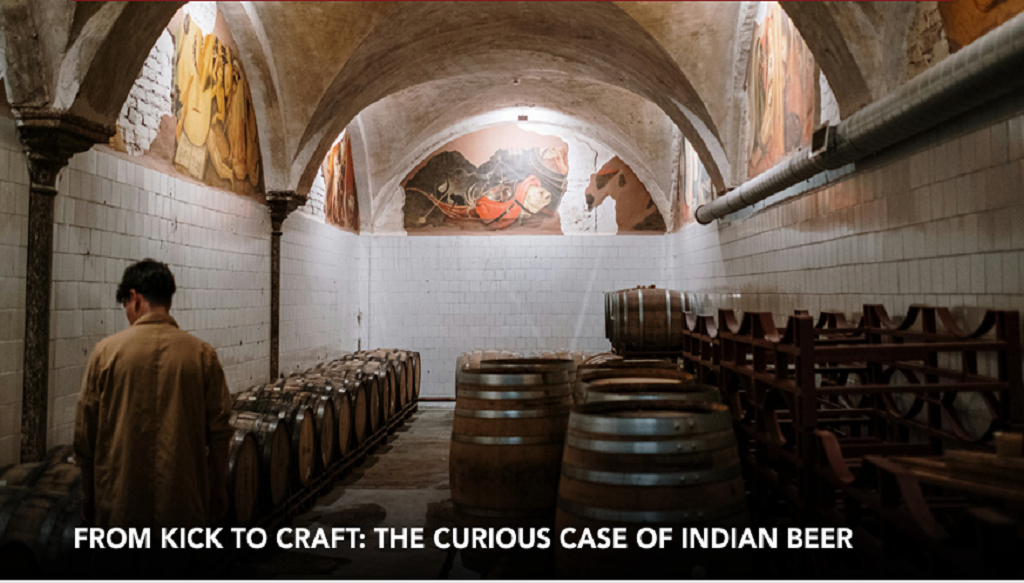
Ajay Jha A senior Delhi-based independent journalist India’s relationship with beer stretches back further than most people realise. Long before the British introduced European-style brews in the 18th century, indigenous communities across the subcontinent were fermenting grains like rice and millet to create beer-like beverages. These traditional drinks, known as sura, handia, and apong, were deeply embedded in rituals and social customs, especially in tribal regions of the Northeast and Central India. The formal beer industry began in 1830 when Edward Dyer established India’s first brewery at Kasauli in Himachal Pradesh. It produced Lion beer, which holds the distinction of being Asia’s oldest beer brand. The industry expanded under colonial influence, with breweries opening across India.In modern times, strong beer has emerged as the undisputed favourite among Indian consumers. With alcohol content typically ranging from 5 to 8 percent, it accounts for more than 85 percent of all beer sold. Strong beer offers better value for money, delivering a stronger buzz at a lower cost. Major breweries have capitalised on this.Before strong beer became mainstream, some drinkers would mix regular beer with whisky to enhance its potency. This was a popular workaround for those seeking a kick without spending too much. The Indian beer palate is changing fast. Urban consumers, especially younger generations, are exploring styles like lager, wheat beer, stout, ale, and India Pale Ale. One persistent myth is that darker beer is stronger. In reality, colour has little to do with alcohol content. A stout may look intense, but could have a lower ABV than a pale lager. As consumers become more informed, such misconceptions are fading, paving the way for a more nuanced appreciation of beer.The Rise of Craft and the Changing Market India’s beer mThe Rise of Craft and the Changing Market India’s beer market has transformed dramatically in the past decade. Once dominated by a few legacy brands, it now includes domestic giants, international players, and a growing tribe of craft arket has transformed dramatically in the past decade. Once dominated by a few legacy brands, it now includes domestic giants, international players, and a growing tribe of craft brewers. The market is valued at over ₹40,000 crore, with annual consumption crossing 300 million cases. While domestic beer still holds the lion’s share, imported beer is gaining ground. Global brands like Budweiser, Heineken, and Corona are now brewed locally through joint ventures and licensing agreements. This reduces costs and makes premium beer more accessible. The explosion of microbreweries across the country has added to the excitement. Several states have relaxed licensing norms, encouraging entrepreneurs to set up brewpubs and taprooms. These establishments offer freshly brewed beer with distinct flavour profiles. Young consumers are drawn to the authenticity and variety that craft beer provides. Beer Beyond the Bottle One of the most striking changes in India’s beer culture is how it has broken free from old social and seasonal constraints. Not long ago, beer was seen as a casual summer drink. Come winter, it would quietly retreat, replaced by whisky and rum. That perception is fading.Socially, beer has become more inclusive. It is no longer confined to college parties or roadside bars. Professionals sip it at networking events, couples enjoy it on date nights, and families might share a pint at brunch. The stigma once attached to beer drinking, especially for women, is gradually eroding.Beer was not always popular in India. As more Indians started travelling, working in global companies, or studying abroad, they were exposed to different drinking habits.Slowly, beer started showing up at parties, restaurants, and weekend hangouts. It was lighter, easier to drink and did not carry the same social baggage as hard liquor. The arrival of microbreweries in cities like Bengaluru, Pune, and Gurugram saw the rise of places that brewed their own beer. These places offered new flavours like wheat beer, fruity ales, and strong stouts. They became places to hang out, listen to music, and try something new.Women played a big role in this shift. As public spaces became more open and inclusive, more women started drinking socially. Beer, seen as less intimidating than hard liquor, became a popular choice. A New Era Brewing India’s beer story is no longer just about the kick. It has become craft, culture, and choice. From ancient tribal brews to modern microbreweries, the journey now reflects a broader shift in how Indians engage with taste, identity, and social experience. As consumers grow more discerning and inclusive spaces continue to flourish, beer is shedding its old stereotypes and emerging as a symbol of urban sophistication and creative expression.The road ahead is both promising and complex. Regulatory hurdles and market pressures remain, but so does the spirit of innovation. Whether it is a crisp lager on a rooftop in Mumbai, a smoky stout in a Bengaluru taproom, or a millet-based brew reviving indigenous traditions, Indian beer is evolving into something far richer than a beverage. And as more Indians raise their glasses, not just to drink but to discover, this curious case of Indian beer is turning into a celebration of possibility. Cheers to that.

FROM KICK TO CRAFT – THE CURIOUS CASE OF INDIAN BEER BY AJAY JHA Read More »

MEZCALITA, MUMBAI – A SPIRITED ODE TO MEXICO’S SOUL “FEATURE DESK”

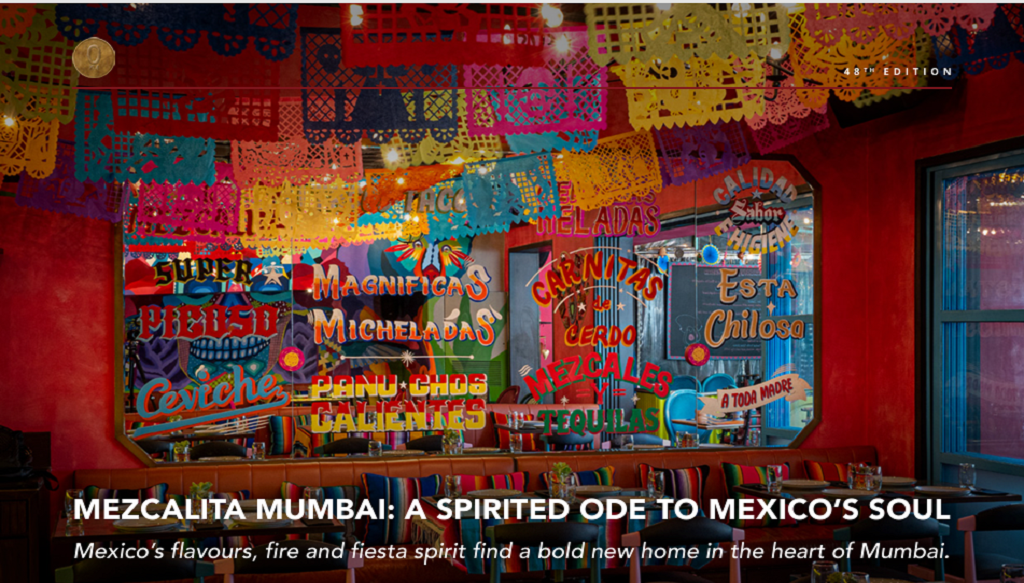
MEZCALITA MUMBAI From Features Desk Walk past the stately colonial facades of Churchgate, Mumbai, and through the lime green double doors of Mezcalita, and you’ll find yourself instantly transported, not just geographically, but emotionally into the vibrant, high-spirited heart of Mexico. Mezcalita isn’t merely a restaurant; it’s a love letter to Mexican culture, told through food, drink, art and soul. The Visionaries Behind the Fiesta At the helm of this dynamic cantina y tequila bar is Rizwan Amlani, a man whose journey reads like an adventure novel. A former DJ turned culinary artisan, Amlani is best known for pioneering DOPE Coffee – one of India’s first third-wave coffee brands – and for pushing the boundaries of dining culture. Together with Vicky Singh, Partner at Slink & Bardot, the duo dreamed up Mezcalita as a space that reflects the lesser known yet deeply authentic sides of Mexican cuisine.“Mezcalita is about discovery,” says Amlani. “We wanted to bring the true flavours of Mexico – not just the tacos and burritos people know, but the stories, the rituals and the heritage that breathe life into every dish and drink.” A Culinary Maestro from Mexico City To translate that vision onto the plate, Mezcalita turned to Executive Chef Pablo Benitez, a culinary veteran from Mexico City. With over two decades of global experience, from the iconic Le Cirque to academia in pre-Hispanic cuisine, Benitez brings gravitas and authenticity to Mezcalita’s kitchen.His culinary philosophy is rooted in storytelling. “Every dish has a soul,” he says. “At Mezcalita, we don’t just serve food. We serve narratives from Oaxaca, Yucatán, Baja California – flavours that carry generations of tradition.” From his days apprenticing in French fine dining to educating future chefs at Universidad del Claustro de Sor Juana, Chef Benitez’s passion remains anchored in celebrating Mexican heritage with creative finesse. His arrival in India marks a cross-cultural milestone – blending local curiosity with Mexican pride. A Menu That Moves from Street to Soul The menu at Mezcalita is a vibrant mosaic. It begins with multiple versions of guacamole and ends with playful desserts like the Tres Leches de Cereza or the Frozen Berry Soup – a visual and flavourful delight. In between, expect an exhilarating range: from Portobello-Trumpet Panuchos (a mushroom based delight from the Yucatán Peninsula) to Habanero Prawns that arrive with fair warning for their fiery kick. There’s also the Birria Taco, Mexico’s beloved hangover cure, and the Cottage Cheese Torta de Chilaquiles – a local favourite reimagined for vegetarians.The Mexi-Conscious section – a thoughtful nod to health-conscious diners, features avocado buns, adobo vinaigrettes and power-packed bowls without compromising on flavour. Whether you’re a seafood lover or a plant-based eater, Chef Benitez ensures each dish carries depth, spice and soul. Liquid Gold: Mezcal, Tequila & More Of course, no Mexican fiesta is complete without its spirit animals – mezcal and tequila. Mezcalita’s bar is a shrine to agave in its many avatars. Small-batch spirits sourced directly from Mexico are artfully arranged on lime green box shelves, resembling sacred artefacts in a temple of indulgence. Signature cocktails like the Cha-Chinga (with charred cucumber and bird’s eye chilli), Oaxaca to Osaka (a mezcal-sake fusion) and La Pomela (mezcal meets grapefruit and Campari salt) speak to a bar programme that is both experimental and rooted. Groups can opt for shareable Muy Grande pitchers or even the theatrical Margarita Tower – a towering tribute to the Mexican way of celebrating everything with friends and fire. Even the non-alcoholic options hold their own, from Agua de Jamaica (hibiscus iced tea) to Horchata (cinnamon-almond rice milk cooler), these drinks prove that Mezcalita is as much for sober hedonists as it is for cocktail connoisseurs. A Design That Dances with Culture Every corner of Mezcalita is soaked in symbolism. Conceptualised as a non-clichéd Mexican space, the interiors are vivid without being garish, and spiritual without being saccharine. Colourful murals by Mexican artist Senkoe known for blending sacred geometry, nature and mythology fill the walls with stories, not just art. The pièce de résistance is the bar altar, transformed into a sacred homage to the agave plant. It evokes pagan mysticism with ritualistic items, while overhead crepe Mexican flags form a floating canopy – turning every drink into a minor celebration. A Cultural Catalyst in Mumbai’s Dining Scene Mezcalita doesn’t just introduce Mexican cuisine to Mumbai – it elevates it. It’s a place where stories are told in salsa verde, where margaritas come with cultural context, and where the walls speak in Mayan metaphors. More than just another restaurant, Mezcalita is a cultural bridge – built by passionate people who understand that the future of dining lies not just in fusion, but in authentic immersion. With its doors open daily and its bar stocked with the spirit of Mexico, Mezcalita invites diners to not just eat or drink, but to experience. Whether you’re sipping a smoky mezcal under a sky of papel picado or biting into a taco whose recipe goes back centuries, this is one journey worth taking – again and again.

MEZCALITA, MUMBAI – A SPIRITED ODE TO MEXICO’S SOUL “FEATURE DESK” Read More »

CONVERSATION ROOM, KOLKATA – WHERE CITY SPEAKS LOUDER THROUGH ITS SILENCES “FEATURE DESK”

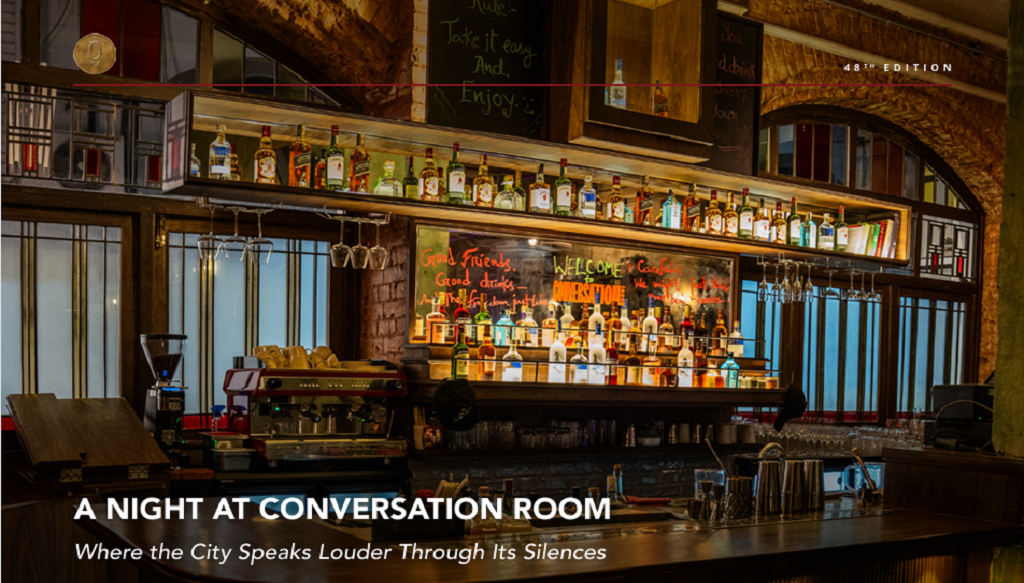
CONVERSATION ROOM, KOLKATA From Features Desk There’s something deeply comforting about finding a place that allows you to breathe, think, and be yourself without any pressure. That’s exactly what Conversation Room on Chowringhee Road turned out to be for me. A bar, yes-but not in the conventional sense. This wasn’t just about drinks or food or music. It was about people. It was about moments. It was about presence. Right opposite the Nehru Museum, the facade was subtle, almost whispering to step in than shouting for attention. And once I did, it felt like the kind of place that might as well have existed in my imagination-an unpretentious cocoon in the heart of the city. The Vibe: Where Comfort Meets Global Cool What struck me first was how beautifully intimate the space felt. At 3,000 square feet, it’s not small, but it’s not trying to be grand either. With just 88 covers, you get a sense that every seat matters.It’s designed like a neighbourhood bar but carries the soul of a global cocktail destination. Think Brooklyn meets Bandra-but in Kolkata. The interiors are warm and inviting with wooden finishes, understated lighting and eclectic music that flowed through the room without hijacking your conversation. There is no deliberate design statement here and yet the entire space speaks of intentionality. You’ll find couples on quiet dates, groups of friends lost in laughter and even solo patrons sipping slowly, like the world outside doesn’t exist. It reminded me that human-to-human connection is not extinct. We’re just rusty. Cocktails That Don’t Talk Down To You The cocktail menu, curated by Countertop India, carries a simple philosophy: sophistication without snobbery. I started with the Great Listener-a cold brew Irish whiskey blend with Baileys and hot cream. Just the right amount of bold and cold. Next, I sipped on Smooth Talker-a layered play of Scotch, caramel liqueur, cacao and bitters. The name matched the experience: smooth, persuasive, memorable. What I appreciated the most was how the menu didn’t try too hard to impress. Each drink had character but none screamed for attention. The highball options, served with in-house flavored sodas were perfect palate cleansers between conversations. The Wine Wall was another quiet highlight. It demystified the intimidating world of wine with just ten, well-curated bottles, handpicked by the team. For someone who finds wine menus overwhelming, this felt quite refreshing. Food That Feeds Your Soul, Not Your Instagram Chef Saurabh Udinia has created a food program that celebrates “ugly delicious” without trying to be clever. There’s no smoke, foam, or dramatic plating here. Just good, solid dishes that pair beautifully with long chats and longer evenings. I couldn’t resist ordering the Stuffed Chicken Wings with Chorizo and they were a revelation. Juicy, spicy and satisfying like a story you want to hear again. The Bhutanese Ema Datchi with Tingmo felt like a warm invitation into someone’s family kitchen. And the Goat Pepper Fry with Kerala Parota brought the kind of heat that makes you pause mid-bite, look up and smile. By the time dessert rolled in Caramelized Honey Butter Toast with Vanilla Bean Ice Cream I was already planning my next visit. More Than a Bar-A Culture in the Making As I was soaking in the ambience, I realized that Conversation Room wasn’t just another entrant into Kolkata’s nightlife. It’s trying to fix something we have collectively lost: the joy of uncurated connection. It doesn’t distract you with gimmicks. It doesn’t demand your attention. Instead, it creates space for eye contact, for warmth, for spontaneity. Founders Ramesh Agarwal and Abhimanyu Maheshwari have brought in more than their industry credentials-they have brought in intent. You can feel it in every inch of the place. From the music curation to the food menu to the staff that knows when to chat and when to leave you alone-it all adds up. Abhimanyu describes it best: “A place where you can have an existential meltdown with a close friend in the evening and end the night dancing on tables.” That’s not an exaggeration. It’s a promise. And it’s kept well. Final Sip Conversation Room isn’t just a place you visit-it is a space you inhabit. For a few hours, you get to press pause on the noise of the world and simply be. And that, in today’s time, is nothing short of magic.

CONVERSATION ROOM, KOLKATA – WHERE CITY SPEAKS LOUDER THROUGH ITS SILENCES “FEATURE DESK” Read More »