
50th Edition E- Magazine Blogs

INSIDE INDIA’S GIN RENAISSANCE – SAMSARA GIN & IT’S JOURNEY. BY ADITYA AGGARWAL

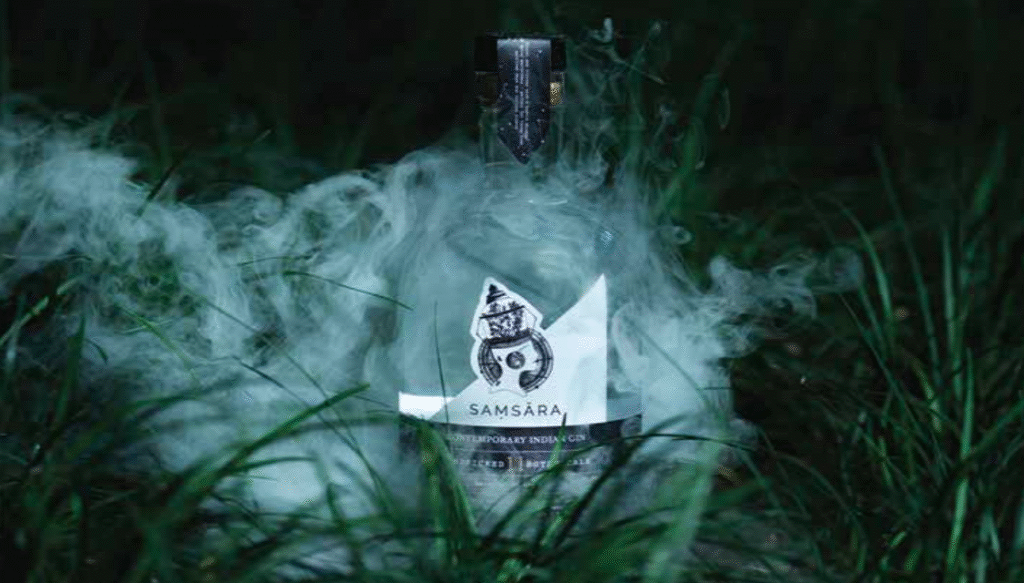
SAMSARA CONTEMPORARY INDIAN GIN New World Experiments THE CITY OF PINK GIN’S JOURNEY IN INDIA: TURBULENT RISE, STEADY FOOTING Aditya Aggarwal Founder, Spaceman Spirits Lab When I look back to the early days of SAMSĀRA, our ambition was simple, create a gin that speaks of place, that reflects the soil, the stories, the botanicals around us. But the path hasn’t always been smooth. The story of gin in India is a fascinating tale of aspiration, disruption, retreat and resilience. As we unveil the 50th issue of 0 KM at ProWine Mumbai, I want to share my reflections, its ups and downs and how I believe gin is finding a steady foothold in India. The Early Sparks: Imported Prestige, Limited ReachGin has long occupied a niche role in India. In earlier decades, it was largely an imported spirit – British brands, Dutch brands, a touch of colonial legacy that appealed to a small set of connoisseurs and expatriates. It was exotic, aspirational, but distant. Lack of drinking education, underdeveloped cocktail culture, limited distribution and low consumer familiarity all kept gin a fringe category.Even when cocktails began gaining popularity in Indian metros, gin tended to be overshadowed by vodka and rum. The classic gin & tonic, so emblematic in other markets, was often restricted to premium hotels or foreign tourists. Many Indian consumers either didn’t know what gin was or assumed it to be a niche European oddity. The First Surge: Premiumisation & Cocktail CultureThe turning point arrived in the late 2010s, when urban Indian consumers – millennials, globally exposed, socially adventurous, started exploring beyond safe spirits. Cocktail bars sprouted in Mumbai, Delhi, Bangalore and cities began to host mixology festivals, gin dinners, masterclasses. Suddenly gin was the canvas on which bartenders could paint flavours, botanicals, local ingredients, fusions.This wave of curiosity helped premium-and-above gin volumes in India grew by 8% in the 2010s, with expectations of sustained growth over the coming decades. Fast forward to 2025, the broader Indian gin market is now projected to reach USD 1.8 billion by 2030. Even more conservative projections see the market expanding steadily through the 2030s.Craft gin distilleries have played a defining role in this growth. They differentiated by tying their spirits to Indian identity, infusing local botanicals, telling stories of terrain, seasons and indigenous herbs. Brands like Greater Than, Hapusa, Stranger & Sons and Jaisalmer began to break through, earning awards in international spirits contests. The allure of “local but premium” resonated deeply with consumers seeking more than a formulaic drink.The Headwinds: Costs, Regulation, Consumer EducationThe overall journey hasn’t been smooth. Whenever growth accelerates, structural barriers push back.– High input and regulatory costs Gin, more than many spirits, depends on botanical diversity, quality control and thoughtful distilling. But input costs, imported juniper, exotic botanical extracts and premium glass bottles, face steep import duties and shipping overheads. Overheads such as labelling, packaging, logistics, excise and state-level taxes eat into already slim margins. Some states levy astronomical markups or restrict distribution channels, limiting scale.– Regulatory and distribution challenges India’s regulatory environment is fragmented. Liquor is a state subject; every state enacts its own rules on licensing, advertising, transport, retailing and taxation. For a gin producer, expanding across states means navigating a maze of permits, approvals and local politics. Advertising restrictions further constrain consumer outreach; the spirit industry can’t promote itself in conventional ways. In many states, direct-to-consumer shipping is disallowed, limiting reach.– Consumer education & inertia Gin still remains unfamiliar to large swathes of India’s drinking population. Many consumers default to whisky or rum. Even when they try gin, they are unsure how to drink it -neat, tonic, cocktail? This means brands must invest heavily in education, sampling, bartender training, events and collaborations. The cost of awareness is high and many brands burn cash before traction. – Global softness & changing trends Interestingly, while India’s gin story has momentum, globally the gin category has seen some contraction. In markets like the UK and Spain, premium gin sales have cooled and some consumers are gravitating toward other categories or flavoured spirits. This global headwind can dictate import strategies, pricing pressures and investor sentiment. The Resilience: Why Gin Endures in IndiaDespite turbulence, gin has shown a remarkable ability to adapt and evolve in India. Here’s why I believe it continues to survive and even thrive.1. The “canvas” quality of ginGin is a versatile spirit. It’s not fixed to one flavour, one terroir, one style. It allows experimentation. In India, distillers have leveraged this flexibility to incorporate native botanicals – Himalayan juniper, Nagpur orange peel, ashwagandha, local citrus and spices to create identity. These innovations make gin feel Indian, not imported.2. The cocktail wave is still young Indian cocktail culture is nascent compared to mature markets. Many cities still lack enough quality cocktail bars; many drinkers are yet to explore beyond the basic. This leaves significant headroom for gin to grow as a chosen spirit for mixology. Bars and consumers discovering gin now tend to stay, building loyalty.3. Premiumization & “drink better, not more” Indian consumers, especially in the urban class, are shifting consumption patterns. Instead of chasing quantity, many prefer quality. They are willing to pay more for authenticity, craftsmanship and story. Gin fits beautifully into that framing – an artisanal, botanical-rich spirit. That helps it avoid direct competition with bulk spirits and commoditized categories. 4. Strategic partnerships & consolidation Larger spirits houses are recognising gin’s potential. In 2025, Diageo’s Indian arm acquired NAO Spirits, the maker of Greater Than and Hapusa, to expand its premium portfolio. Further, Tilaknagar Industries acquired a 20% stake in Spaceman Spirits Lab, the makers of SAMSĀRA Gin. Such moves bring capital, distribution muscle and legitimacy to craft gin brands. They also signal to investors and the ecosystem that gin is not a fad.5. Normalization Through Familiarity Every restaurant that offers a gin cocktail, every bar that introduces gin flights, every consumer who tastes it adds momentum. Over time, “gin for special occasions” is shifting toward “gin for everyday exploration.” That

INSIDE INDIA’S GIN RENAISSANCE – SAMSARA GIN & IT’S JOURNEY. BY ADITYA AGGARWAL Read More »

MAKING A SOCIAL IMPACT WHILE DRIVING PROFIT – DIAGEO INDIA BY AJAY JHA

DIAGEO INDIA: A RESPONSIBLE GIANT DRIVING PROFIT WITH PURPOSE Ajay Jha A senior Delhi-based independent journalist In today’s world, where consumers are more informed, connected, and socially conscious than ever before, corporations are expected to do more than just deliver products; they are expected to deliver impact. This shift has created a new kind of corporate ethos, one that blends profitability with responsibility, and growth with sustainability. Among the companies leading this transformation is Diageo India, a subsidiary of the global spirits powerhouse Diageo plc.Far from being just another player in the alcoholic beverages industry, Diageo India has emerged as a model of responsible enterprise, demonstrating how a business can thrive financially while contributing meaningfully to society and the environment.Diageo India operates through United Spirits Limited, and is the second-largest spirits company in the world by volume. Its portfolio includes names like McDowell’s No.1, Royal Challenge, Signature, Antiquity,, Black Dog, and Black & White, brands that have become synonymous with Indian consumer preferences. Globally, Diageo PLC owns some of the most prestigious alcohol brands, including Johnnie Walker, Guinness, Tanqueray, Baileys, Smirnoff, Captain Morgan, Don Julio, Ketel One, and Gordon’s. It also holds a significant stake in Moët Hennessy, making it part-owner of luxury labels like Dom Pérignon, Hennessy, and Moët & Chandon.But Diageo India is not just about global prestige. Its homegrown artisanal single malt whisky, Godawan is crafted in Rajasthan and reflects the company’s commitment to local culture, sustainability, and craftsmanship. This blend of global excellence and local relevance is what sets Diageo India apart.A Growing Economic FootprintDiageo India’s contribution to the Indian economy is both impactful and far-reaching. According to a comprehensive study conducted by Pahlé India Foundation, the company generated ₹25,389 crore in revenue in 2024, accounting for 0.074 percent of India’s GDP. Its indirect impact through supply chains, ancillary industries, and employment adds another ₹24,643 crore, contributing an additional 0.069 percent to GDP. Together, Diageo India’s total economic footprint stands at ₹49,032 crore, a figure that underscores its role as a major economic engine.This economic contribution reflects a dynamic ecosystem of manufacturing, logistics, agriculture, hospitality, and branding. Diageo India’s operations stimulate growth across sectors, creating a multiplier effect that benefits both urban and rural economies. Its procurement practices support thousands of small businesses, while its tax contributions help fund public infrastructure and services. Investing in People and Their PotentialDiageo India’s operations span 36 manufacturing units across the country, employing 5,832 individuals directly. But the ripple effect is even more impressive. Over 6.4 lakh people are indirectly employed through its supply chain and allied industries. The company’s commitment to its workforce goes beyond numbers. Employees receive fair wages, medical insurance, paid leave, provident fund contributions, and skill development opportunities. These benefits create a secure and fulfilling work environment, reflected in the high retention rates. Approximately 84.5 percent of factory workers have been with the company for over a decade. A survey conducted as part of the impact study revealed that 97 percent of executives and 92 percent of factory workers reported high levels of job satisfaction, proof of Diageo India’s inclusive and supportive workplace culture.The company has also made significant strides in gender inclusion. Women now make up nearly one-third of the executive workforce, and targeted efforts at plants like Alwar have increased female participation in factory roles. Diageo India’s employment model is not just about jobs. Rather, it is about dignity, opportunity, and long-term growth.A Supply Chain That Builds CommunitiesDiageo India’s manufacturing ecosystem is a well-oiled machine. Of its 36 plants, 30 focus on bottling and distribution, five combine manufacturing and bottling, and one is dedicated solely to manufacturing. These facilities are supported by a vast network of industries associated with activities such as raw materials, packaging, logistics, machinery, branding, staffing, hospitality, and more. This interconnected supply chain ensures operational efficiency and stimulates economic activity across sectors. Agro-based industries linked to Diageo India generated ₹3,956 crore in value and supported 2.9 lakh jobs, while packaging and logistics added ₹4,336 crore and 58,000 jobs. The company’s procurement strategy is designed to empower local vendors and service providers. From sourcing grains and spices to engaging branding agencies and hospitality partners, Diageo India’s supply chain is a facilitator for regional development. Its partnerships with small and medium enterprises help build resilient communities and encourage entrepreneurship.Sustainability That Delivers ResultsDiageo India has made sustainability a cornerstone of its operations. Its distilleries have achieved zero coal status, leading to an 84 percent reduction in greenhouse gas emissions. The company has embraced renewable energy, with several plants sourcing over 95 percent of their energy needs from renewables. Packaging is another area where Diageo India shines. Over 99 percent of its packaging materials are recyclable, and more than half are made from recycled content. The company has also eliminated mono cartons at key facilities, significantly reducing waste.Water conservation is a major focus. At the Alwar plant, Diageo India constructed check dams along the Ruparel River, restoring 40,000 cubic meters of water and raising groundwater levels by 100 to 125 feet. This initiative led to a 30 percent increase in onion cultivation land per farmer and a tenfold rise in farmer incomes. The Nashik plant has adopted the Miyawaki afforestation technique, creating dense green cover and supporting local nursery vendors. These efforts enhance biodiversity, improve the water table, and provide economic opportunities to surrounding communities.Social Impact That Goes Beyond ComplianceDiageo India’s CSR initiatives are diverse, targeted, and impactful. In the financial years 2024 and 2025, the company spent ₹48.2 crore on CSR across multiple states. These efforts focused on water, sanitation, and hygiene, including the construction of 264 sanitation facilities and the provision of clean drinking water in rural areas. Through the Diageo Bar Academy, over 8,500 individuals are trained annually, with plans to reach 12,000 by 2030. This initiative has already generated ₹2 crore in additional income, with a projected ₹10 crore by 2030. Programmes like Saksham provide long-term employment to people with disabilities, while Learning for Life equips individuals with hospitality and

MAKING A SOCIAL IMPACT WHILE DRIVING PROFIT – DIAGEO INDIA BY AJAY JHA Read More »