51st Edition E- Magazine Blogs

CHEF GUNJAN GOELA – THE LEGACY OF BANIA CUISINE CURATED BY CHEF RICHA WRITTEN BY NIVEDITA

CHEF GUNJAN GOELA THE LEGACY OF BANIA CUISINE Curated by Chef Richa Written by Nivedita With 23 years of experience, Chef Richa is shaping modern cuisine through her inventive use of overlooked ingredients, reimagined recipes, and revived forgotten flavours. For her, cooking is a form of storytelling where memory and culture inform every dish she creates. She is also on an intriguing mission to bring sub-regional and community cuisines, especially those lovingly prepared by Women who are either professional chefs or home cooks, into the spotlight and onto mainstream restaurant menus. She regards dining as a ritual that connects people to history, tradition, and the magic of food, ensuring that her culinary vision continually shapes the dining experience. Across India, countless regional cuisines thrive quietly in homes and communities, vibrant traditions that rarely find their moment under the national spotlight. As chefs, we spend years mastering global techniques, but it’s the flavours rooted in the soils and seasonings of our own country that possess a magic too rarely celebrated. I believe that our understanding of good food is incomplete without knowledge of legacy cuisines where stories and flavours are passed down more by memory than by recipe, because true dining is not just about taste, but about memory, culture, and the mindful rituals that bind us. Chef Gunjan Goela, a renowned culinary expert, has collaborated with premier institutions such as ITC Hotels and represented Indian vegetarian cuisine at global culinary events, earning recognition for her commitment to sustainable food and cultural preservation. She is a published author of ‘The Legacy of Bania Cuisine’, her acclaimed book chronicling Delhi’s Bania food traditions. It is celebrated as a mentor to young chefs and an advocate for Ayurveda-inspired balance, indigenous grains, and mindful eating. I interviewed Chef Goela to get a behind-the-scenes perspective on what inspired her devotion to Bania cuisine. Q: When you first chose to step into a professional kitchen, it wasn’t just unconventional for a woman but also almost unheard of. What was that spark, that defining moment, when you realised, “This is my calling”? A: When I first stepped into a professional kitchen, it wasn’t just a new job — it felt like entering a completely different universe. The pace was intense, the heat was literal and metaphorical, and nearly every station was dominated by men. Back then, it was almost unheard of for a woman to pursue this path professionally. I remember feeling a mixture of excitement, fear, and curiosity, all swirling together like the aromas around me. But there was something inside me, a spark I couldn’t ignore. I loved how a simple ingredient could transform into something extraordinary, how a carefully prepared dish could bring people joy, comfort, and even memories. I vividly recall the first time I plated a dish with intention and care, and and someone’s eyes lit up with delight at the first bite. In that moment, it wasn’t just cooking — it was expression, connection, and creation all at once. That was the defining instant when I realized, “This is my calling.” The kitchen wasn’t just a workplace; it became my canvas, my sanctuary, and the place where my creativity, patience, and heart could all find purpose. Over time, every challenge, the long hours, the high pressure, the skepticism became part of the journey that strengthened my love for this craft. It’s funny how, looking back, the very things that seemed intimidating at first the heat, the chaos, the competition are now what I cherish most. They taught me resilience, focus, and courage. And that first spark, the one that told me I belonged here, has never dimmed. Q: You have worked your way through kitchens that were once almost entirely male domains. Was there a moment when you felt you had truly broken that barrier, when your apron felt like both armour and achievement?A: The journey through male-dominated kitchens was never easy, especially back when I started, female professionals in professional kitchens were unheard of. There was constant pressure to prove myself, not just as a capable chef, but as a woman in a space where authority was questioned. My turning point came during one hectic service when I focused completely on each plate, each garnish. In that moment, I realised respect was being earned not from novelty or sympathy, but from skill, discipline, and consistency. My apron became my armour, a symbol of resilience and pride. Over time, those challenges shaped me into a chef who believes true leadership lies in mentorship and helping others rise, because a kitchen thrives only when everyone grows together.Q: Every author has that one moment when an idea transforms into a calling. For you, when did “Baniya Legacy of Old Delhi” become that, and what memories or challenges shaped its journey from a family kitchen to a published book? A: The seed for “Baniya Legacy of Old Delhi” was planted in my earliest memories, where I remember sitting on a low stool in my grandmother’s kitchen, watching her hands move deftly between grinding spices, kneading dough, and stirring simmering curries. She didn’t just cook, she wove history, culture, and care into every dish. A simple breakfast of ‘torai pulao’(bottlegourd and rice) stayed with me for the care and love behind it. Each bite held memories, lessons, even some gentle scoldings, showing me how food connects people across time and preserves tradition and identity.I realised much later that if I didn’t document these recipes and the stories behind them, they might vanish with time. Each dish held emotion, philosophy, and a sense of identity, a legacy of Baniya kitchens where food was not just sustenance but storytelling. The journey, though fulfilling, was far from easy. Researching oral traditions meant relying on fading memories and unrecorded techniques. There were moments of doubt, wondering if today’s world, obsessed with fusion and novelty, would understand the quiet depth of such heritage cuisine. Yet every time I rolled a poori, stirred a dal, or ground masala by hand,
CHEF GUNJAN GOELA – THE LEGACY OF BANIA CUISINE CURATED BY CHEF RICHA WRITTEN BY NIVEDITA Read More »

TULLEEHO: A SPIRITED JOURNEY THROUGH INDIA’S DRINKING CULTURE

TULLEEHO: A SPIRITED JOURNEY THROUGH INDIA’S DRINKING CULTURE From Features Desk The year was 1999. At a dining table in New Delhi’s Basant Lok, we were sipping Bushmills 10-year-old Irish whiskey, lamenting the lack of excitement in our corporate jobs. As the drinking continued, the conversation turned to the absence of any reliable guide to drinking out in India. Where could one find a good bar? Where was our “Time Out” or “Zagat Guide” equivalent? Why don’t we review bars? We thought. Although neither my partner nor I had experience with either liquor or bars, except at the drinking end of a glass, the idea seemed intriguing, but only as a concept. Publishing a magazine or book was beyond our budget, but the World Wide Web had just arrived. And so, a website it would be.My wife, amused by our enthusiasm, said “tum sab tullee ho”, and the name came to me in that moment: www.tulleeho.com. With a name as catchy as that, dreams that typically die the morning after stayed alive. We began our task in earnest by visiting Delhi’s bars: Mezz and Pebble Street in New Friends Colony, Turquoise Cottage in Adchini, M-52 in GK 2, and Thugs at the Broadway Hotel in Daryaganj. We passed our amateurish verdicts on Blue Lagoons, Bloody Marys, Mojitos, and Long Island Iced Teas, and “borrowed” drinks menus as we went from bar to bar. Building the Platform When we travelled across India, our work continued, and although our opinion may have been suspect, our prose sparkled. We found Babul Gogoi, an Assamese designer working out of Press Enclave, who built our first site using Microsoft Front Page. It featured an Urdu couplet I’d heard from Bade Mian of Tunde Kebabi in Lucknow:”Sadakat khud-b-khud karti hai shauhrat zamane mein, Munafa utna ho jitna ho namak khane mein” Literally translated, it means: “Goodness by itself will give you fame in this world. Profit should be as salt in food.” Bade Mian had said these words to me when I asked why he had left a lucrative post at Radisson’s Great Kebab Factory. We used his words in jest, but they’ve unfortunately rung true. From Content to Experience With India being a media dark market for alcohol in 2000, and the web still being the Wild West, from a regulatory standpoint, our investors, Mahesh Murthy and Arun Pai of Passionfund, encouraged us to build tulleeho.com into a community for tipplers, first in India, then globally. The idea was to scale through user-generated content and entice liquor brands to advertise or sponsor features on our website. We knocked on many alcohol company doors to get their ad dollars, but the pickings were thin. Lady Luck finally smiled on us in 2002, two years after we had started tulleeho.com. “Ask Tulleeho” was a section on our website where visitors sent alcohol-related queries, which we answered via e-mail. This was also one of our very first sponsored features. Bruno Yvon, the then country manager of Veuve Clicquot, agreed to give a bottle of VCP yellow label to the best question linked to wine or champagne, with Bruno himself answering all those questions. The thought, however, grew in our minds about the mundane nature of an e-mail answer for a subject as exciting as alcohol. We consulted Shatbhi Basu, our Tullee Guide to Mumbai (Yangdup Lama was our Tullee Guide in Delhi), and asked the La Grande Dame of Indian bartending about how we could bring “Ask Tulleeho” to life. What then emerged was the “Tulleeho Bartending Masterclass”, a day-long workshop wherein we would invite consumers to come and mix up some cocktails under the guidance of Shatbhi and Yangdup, and learn everything there was to learn about setting up their home bar. We also planned two two-day workshops for NCR bartenders, one for hotels and the other for independent outlets. To subsidise fees, we approached Smirnoff and Borosil. Both readily agreed, with Smirnoff especially excited; their brand manager, Atindriya Bose, saw it as the perfect platform to showcase Smirnoff’s versatility as a cocktail base, both to bartenders as well as consumers. Strategic Shift The workshops were a hit and led to our epiphany: rather than chase an online model, we would approach alcobev companies and offer to them our services as a marketing services agency, helping bridge the gap between them and the end consumer. This move saw immediate success with Smirnoff rebranding the workshops as Smirnoff Tastemaker Session, while tasking us with engaging thousands of consumers throughout the year across India. The campaign was so successful that it won Darpan Kaur, Smirnoff’s new marketing manager, a global Double Eagle award.This also led us to release in 2011, the Tulleeho Book of Cocktails, published by Westland, with easy-to-make cocktails, drawing upon easily sourceable ingredients and written in a user-friendly manner. At the same time, our work with Diageo deepened, and we partnered with Bacardi Martini to run the Bacardi Martini Grand Prix, India’s first branded bartender competition. Knowledge and Certification By 2009-10, we pivoted to knowledge-centric initiatives: education, consulting, training. With hospitality booming and demand for certifications rising, becoming an Approved Programme Provider for WSET (Wine & Spirit Education Trust) was a natural step in 2009. We have since become India’s largest provider, certifying over 4,000 professionals and enthusiasts across India and the Maldives.Our advocacy work helped launch global programmes like Maison by Pernod Ricard and ground-up initiatives like Heineken Bar Stars, which helped launch Heineken in India. Tulleeho also supported market entry for global brands through partnerships with Bord Bia, UK Department of Business and Trade, the EU, Sopexa, and Santander Navigator. In 2024, we also began representing the California Wine Institute in India via the Capstone California programme.In 2017, I became Consulting Editor of Brews and Spirits, a B2B publication, soon after Tulleeho became a knowledge partner for the Brews and Spirits Expo in Bangalore, running its conference since its inception. In 2019, we co-founded “30 Best Bars India”, now in its sixth edition,

TULLEEHO: A SPIRITED JOURNEY THROUGH INDIA’S DRINKING CULTURE Read More »

CULTURE IN A GLASS – INSIDE THE 17TH HONG KONG INTERNATIONAL WINE AND SPIRITS FAIR BY ANAMIKA JOSEPH

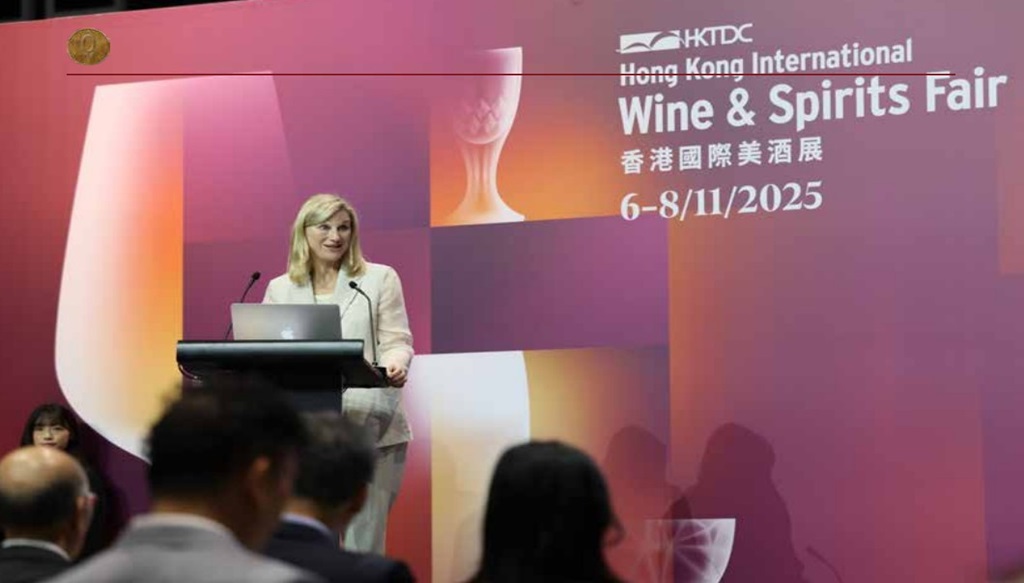
CULTURE IN A GLASS: INSIDE THE 17TH HONG KONG INTERNATIONAL WINE & SPIRITS FAIR WHERE TRADITION AND INNOVATION MEET, ONE SIP AT A TIME. Anamika Joseph In house curator (WSCI) Wine & Spirits Club of India When a city hosts a wine and spirits fair, it becomes more than a venue for bottles, brands, and trade deals. It transforms into a living cultural exchange, a place where stories are poured, heritage is tasted, and identity is expressed through aroma and flavour and shared experience.That was the unmistakable atmosphere at the 17th Hong Kong International Wine & Spirits Fair, held this season with an energy that felt both international and deeply personal. Across three days between November 6 and 8, the event welcomed over 620 exhibitors from 23 countries and regions. Wines, baijiu, sake, whisky, vodka, gin, rum, and low-alcohol innovations filled the halls, but what stood out most was not the scale. It was the tone, youthful, open, curious and beautifully cross-cultural. The “World of Spirits” Zone This year marked the debut of the ‘World of Spirits’ zone, a concentrated showcase representing spirits from 14 different countries. The area pulsed with discovery. Here, you could watch a bartender craft a baijiu highball at one booth and two steps later, sample a Tasmanian single malt finished in Muscat casks.The message was clear: spirits today are no longer defined by their geography but by the stories they choose to tell. Chinese baijiu, in particular, stepped into the spotlight with renewed intention. Six of the top Chinese baijiu brands exhibited this year, and the emphasis was distinctly modern: lighter styles, fresher branding, approachable flavour profiles, and bottle designs that blended cultural heritage with contemporary aesthetics. Luzhou Laojiao’s launch of ‘Guojiao 1573’ was a striking example. With a bottle design incorporating iconic Hong Kong landmarks, it presented baijiu not just as a drink, but as a cultural symbol, a bridge between past and present, tradition and reinvention. This shift reflects a rising desire among younger consumers to connect with their heritage, but in ways that feel relevant, intentional, and expressive. Wine, Rediscovered and Reimagined While spirits rose in prominence, wine held its ground with elegance. The fair’s tasting sessions, led by renowned Masters of Wine, reminded visitors that wine culture is evolving beyond geography and pedigree. Guests explored terroir-driven wines from regions like Ningxia and Xinjiang in China, alongside Japanese sake, Hungarian whites, and refined Tasmanian reds.It was less about comparing ‘old world vs. new world’ and more about experiencing how climate, soil, and human hands shape emotion into taste. At one table, an Israeli winery introduced selections that delighted the attendees, many of whom admitted they tasted Israeli wine for the first time. Curiosity outshone assumption. Wine was not presented as an elite pursuit, but as a conversation: open, exploratory and deeply personal. Local Craft, Global Confidence What may have been most exciting, however, was the ascendance of Hong Kong’s own craft distillers. Brands like Kowloon Distillery and Two Moons displayed a confidence and identity that suggested Hong Kong is no longer just a marketplace for global beverages; it is also a creator of global beverage brands.These distillers are not mimicking global styles; they are creating their own. Citrus-forward gin rooted in Cantonese botanical storytelling. Whisky expressions shaped by local water, climate, and urban ageing conditions. A cultural voice, distilled. Buyers as Cultural Interpreters The energy on the trade floor was less transactional and more strategic. Buyers were not just purchasing, they were curating experiences for audiences back home. A Malaysian distributor expanded baijiu offerings to meet emerging interest. A Korean buyer who came seeking Portuguese wines ended up placing an unexpected order for Australian selections, moved by flavour and originality rather than reputation.It illustrated a shift happening worldwide: taste is now global, and consumers are ready to explore. Across continents, the language of trade is shifting from volume to values, and from trends to authenticity. Mood Shifted When Public Arrived On the final day, the fair opened to the public, and more than 11,000 enthusiasts poured in. The halls became a social space, a tasting journey, a playground of curiosity. At the mixology party, bartenders from award-winning Asian bars crafted cocktails like performance art, turning spirits into conversation pieces.It was no longer an industry event; it was culture in motion. Across all categories, one truth stood out: people today are not drinking more; they are drinking more meaningfully. They want stories behind the glass, authenticity behind the brand, a sense of identity and belonging, and experiences that feel personal, not performative.Wine and spirits are becoming less about indulgence and more about connection.A City in Conversation With World Hong Kong has long been a crossroads, a place where influences intersect, evolve, and transform. This year’s Wine & Spirits Fair was a reflection of that identity: multicultural, dynamic, and willing to challenge the old in pursuit of the new.Standing in that space, one could taste the city itself: open-minded, expressive, modern, rooted, and always reaching outward. Because in the end, whether one is swirling, sipping, tasting, or toasting, the real essence isn’t in the glass; it is in the stories shared around it.

CULTURE IN A GLASS – INSIDE THE 17TH HONG KONG INTERNATIONAL WINE AND SPIRITS FAIR BY ANAMIKA JOSEPH Read More »

SIP AND GUZZLE, NEW YORK WHEN TOKYO PRECISION MEETS NEW YORK ENERGY FROM FEATURES DESK

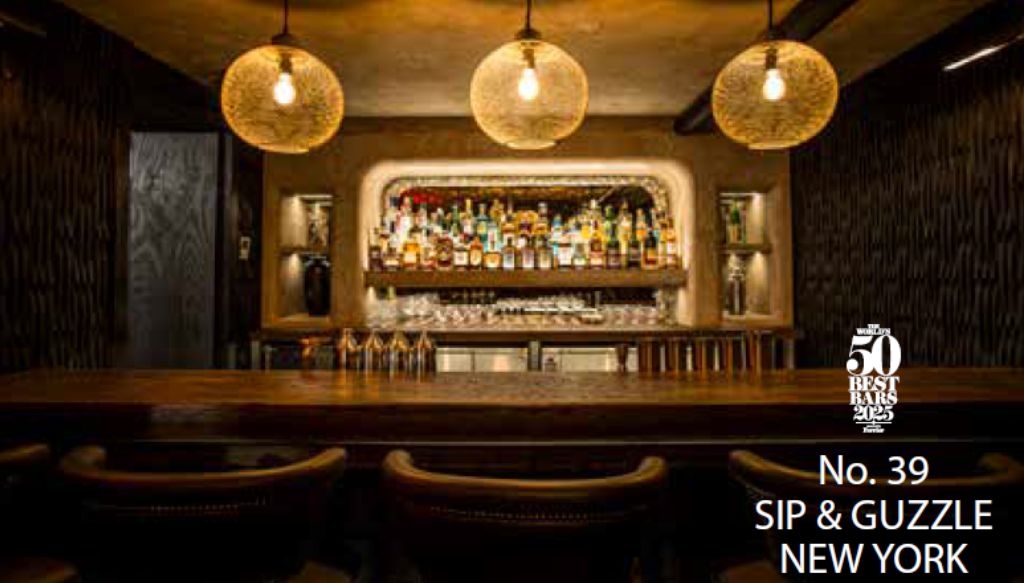
WHEN TOKYO PRECISION MEETS NEW YORK ENERGY SIP & GUZZLE, NEW YORK From Features Desk Tucked into the charming streets of Greenwich Village, Sip & Guzzle has quickly become one of New York’s most talked-about destinations for cocktail connoisseurs and culinary adventurers alike. Located at 29 Cornelia Street, this bi-level bar is the creation of world-renowned bartenders Steve Schneider of ‘Employees Only Singapore’ and Shingo Gokan of ‘The SG Club’ fame, alongside founder Justin Weitz, whose vision bridges culture, craftsmanship, and creativity.At its heart, Sip & Guzzle is a story of connection, between East and West, between art and flavour, and between two friends whose careers have shaped the world of modern mixology. The concept draws inspiration from the mid-1800s voyage of the Japanese consulate to the United States, when 77 samurai visited New York and experienced the legendary bar of Jerry Thomas.Their return to Japan inspired Shingo Gokan’s award-winning Tokyo bar: The SG Club. Now, Sip & Guzzle continues that narrative full circle, bringing the samurai spirit back to New York and blending the energy of the Big Apple with the precision of Japanese hospitality. A Tale of Two Bars Sip & Guzzle unfolds across two distinctive spaces that reflect this duality. The ground-floor Guzzle, led by Steve Schneider, channels the convivial energy of a bustling New York saloon. The atmosphere is lively, warm, and familiar; the kind of place where one can unwind over a perfectly balanced cocktail that feels both comforting and fresh. Schneider’s menu celebrates ‘crushable classics’ with inventive twists, like the ‘Yuzu Mugirita’, where shochu and yuzu replace tequila and lime, or the ‘Miami Vice Negroni’ and ‘Sherry Colada Highball’, which capture the playful spirit of the bar. Descending downstairs leads guests to Sip, a serene Japanese-style speakeasy overseen by Shingo Gokan and head bartender Ben Yabrow, formerly of ‘Double Chicken Please’. Here, mixology becomes an art form; cocktails are crafted with surgical precision using Japanese techniques, hand-cut ice, and thoughtful presentation. Signature drinks like the Tomato Tree, Mirepoix Gibson, and Chinatown No.5 reflect a deep respect for Japanese flavours, history, and craftsmanship. Culinary Artistry Complementing the drinks program is a culinary experience led by Executive Chef Mike Bagale, formerly of Chicago’s three-Michelin-starred ‘Alinea’, with support from Chef de Cuisine Isaac Leidenfrost. The menu reimagines Japanese izakaya favourites and American bar comfort food with playful creativity.At Guzzle, the vibe is casual and fun with dishes like Mochi French Fries, The Bikini (the world’s thinnest sandwich), and the cheekily served Electric Chicken, a spicy, mouth-tingling fried chicken accompanied by gloves and scissors. Downstairs, Sip offers refinement and indulgence through dishes like the ‘Royale with Cheese’, a decadent A5 Miyazaki Wagyu sandwich layered with aged cheddar and wasabi-tonkatsu sauce on soft shokupan bread. Each dish is thoughtfully designed to echo the bar’s philosophy, bridging cultures, curiosity and conversation.The Sip & Guzzle Experience The interiors, designed by Atsuhiko Sugiyama of Tokyo and Hiromi Akai of New York, mirror the bar’s philosophy of cultural fusion.Guzzle captures the warmth of an 1860s New York tavern, featuring exposed brick, rustic oak floors, and Andy Warhol prints, while Sip evokes an old Tokyo speakeasy: intimate, mysterious, and artfully detailed, with references to Yayoi Kusama and traditional Japanese craftsmanship. Since opening, Sip & Guzzle has earned accolades, including #5 on North America’s 50 Best Bars, #39 on the World’s 50 Best Bars, and ‘Best New Cocktail Bar’ at the 2025 Tales of the Cocktail Spirited Awards. Beyond its rankings, however, it stands out as a place that captures the soul of modern hospitality, where every detail, from the ice in your glass to the art on the wall, tells a story of passion, precision, and cross-cultural creativity.Whether one comes to Sip in quiet reflection or Guzzle with friends, one thing is certain: at Sip & Guzzle, every experience is designed to linger long after the last drink is poured.With its unique blend of storytelling, craftsmanship and innovation, Sip & Guzzle isn’t just a bar; it’s an experience that celebrates the art of connection.

SIP AND GUZZLE, NEW YORK WHEN TOKYO PRECISION MEETS NEW YORK ENERGY FROM FEATURES DESK Read More »

1930, HONG KONG – THE SECRET MILAN BAR THAT KEEPS MAKING GLOBAL HISTORY BY FEATURE DESK

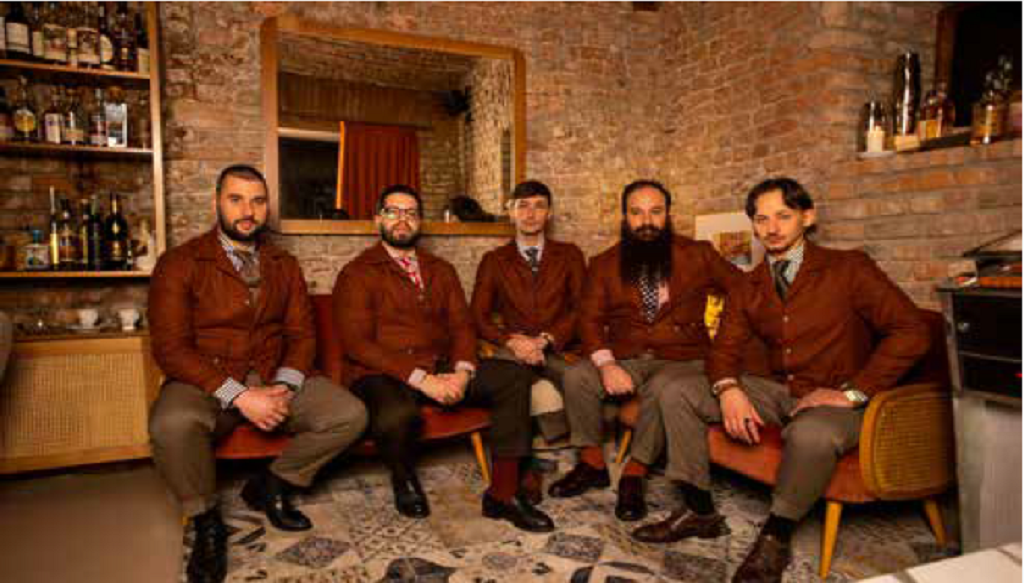
‘1930’: THE SECRET MILAN BAR THAT KEEPS MAKING GLOBAL HISTORY 1930, HONG KONG From Features Desk ‘1930’, the secret private club in Milan, has once again confirmed its place among the world’s mixology elite, achieving the 43rd position in the prestigious ‘World’s 50 Best Bars’ ranking for the seventh consecutive year.This recognition celebrates the excellence, consistency, and unique identity of a venue that, while preserving its intimate and discreet character, continues to proudly represent both Milan and Italy on the international stage.Beyond its exclusivity, ‘1930’ captures the very essence of Milan’s creative soul, refined yet quietly rebellious. Each visit feels like stepping into a piece of living history where time seems to slow reflecting a decade of dedication to the craft. “This year marked an important milestone in the history of ‘1930’. After 12 years at its original address, the bar found a new home, beginning a challenging evolution that has preserved the soul and refined atmosphere of the original venue, while adding new spaces and details that further enhance its identity and guest experience. “We are deeply grateful for this recognition,” says bar manager Benjamin Cavagna, “I dedicate this result to our extraordinary team that works every day with passion and dedication to our loyal guests, who continue to support us, and to the city of Milan, which inspires and embraces us. It is an honour to represent the Italian mixology scene on such a prestigious international stage, surrounded by colleagues from all over the world.” Aperitivo, Elevated to Art ‘1930’ welcomes its guests starting with ‘aperitivo’, with evocative cocktails, refined experimentation, and creative presentations, while the venue remains a point of reference for those seeking experiences beyond the ordinary. Every detail, from service to music selection, contributes to creating an unforgettable experience. As a result of continuous research and experimentation, ‘1930’ has also introduced À La Carte, a menu that merges mixology with haute cuisine. Structured like a restaurant menu: from appetisers to desserts, along with a section of reimagined classics, this journey offers a sensory experience where drinking becomes a true culinary act, highlighting techniques, ingredients, and inspirations drawn from both Italian and global gastronomic traditions.Access to the venue remains exclusive to the 193 private club members who can book a table, while others may visit ‘Mag La Pusterla’, a renowned cocktail bar operating as a standalone venue that also serves as the gateway to ‘1930’.Now celebrating its seventh year, ‘1930’ strengthens its position among the world’s most revered bars. This achievement is a celebration of consistency and evolution of a space that continues to innovate while honouring its roots. ‘1930’ offers more than a cocktail – A journey, one that lingers long after the final sip.

1930, HONG KONG – THE SECRET MILAN BAR THAT KEEPS MAKING GLOBAL HISTORY BY FEATURE DESK Read More »

HOPE AND SESAME, GUANGZHOU MAINLAND CHINA’S FLAGSHIP BAR BY TATIANA PETRAKOVA

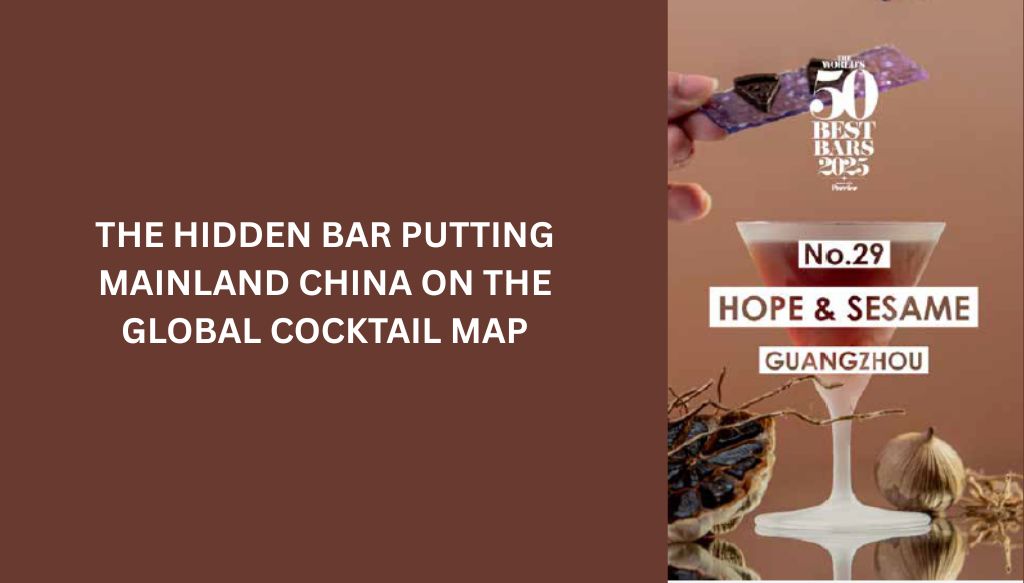
THE HIDDEN BAR PUTTING MAINLAND CHINA ON THE GLOBAL COCKTAIL MAP HOPE & SESAME, GUANGZHOU From Features Desk Founded in 2016, Hope & Sesame has quietly been redefining cocktail culture in southern China. Located in a traditional Cantonese café in the Dongshankou neighbourhood of Guangzhou, the bar’s unassuming entrance belies what lies within: a temple of mixology, innovation and Asian hospitality. From the moment one steps through the discreet refrigerator-door speakeasy style facade, the surroundings speak of craftsmanship, subtle luxury and a focus on flavour that transcends the ordinary. Technique Meets Tradition What sets Hope & Sesame apart is its fearless blending of modern technique with regional ingredients and warm hospitality. Under the leadership of co-founders Andrew Ho and BastienCiocca, the bar has become a testing ground for cocktails that combine rotary distillation, sous-vide infusions, centrifugal clarification, and other advanced methods, while still delivering drinks that feel inviting instead of overly avant-garde. Local flavour is never an afterthought; expect creative riffs on Chinese ingredients like roasted sweet potato, clarified coconut milk, pandan, and gochujang, woven into a drink menu that evolves every few months. Key to the experience is that the technique supports flavour rather than overshadowing it.The ambience also plays a powerful role in the bar’s character. With exposed brick, vintage timber panelling, gentle lighting and jazz-inflected nights, Hope & Sesame invites you to linger, to explore rather than rush. There is a comfortable sophistication; old-world bones beneath modern finesse. Between the cocktails and the atmosphere, it has established a loyal following in China and gradually attracted global attention. Recognition on the World Stage Which brings us to its recent landmark achievement: Hope & Sesame has been ranked No. 29 on The World’s 50 Best Bars 2025 list. This milestone marks the bar’s arrival on the global stage, not just as a regional favourite but as a serious contender among the best bars in the world. The ranking is all the more significant because it recognises a mainland-China cocktail bar in a list historically dominated by Western venues and major Asian hubs like Hong Kong or Tokyo. In parallel, the bar also ranks No. 7 on the Asia’s 50 Best Bars 2025 list, which named it ‘The Best Bar in Mainland China’. For customers and cocktail enthusiasts, this means visiting Hope & Sesame is more than just ordering a drink; it’s stepping into a bar at the cutting-edge of the craft. One will find menus that shift thematically, the latest being ‘To the Flavours’, a focus on small-batch distillations, local sourcing and a willingness to surprise. But all of this is delivered with warmth and accessibility. The team values hospitality highly: staff are knowledgeable, attentive and ground the experience in genuine connection rather than gimmick. Beacon for Chinese Cocktail Culture Looking ahead, the bar’s inclusion on the global list raises interesting questions about Guangzhou’s growing role in the world of cocktails and the evolution of Chinese F&B culture. Hope & Sesame has become a flag-bearer for the region, showing that excellence in mixology is not confined to long-established global cities. With its global recognition, the bar continues to inspire younger talent, deepen local ingredient exploration, and expand the notion of what a world-class cocktail bar can be in China.In the end, it is a story about the craft and the way it brings together tradition and innovation into a glass. With its global recognition, Hope & Sesame continues to open new doors, not just for Guangzhou, but for the future of Chinese cocktail culture.

HOPE AND SESAME, GUANGZHOU MAINLAND CHINA’S FLAGSHIP BAR BY TATIANA PETRAKOVA Read More »

THE CAMBRIDGE PUBLIC HOUSE, PARIS BRITISH HEART, FRENCH SPIRIT BY FEATURE DESK

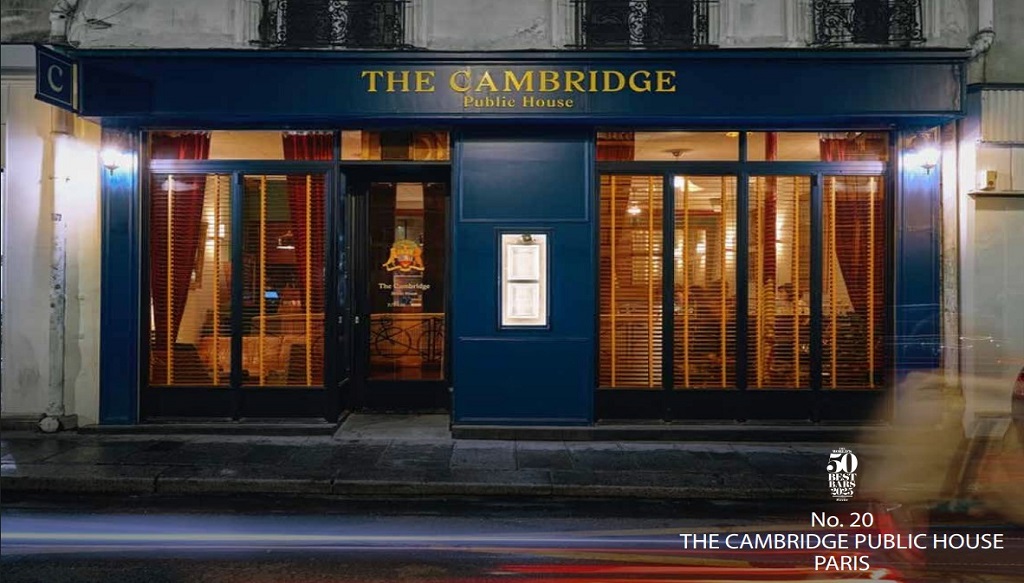
THE CAMBRIDGE: BRITISH HEART, FRENCH SPIRIT THE CAMBRIDGE PUBLIC HOUSE, PARIS From Features Desk ‘The Cambridge’ is an award-winning neighbourhood bar which opened its doors in the heart of the Marais, Paris, in 2019. Founded by industry duo Hyacinthe Lescoët and Hugo Gallou, the bar takes its inspiration from a classic British pub, which is blended seamlessly with elements of a chic Parisian cocktail bar, to deliver a relaxed and unique drinking experience. Its warm, unpretentious atmosphere invites both locals and travellers to slow down and savour each pour. Every detail from the interiors to the curated soundtrack reflects a love for timeless hospitality. ‘The Cambridge’ offers a comfortable and familiar setting that emulates the feeling of a classic British pub with a chic Parisian twist. Floor-to-ceiling glass windows at the front of the venue are opened fully in summertime, allowing guests to enjoy classic European cafe culture in the heart of the Marais. After dark, ‘The Cambridge’ shifts into a vibrant late-night hotspot, with cocktails flowing all night long, making it one of the city’s most loved destination cocktail bars for locals, internationals, and cocktail enthusiasts. Conscious Cocktails, Crafted Carefully The Cambridge’s cocktail menu evolves throughout the year and uses the best quality ingredients currently available. Popular staples and signature drinks that remain on the menu are updated seasonally and include playful takes on British classics as well as combinations of well-known cocktails. These include the ‘Pimms 4.0’, now in its fourth iteration, for which the team combines Pimms with Sirene Americano, Gin, Verjus, Clarified Lemon, and Orange Wine to create a playful take on the British classic; as well as the Gimlet Julep, which takes the best of two classic cocktails resulting in a harmonious, elegant drink; and the smokey ‘Cigarette After Sex’ which features Agua de Jamaica, Sloe Gin, and Del Maguey Vida Mezcal. Every week, the team also creates a special ‘Cocktail of the Week’, an experimental cocktail created using leftover produce. Alongside its cocktail offering, ‘The Cambridge’ serves a simple food menu inspired by British pub classics, all made in-house by the team using French ingredients; the sausage and vegetarian rolls are a particular favourite. All the food is designed to be the perfect accompaniment to the beverage menu.Paris’s Toast to Sustainability Since opening, ‘The Cambridge’ founders, along with their small, tight-knit team, have continually strived to improve sustainability not only within the bar but amongst the wider hospitality industry. Following the launch of its ‘Community Plan’ in 2023, the bar went on to become the first in the world to achieve ‘B Corp’ status this summer.‘The Cambridge’ and its team have also gone on to win many industry accolades and awards, including, most recently, being named No.20 and achieving the ‘Ketel One Sustainable Bar Award’ at ‘The World’s 50 Best Bars 2025’.It stands as a timeless reminder that true hospitality is not just about what’s in the glass, but the heart behind. With its blend of British charm, Parisian flair, and a deep-rooted commitment to sustainability, ‘The Cambridge’ has carved out a singular identity in the global bar scene. As it continues to evolve, the bar remains a beacon for conscious hospitality, where every cocktail tells a story and every guest becomes part of a growing community that values craft, connection, and culture.

THE CAMBRIDGE PUBLIC HOUSE, PARIS BRITISH HEART, FRENCH SPIRIT BY FEATURE DESK Read More »

FIVE YEARS STRONG – HOW PROWINE MUMBAI 2025 BECAME INDIA’S GLOBAL BEVERAGE HUB BY MALAY KUMAR ROUT

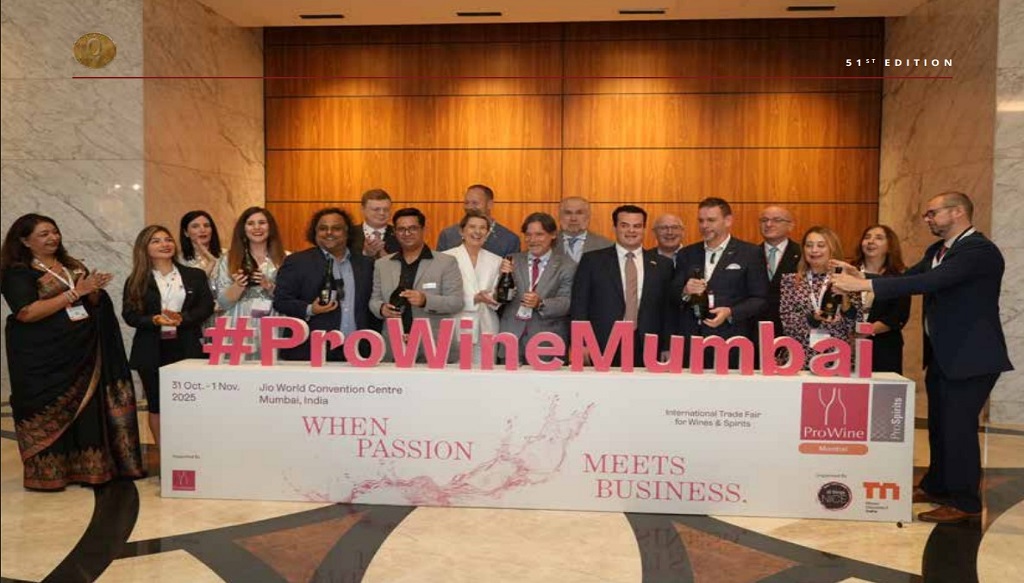
FIVE YEARS STRONG: HOW PROWINE MUMBAI 2025 BECAME INDIA’S GLOBAL BEVERAGE HUB Malay Kumar Rout The founder of WSCI (Wine & Spirits Club of India) If one seeks a masterclass in establishing a distinguished presence, the story of Messe Düsseldorf’s introduction of ProWine to India offers a compelling example. Now in its fifth successful edition, ProWine Mumbai has firmly established itself among India’s premier international exhibitions. The event consistently delivers seamless execution, thriving business opportunities, well deserved brand recognition, and meaningful engagement for attendees, underscoring its critical role in the country’s evolving alco-beverage landscape.This year’s edition, held at the Jio World Convention Centre on October 31 and November 1, elevated the standard for industry gatherings in the region by bringing together 213 exhibitors from 21 countries and over 5,400 trade professionals representing every link in the value chain. The atmosphere throughout the two-day event was marked by purposeful engagement as decision-makers, brand owners, and key opinion leaders convened not merely to celebrate diversity in wines and spirits but to forge the next chapter of India’s beverage story. “Through our satellite events not only in Mumbai, but also in Shanghai, Tokyo, São Paulo, Hong Kong and Singapore, we bring our international exhibitors directly to some of the world’s most dynamic growth markets and are committed to promoting business and networking in a high-quality B2B environment. All our locations benefit from efficient, professional organisation, yet retain their own identity and character. Throughout Asia, and especially in India, we are experiencing incredible momentum and a great desire for new experiences and innovation. India also proves that economic strength can go hand in hand with tolerance and warmth,” Frank Schindler, Director – ProWein, said. What was new this year? To complement its expanding scale, ProWine Mumbai 2025 introduced new features aligned with global trends, most notably “ProWine Zero”, a dedicated space for for the fast-growing zero-proof and low-alcohol category. With the alcohol-free sector projected to surpass $1.2 billion by year-end and growing at over 12 percent annually, the segment showcased premium alternatives tailored to health-conscious consumers. Its strong presence reflected rising demand in India, where over 40 percent of millennials and Gen Z actively seek low- or no-alcohol options, reinforcing ProWine’s commitment to innovation and inclusivity. Messe Düsseldorf also strengthened its digital engagement through ProWine Connect, an evolution of the ‘Fair Match’ platform introduced at ProWein Düsseldorf in 2018. Designed to support targeted networking, the tool enables exhibitors and buyers to review profiles, schedule meetings, and communicate in advance. Its successful adoption at ProWine Mumbai 2025 streamlined business interactions and enhanced preparedness, featuring Messe Düsseldorf’s focus on efficient, high-quality trade fair experiences. Creating waves & not just riding them The evolution of ProWine Mumbai corresponds with major shifts in India’s international trade environment. A defining development this year was the signing of the UK-India Comprehensive Economic and Trade Agreement (CETA) in July 2025, eliminating tariffs on 99 percent of Indian tariff lines and reducing duties on 90 percent of UK lines. This has significantly strengthened prospects for premium categories such as whisky, gin, and craft spirits. Its impact was visible at ProWine Mumbai 2025, where the UK Pavilion featured 19 producers benefiting from expanded market access under a deal projected to boost UK exports by nearly 60 percent, adding an estimated £15.7 ($20.7) billion by 2040.Similarly, Switzerland’s presence reflected the advantages of the India-Switzerland Trade and Economic Partnership Agreement (TEPA), effective October 2025. By lowering tariffs, simplifying customs procedures, and enhancing IP protection, TEPA is easing the entry of Swiss wines, spirits, and non-alcoholic beverages into India, reinforcing the country’s commitment to long-term market expansion.Emerging regions also benefited from strengthened bilateral cooperation. Moldova’s debut at ProWine Mumbai, supported by recent trade agreements and MoUs signed in 2024-25, highlighted growing export opportunities for niche producers seeking new markets. Together, these developments underscore ProWine Mumbai’s role as a strategic platform connecting global beverage producers with India’s rapidly expanding alco-bev economy The winner takes it home The ProWine Bartenders’ Competition at ProWine Mumbai 2025 was a high-impact platform displaying India’s finest bartending talent, judged on creativity, efficiency, flavour mastery, and hospitality under pressure. Deepika Shukla’s victory was a momentous achievement, highlighting gender equality with equal representation among finalists. Her prize includes a guest shift at Hanoi’s prestigious Haflington bar, a cash reward, and a seat at the WSET training course, highlighting the competition’s role in elevating professional standards and career trajectories. The ProWine & ProSpirits Challenge expanded the event’s competitive spirit with an inclusive, no-fee format that attracted a wide range of wine and spirit entries. Gold medallists represented regions from La Mancha and Veneto to Australia’s Barossa and India’s Nashik, alongside diverse spirits including whiskies, gins, liqueurs, soju, and non-alcoholic innovations. Blind tastings provided brands with valuable consumer insights, while medal endorsements boosted visibility and credibility, reinforcing ProWine Mumbai’s role in elevating industry standards. Discussions that steer the wheel The panel discussions at ProWine Mumbai 2025 brought together producers, distributors, restaurateurs, and brand ambassadors to examine key forces shaping India’s alco-bev landscape. Sessions such as ‘What is India Drinking?’ and ‘What’s Next in the Cocktail Revolution?’ unpacked shifting consumer preferences and emerging mixology trends. ‘What’s Right and Wrong About Wine Programmes in India?’ highlighted gaps in education and promotion. Panellists offered insights on premiumisation, the rise of low- and no-alcohol choices, and growing demand for sustainability.The discussions deepened understanding of market trajectories and regulatory considerations, reinforcing ProWine Mumbai’s role as a vital forum for industry collaboration and leadership. Mecca of Knowledge The masterclass lineup at ProWine Mumbai 2025 delivered a powerful blend of education and sensory exploration, drawing industry professionals and consumers alike. Day 1 featured sessions such as ‘Water is Not Just Water’, highlighting water’s impact on beverage quality, along with deep dives into single malt whisky, rum styles, and the terroirs of Australian and Californian wines. The evolution of Indian rum and tastings of Chile’s Gran Reserva added further depth.Day 2 built on this momentum with more intricate themes, including ‘Styling it Out:

FIVE YEARS STRONG – HOW PROWINE MUMBAI 2025 BECAME INDIA’S GLOBAL BEVERAGE HUB BY MALAY KUMAR ROUT Read More »

CHÂTEAU LAFLEUR BREAKS WITH BORDEAUX A CLIMATE DRIVEN REVOLUTION BY SANGMITRA

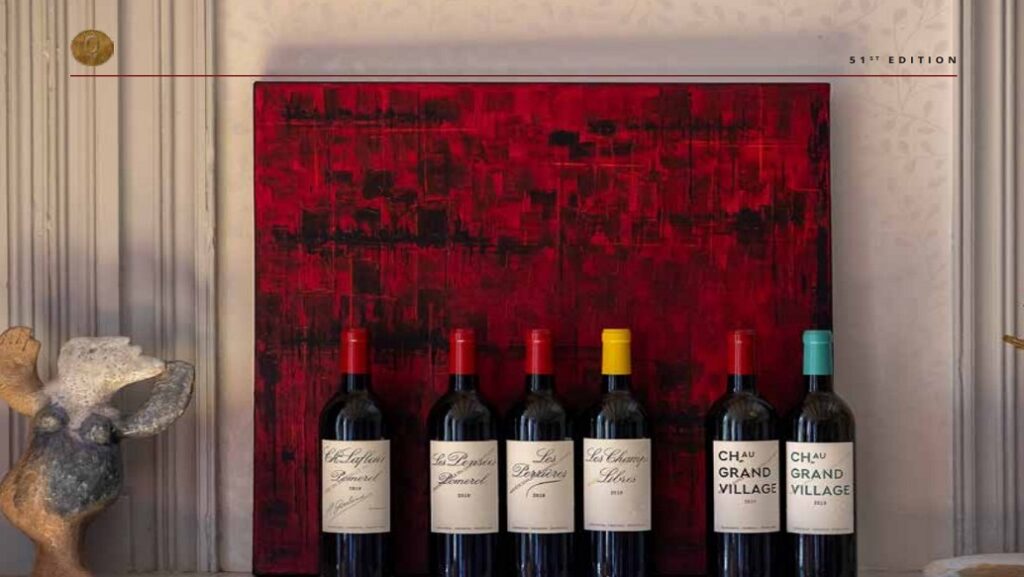
CHÂTEAU LAFLEUR BREAKS WITH BORDEAUX: A CLIMATE-DRIVEN REVOLUTION Sangmitra winesutra Founder and CEO, Winesutra In a move that has sent ripples through the wine world, the Guinaudeaus family of Château Lafleur has announced a historic and unprecedented departure from the prestigious appellations of Pomerol and Bordeaux. Beginning with the 2025 vintage, their wines will be labelled ‘Vin de France’. This decision, while radical, is not a rejection of tradition. It is a courageous response to the existential threat of climate change. For over 150 years, Château Lafleur has been synonymous with excellence, terroir expression, and quiet innovation. However, in recent years, the accelerating pace of climate disruption has compelled the family to reassess its approach, from vineyard management to regulatory constraints. Their choice to step outside the Appellation d’Origine Contrôlée (AOC) system is not a marketing stunt. Rather, it is a declaration of independence, driven by necessity and guided by conviction. A Vintage Forged in Fire The 2025 growing season was one of the most extreme in memory. Rainfall in March was down 73 percent, followed by months of drought and scorching temperatures. In the vineyard, fruit exposed to direct sunlight reached nearly 50°C. Vines faced severe water stress, and the risk of crop failure loomed large. Yet, through years of research and adaptation, the Lafleur team was prepared. They implemented a series of innovative techniques that defied convention but saved the vintage with reduced canopy height to limit transpiration, increased foliage density to shade fruit and preserve acidity, subterranean irrigation using sustainable water sources, and early-season interventions to mitigate stress before irreversible damage occurred. The result was grapes of exceptional quality, small berries with vibrant aromatics, balanced acidity, and moderate alcohol levels. A vintage not just rescued, but reimagined. Innovation Meets Regulation Despite their success, Lafleur’s adaptive methods remain incompatible with current AOC regulations. The AOC system, designed to protect tradition and terroir, has become a barrier to innovation. Lafleur’s experience reveals a painful irony as the very rules meant to safeguard quality now prevent winemakers from responding to the realities of climate change. The Guinaudeau family has proposed five key reforms to modernise viticulture in the face of environmental stress. These include lower planting densities tailored to soil water reserves, authorisation for mulching and full soil cover techniques to retain moisture, use of canopy shading to protect fruit from sunburn, significant canopy height reductions to reduce water loss, and flexible irrigation policies with sustainable sourcing and early-season deployment. These are not theoretical suggestions. They are proven strategies that are responsible for saving the 2025 vintage, but under current AOC rules, they remain prohibited. Vin de France: A New Chapter, Same Soul By choosing the ‘Vin de France’ label, Lafleur has gained the freedom to act swiftly and responsibly. However, this is not a break from tradition since it is a reaffirmation of it. The same distinctive terroir that has defined Lafleur since 1872, the same noble vine genetics cultivated with care and precision, and the same devoted family, guided by humility, curiosity, and conviction. The Guinaudeaus remain committed to their five authorised local grape varieties. They reject the idea of introducing foreign cultivars, believing that true adaptation lies not in abandoning identity, but in evolving within it. Their philosophy is clear: terroir is not static, it is a living dialogue between nature and culture, and in the face of climate change, that dialogue must evolve. A Vintage of Conviction The 2025 harvest looks promising. Early tastings suggest a vintage marked by nature, foresight, and resilience. This is a story of change, not of loss. Lafleur’s decision to leave the AOC system sends a message to the wine industry. It urges producers to reconsider how they define quality, authenticity, and tradition in a time of environmental disruption. Château Lafleur’s decision to change its label reflects a deeper shift in thinking. It is a clear signal that climate change is not a distant concern. It is already affecting how wine is made, and the impact is unfolding now. The Guinaudeaus have chosen courage over comfort and innovation over inertia. In doing so, they have opened a new chapter for Lafleur and for everyone who believes that great wine must evolve to survive. As the wine world watches closely, one thing remains clear. The 2025 vintage of Château Lafleur will be remembered for its quality and for the conviction behind it

CHÂTEAU LAFLEUR BREAKS WITH BORDEAUX A CLIMATE DRIVEN REVOLUTION BY SANGMITRA Read More »

THE UNSUNG INGREDIENT HOW ICE SHAPES EVERY SIP BY DUSHYANT TANWAR

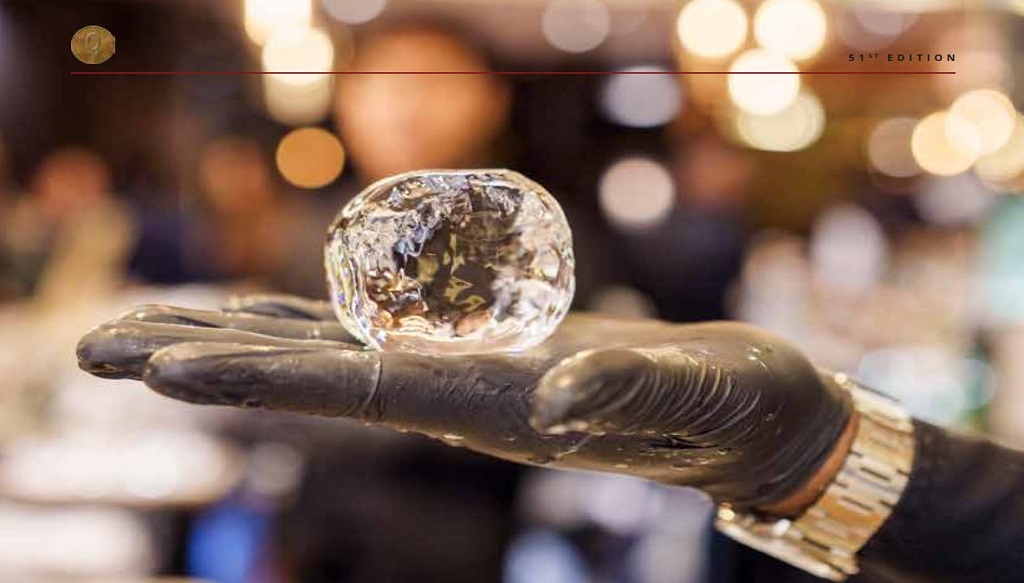
THE UNSUNG INGREDIENT: HOW ICE SHAPES EVERY SIP Dushyant Tanwar Portfolio Advocate – North India Beam Suntory “Can I have a mojito without the ice.” – These words have haunted bartenders for years now. It took away all the skill that their mentors had slapped (look up slapping mint) into them and left the guest with a bubbly cool liquid with lime and mint floating in it like the gods had beaten them up and left them to drown. In a lineup of drinks it looked like a war trodden soldier, who without any grooming joined the parade.In this little piece, we will explore where ice came from into the world of drinks, its importance, how it evolved over the years while it made its way into drinks in various shapes and sizes. History of ice in drinks Ice in today’s time and date is a common ingredient in all bars and households but not too long ago it was an elusive treat, only for the wealthy. It was used to preserve food and chill drinks. It is such an important ingredient, that it also appeared in the first definition of a cocktail.Around 1000BC, the Chinese were using ice from cold streams and blocks of snow as a means of preserving food. Around 500 BC, the Egyptians and Indians used rapid evaporation to cool water in clay pots and on straw beds. This combined with the cool temperatures of the night also helped in freezing the water. By 400 BC, the Persians had developed the Yakhchal (ice pit), a dome shaped building about 2 stories high with the same amount of space under ground. The walls of this Ice pit were made of sand, clay, egg whites, lime, goat hair and ash, a combination that was water resistant and also resistant to heat transfer helping create insulation. Around the 5th century BC, the Greeks were enjoying nectar and honey flavored snow. Alexander the great built the first Greek icehouses and loved eating frozen milk and honey along with fruits and wine. The Romans were also not far behind, and enjoyed ice and snow mixed with wine and juices to cool themselves off. Emperor Nero also had snow transported to Rome for these purposes.While empires fell taking away the advancement of these techniques, ruins and texts have helped gather and preserve this knowledge on (of) Ice. The American adopted the European style pits for ice conservation. In the 17th century the Americans used these pits with a hut on top to trap cold air. It was mostly ice from ponds that were cut and stored in late winter. Thomas Moore in 1803 patented his appliance the “refrigerator”, which was nothing but an ice box he made with oval shaped cedar wood which housed a rectangular tin in it. Ice was put in between the wood and the tin box before being covered with cloth and rabbit skin. Thomas used his invention to transport butter, giving it an extended shelf life of about 4-5 days. One of the notable figures in the history of ice was Frederic Tudor, nicknamed the “Ice King of the World”. He was the first man to see the potential in ice as a product and took it to all parts of the US and then to different parts of the world. By 1820, he had devised a brilliant way to use sawdust as insulation on ships, which eventually helped him bring ice to as far away as the Caribbean Islands and Bombay. His vision and perseverance revolutionized the food and drinks industry. People were drinking cold mint juleps in summers, and ice had become the second largest export of the US, after cotton. The journey of mechanical ice production began in 1847 with Dr. John Gorrie, who developed a prototype refrigeration machine to cool his patients suffering from malaria and yellow fever. Despite receiving a patent in 1851, Gorrie’s invention was ridiculed by the ice-shipping industry, leading to his business failure and the shelving of his concept. Progress resumed in 1853 when Alexander Twining patented the first commercial refrigeration system, followed by James Harrison’s high-capacity ice machine, which earned an Australian patent in 1855. In 1873, Andrew Muhl’s ice-making machine in Texas paved the way for the world’s first commercial icemakers, manufactured by Columbus Iron Works. By 1917, the National Association of Ice Industries was formed as mechanically produced ice gained popularity in the food and beverage industry. Innovations continued with Henry Vogt’s 1938 Tube-Ice Machine, which introduced automatic ice production in vertical tubes, and Charlie Lamka’s 1968 invention of volumetric plastic-bag packaging, revolutionizing ice storage and distribution. The industry evolved with organizational rebranding, culminating in the International Packaged Ice Association (IPIA) in 1998, which now represents over 400 global ice producers and promotes the mission that “Ice is a Food.”Ice in Modern Day drinks. “The more the ice the better it is” – Zbigniew Zapert (Zibi) was the first person to tell me these golden words.When it comes to ice, it’s the quality and consistency that matters. And before you even have ice, you have water which has to be neutral, without any flavors or odors. When it comes to ice it is important to see what the application of the ice is. Different types of ice are used for shaking, stirring and for service of a drink. When making a drink, use the same quality of ice, same size and same shape for the same dilution and consistency in your cocktail. To geek out on this, new bartenders are urged to measure the amount of liquid ingredients before you put into the shaker or the stirring glass and then post processing measure it again. One has to know the amount of dilution the ice causes in a drink. For cocktails 20 – 40 % dilution is the key depending on the type of drink and the ABV of all the ingredients involved. It is also a useful piece of information when one is batching

THE UNSUNG INGREDIENT HOW ICE SHAPES EVERY SIP BY DUSHYANT TANWAR Read More »