54th Edition E- Magazine Blogs

Following the River to Port

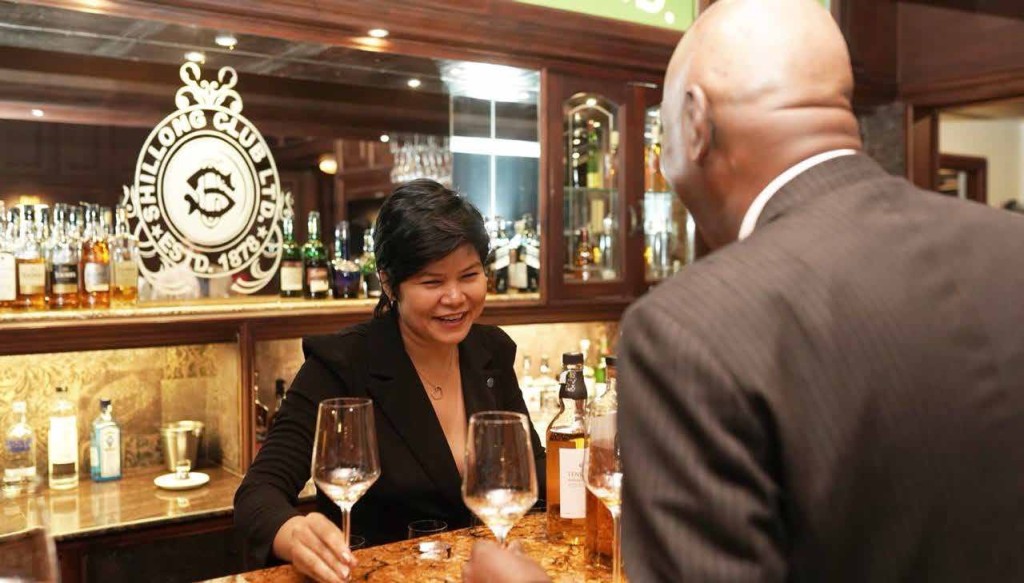
Mandira Bordoloi WSET-3, BDM Beer, Wine 7 Spirit DHL India – Hillebrand Gori “My dear girl, there are some things that just aren’t done, such as drinking Dom Pérignon ’53 above the temperature of 38 degrees Fahrenheit. That’s just as bad as listening to the Beatles without earmuffs.” – James Bond, Goldfinger (1964)It took only that one line, Sean Connery’s charm wrapped neatly around a bottle of Dom Pérignon for me to fall in love with the idea of wine. And perhaps with the charisma that came with knowing your drink so intimately. Of course, I was far too young then to understand wine, romance, or James Bond’s unwavering loyalty to his beverages. But even at that age, I sensed there was something undeniably attractive about the knowledge of wine, a personality trait that could set someone apart in any room.Growing up, my relationship with alcohol looked nothing like Bond’s refined rituals. In my family, drinking was never a taboo, but neither was it a performance. My elders enjoyed whatever the canteen offered, from renowned Indian rums to modest whiskies and brandies that served their purpose: helping people dance, sing, celebrate, or simply unwind. Nothing extravagant, nothing theatrical.At home, fermentation was just another part of life. The scent of rice wine or homemade fruit wine drifting through the kitchen was familiar, even comforting. It wasn’t exotic or pretentious—it simply belonged. Yet somehow, despite being surrounded by all this, I developed a strange detachment from alcohol. Perhaps I was searching for something… different. Something that didn’t feel ordinary.Wine, however, remained a distant planet – beautiful, intriguing, but utterly alien. For years I believed it wasn’t meant for Indian consumers at all. It felt too foreign, too complex, too steeped in rituals that didn’t match our everyday drinking culture. While the world swirled, sniffed, and sipped, we poured, clinked, and consumed.But that Bond quote lingered in my mind, quietly nudging me. Maybe wine wasn’t just a drink- it was a narrative, a culture, a conversation. And perhaps, somewhere in the evolving tastes of modern India, there was space for us to explore it too. With the arrival of my legal drinking age, wine still wasn’t a part of my life but fate ensured it found me anyway. I remember being gifted my very first bottle. The price tag hinted that it wasn’t anything remarkable, and the taste confirmed it. It was sharp, slightly off, and far from the velvety elegance I had imagined from years of watching James Bond swirl his champagne with sophistication. Yet something unexpected happened. As the tannins gripped my tongue- drying, gripping, almost stubborn they awakened a curiosity I didn’t know I had. If the cheapest wine could taste like this, I wondered, what would the complex ones feel like? Surely the world wouldn’t idolize wine if this was all it had to offer. There had to be layers, textures, stories hidden in every sip of a finer bottle.That first encounter didn’t convert me into a wine lover, but it sparked a question. And sometimes, that’s all it takes. A question that lingers long enough becomes a journey. And mine was just beginning. But coming from a small metropolitan city and always surrounded my Defence campus life, exotic wines were never really an option. We drank whatever choices we had in front of us. Nothing fancy, nothing imported, just what the shops stocked. And then, thanks to my then boyfriend, the only costlier wine I ever got was an Australian one he gifted me on my 22nd birthday. You can imagine-I was in love with my boyfriend and a little bit in love with the wine too. It felt special, different, something I wasn’t used to at all. Still, even after that, I wasn’t confident enough to order a full bottle of wine at any gathering. I didn’t feel ready to collect them or display them like some people do. I was curious, yes, but not fully convinced. Wine still felt like something I admired from a distance, not something I had the courage to completely embrace. But after spending almost eight years in media and broadcasting, something inside me shifted. I started feeling that a “wine personality” could add a bit of divaness to who I was. Suddenly, wine didn’t feel distant anymore. The attraction was stronger, almost magnetic, like it had been waiting for me to notice it properly.And then came my first big step – WSET Level 1 certification in Wines. I was happy, yes, but even more curious. It didn’t feel like just a course; it felt like falling in love. Like meeting someone interesting while travelling, or spotting a mysterious neighbour you can’t help but think about. You don’t know them, but something in you wants to. That’s how wine felt to me- a mix of love, passion, curiosity, and a quiet pull that kept getting stronger.Next step of Level 2 hit me harder than I expected. This wasn’t casual curiosity anymore. This was study tables, grape maps, soil types, climate zones, acidity levels, tannin structures, fermentation science- everything that makes wine what it is. And for the first time, I felt like I wasn’t just admiring wine from far away.I was finally inside its world. Not as a casual drinker. Not as someone pretending to know. But as someone who was there professionally and passionately. WSET Level 2 was the moment where wine stopped being just an attractive personality trait and started becoming something I wanted to understand deeply. It felt like meeting the same mysterious person from Level 1 again but now they started opening up, sharing their stories, their history, their complexity.• Every grape variety was like a character. • Every region felt like a new destination on a map. • Every class left me more curious than before. With time, with patience, and yes, with some investment, I finally crossed a milestone I once thought was impossible – I passed WSET Level 3. A certificate that doesn’t just

Following the River to Port Read More »
India-EU and India-US Trade pacts, a boost for global ties

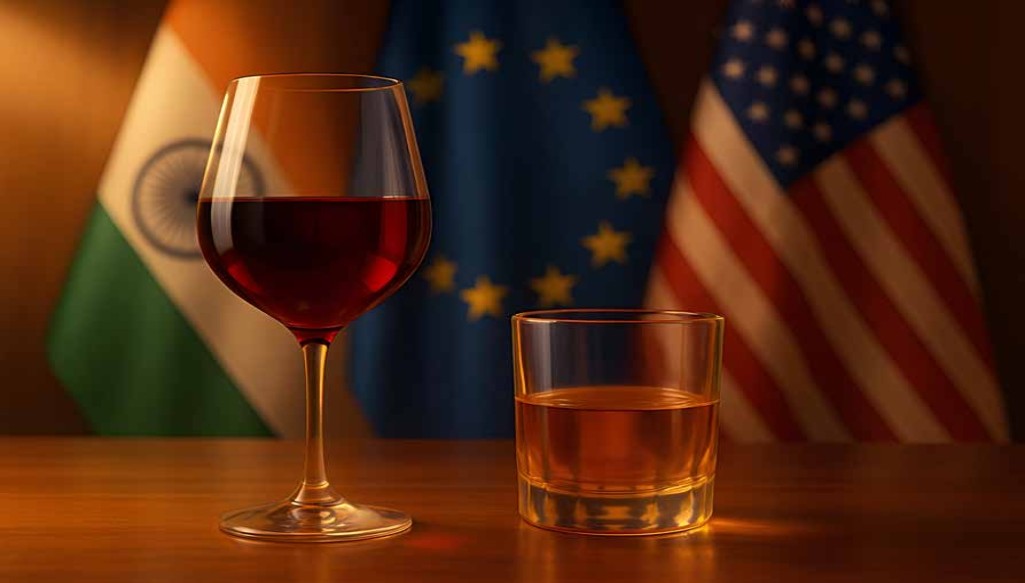
Ajay Jha A senior Delhi-based independent journalist India has entered a new phase in its international trade relations with the full free trade deal with the European Union, followed by the recent interim agreement with the United States. The India-EU agreement, concluded after prolonged talks, covers a wider range, including services, investment, and sustainability, with the potential to add €100 billion in trade over the next decade. The India-US pact, signed in early 2026, focuses on tariff reductions in selected sectors to enhance bilateral trade, which already exceeds $190 billion a year. This interim arrangement builds on earlier WTO resolutions and aims to cut barriers in goods like textiles, agricultural products and spirits. Both deals arrive as India looks to expand its exports, attract investments and diversify markets amid shifting global supply chains. For the alcoholic beverages sector, often called alco-bev, these agreements bring major changes by lowering import duties and facilitating Indian products’ entry into Western markets. They also spark debates on competition, consumer choices and domestic industry safeguards. Key Provisions and Differences in Agreements The India-EU deal follows a phased reduction over five to seven years, cutting duties on 97 per cent of EU exports to India. For alco-bev spirits, duties drop from 150 per cent to 40 per cent, beer from 110 per cent to 50 per cent, and wines from 150 per cent to 20 to 30 per cent, with initial cuts to 75 per cent. The India-US interim deal adopts a balanced approach where the US lowers duties on Indian exports worth over $40 billion, including textiles, gems and marine products from 50 per cent to 18 per cent or zero. India, in return, offers concessions on automobiles with quota-based duty cuts and reduces tariffs on American wines and spirits from 150 per cent to lower levels, with minimum import prices to control volumes. This ensures gradual market opening rather than a sudden influx. The pact also addresses non-tariff issues like certification for food items, but protects sensitive areas such as dairy. Unlike the US deal, the EU agreement includes geographical indications protecting European brands like Champagne, while recognising Indian spirits and emphasises sustainable practices. The US pact is limited and interim aiming for quick gains while the EU one is comprehensive with deeper commitments on labour and environment. For alco-bev, the US focuses on bourbon and whiskey with quotas, while the EU highlights wines from France, Italy and Germany, along with beers. India’s exports gain from lower barriers in both, but the EU’s premium-focused market provides more scope for high-value Indian whiskies. Effects on Alco Bev Sector India’s alco-bev industry, worth over $50 billion, faces both growth prospects and pressures from these deals. High tariffs have long protected local production, dominated by whisky, rum and beer, keeping imports to the luxury segments. With cuts, Indian makers fear competition from Western brands known for quality and range. In the US pact, tariff reductions on spirits could lower American bourbon prices by 30 to 50 per cent, appealing to urban buyers in cities like Delhi and Mumbai. The EU deal’s phased cuts might reduce French wine costs by up to 60 per cent over time, bringing more European options to shelves. This could push domestic firms to upgrade or lose share in premium categories. However, both agreements include protections like minimum import prices in the US deal and transition periods in the EU one, giving time for adaptation. Joint ventures could bring technology for craft beer or fine spirits to India. The sector might move towards premium products, with local companies focusing on quality to compete, instead of relying on high duties. Exports from India stand to benefit greatly. Indian single malt whiskies brands, already praised abroad, could expand with tariff drops from 10 to 20 per cent in the US and EU. This might raise India’s spirits exports from $200 million to over $500 million in five years. Indian Buyers and Export Chances Indian buyers, especially in expanding urban and middle-class groups, will gain more from these agreements. Reduced duties mean more variety and better prices for quality alco-bev items. A mid-range Scotch or French wine now costing ₹3,000 to ₹5,000 might fall by 20 to 40 per cent, encouraging people to try beyond local brands. This could build a refined drinking habit matching global patterns like craft mixes and low alcohol choices. EU non-alcoholic drinks could also become cheaper, offering healthier options.For exports, Indian drinks have good chances in Western markets. Indian whiskies win awards for their special tastes from local grains and ageing methods. With lower barriers, sales of Indian single malt whiskies in the US and EU could grow. Acceptance among Western buyers is rising from interest in unique spirits. Indian rums and gins with spices like cardamom fit the craft trend in Europe and America. Safeguards for Indian Makers To protect local makers, both deals have safety steps. The US agreement uses quotas to limit the import amounts of sensitive items like spirits, avoiding sudden rushes. The EU deal has safeguard rules, allowing short-term duties if imports harm the industry ensuring stability, fairness, competitiveness, resilience, sustainability, growth, balance, & protection. Geographical indications shield Indian brands like Darjeeling tea and extend to alco-bev for true origin. These steps give Indian firms time to improve quality and work perhaps through ties with Western groups. But issues remain. Small makers might find it hard to match global firms in promotion and supply. State excise rules could add complications, reducing FTA gains. For buyers, while costs drop, quality checks remain key to stopping poor imports. Western liking for Indian drinks requires focused ads showing green practices and history. Overall, these deals show India’s growing role in world trade but call for smart changes from all sides to get the most benefits. As the agreements start, the alco-bev sector is at a turning point, ready for expansion if handled well.

India-EU and India-US Trade pacts, a boost for global ties Read More »

Raise a can to the future- Inside UNIWINE’s game

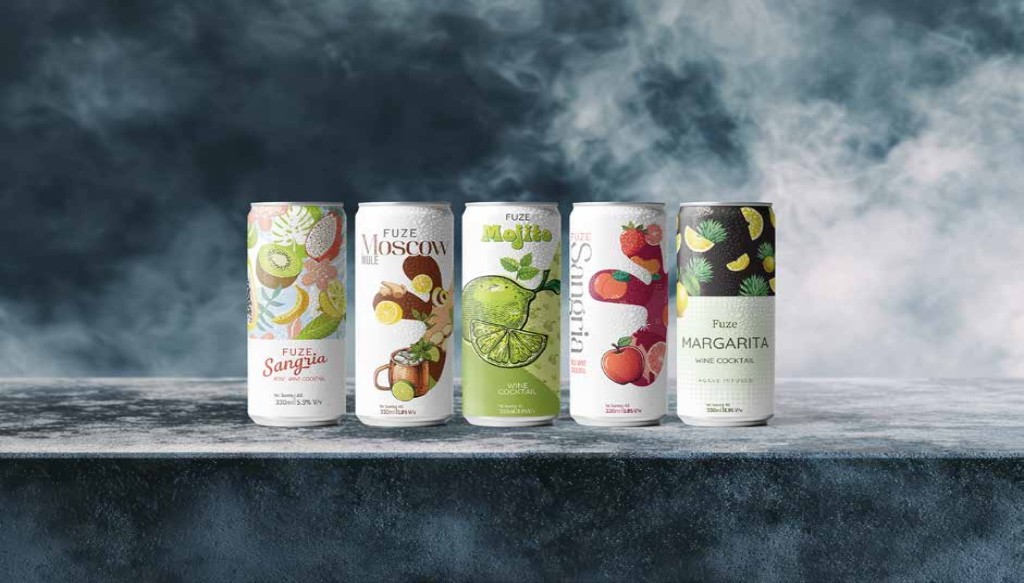
Malay Kumar Rout in routmalay The founder of WSCI (Wine & Spirits Club of India) The global beverage industry and more specifically, the alcoholic beverage segment, has witnessed a remarkable wave of innovation over the past few years. Across continents, producers are rethinking not only what they craft, but how they connect with their audiences. What was once a largely producer-driven market has evolved into a dynamic, two-way conversation. Today’s distillers, brewers, and winemakers are listening more closely than ever to consumer expectations, while consumers themselves are increasingly adventurous, open to experimentation, and eager to explore new taste experiences. This mutually reinforcing relationship is shaping a more vibrant and responsive marketplace. As producers refine their portfolios based on evolving preferences, and consumers embrace diverse styles and formats, the overall product experience continues to improve, strengthening both brand value and market growth in the long run. Of course, every producer operates with a distinct business model, philosophy, and product cycle. Innovation, therefore, takes many forms, some driven by technology, others by storytelling, terroir, or bold experimentation. During a recent visit to Nashik, Maharashtra, a region steadily carving its identity in India’s alcoholic beverage landscape, I encountered a uniquely distinctive producer UNIWINE, whose product range immediately stood apart. What followed was an engaging and insightful conversation with the CEO Rajiv Seth, that revealed something even more compelling than the bottles themselves. It became clear that this was not a strategy conceived in a boardroom presentation. Instead, it was a business and marketing approach shaped by a deep understanding of market demand, evolving consumer aspirations, and the gaps that often go unnoticed. In this Q&A, we delve into that journey exploring the vision, strategy, and philosophy behind a producer who exemplifies how listening closely to the market can lead to authentic innovation and meaningful growth. A Conversation Between Malay Kumar: Hi Mr. Seth, It’s a pleasure to have you here on behalf of the Wine and Spirits Club of India. Rajiv Seth: Thank you, Malay. Great to be here! Malay Kumar: What inspired you to pioneer wine-based ready-to-drink (RTD) products in India? How did your passion for blending play into that?Rajiv Seth: It started with my love for blending-experimenting with flavours to create something new and balanced. Traditional wine can feel intimidating, so we thought: why not make it more accessible? Wine-based RTDs were a natural evolution-using premium grape bases and blending them with fruits, nectars, or even hops for refreshing, ready-to-enjoy options. This passion drove us to develop ground breaking blends that appeal to modern tastes while staying true to wine’s essence. We founded Uniwine in 2018 to disrupt the market and make wine fun and casual. Malay Kumar: Globally, RTDs have exploded in popularity, especially among Gen Z. What do you see driving this trend? Rajiv Seth: Absolutely. RTDs are booming worldwide because they offer convenience, innovation, and novelty. Gen Z prefers low-commitment, exciting drinks with lower ABV options, bold flavours, and premium quality without the formality of traditional beverages. Globally, the RTD alcoholic beverages market is growing strongly, with projections showing significant expansion due to these preferences for portability and experimentation.Malay Kumar: Uniwine has made headlines with canned varietal wines. You’re credited as one of the first in India to launch these non-carbonated wines in cans-how does that work technically? Rajiv Seth: Yes, we’re proud to be pioneers in bringing varietal wines-like Chenin Blanc, Sauvignon Blanc, Cabernet Sauvignon, Shiraz, and Rosé-in 250 ml cans. Still (non carbonated) wines require special technology to prevent can collapse or flavour issues. We use liquid nitrogen (LN2) dosing during filling to create internal pressure and maintain integrity, combined with aluminium cans lined with a water-based polymer to protect the wine’s taste. This allows us to deliver premium, portable varietals without compromising quality-perfect for on-the-go enjoyment. Malay Kumar: You’re also developing a non-alcoholic range-mixers, flavoured waters, energy drinks. How does this fit your vision, especially for Gen Z? Rajiv Seth: Gen Z values health-conscious, versatile options. We’re expanding into non alcoholic lines with premium mixers, flavoured waters, and energy drinks that pair perfectly with our wines or stand alone. This aligns with their mindset-innovation, wellness, and fun without alcohol-while broadening our appeal and encouraging responsible enjoyment.Malay Kumar: Uniwine has made headlines with canned varietal wines. You’re credited as one of the first in India to launch these non-carbonated wines in cans-how does that work technically? Rajiv Seth: Yes, we’re proud to be pioneers in bringing varietal wines-like Chenin Blanc, Sauvignon Blanc, Cabernet Sauvignon, Shiraz, and Rosé-in 250 ml cans. Still (non carbonated) wines require special technology to prevent can collapse or flavour issues. We use liquid nitrogen (LN2) dosing during filling to create internal pressure and maintain integrity, combined with aluminium cans lined with a water-based polymer to protect the wine’s taste. This allows us to deliver premium, portable varietals without compromising quality-perfect for on-the-go enjoyment. Malay Kumar: You’re also developing a non-alcoholic range-mixers, flavoured waters, energy drinks. How does this fit your vision, especially for Gen Z? Rajiv Seth: Gen Z values health-conscious, versatile options. We’re expanding into non alcoholic lines with premium mixers, flavoured waters, and energy drinks that pair perfectly with our wines or stand alone. This aligns with their mindset-innovation, wellness, and fun without alcohol-while broadening our appeal and encouraging responsible enjoyment.Malay Kumar: The Indian RTD market is growing but lags behind international markets, where RTDs are rapidly claiming shelf space. Indian consumers seem slower to adopt-perhaps due to spending power. What data shows this, and what challenges do you see? Rajiv Seth: Internationally, RTDs are surging-global markets show strong CAGRs and value growth from convenience and trends. In India, the RTD alcoholic beverages market is projected to grow from around USD 25.8 billion in 2025 to USD 48.7 billion by 2031, with RTD cocktails at 19.7% CAGR in some segments. But yes, we’re behind-due to high excise duties, complex state regulations, price sensitivity, lower disposable incomes in many segments, and traditional preferences for beer or spirits. Awareness and distribution

Raise a can to the future- Inside UNIWINE’s game Read More »