


Across India, countless regional cuisines thrive quietly in homes and communities, vibrant traditions that rarely find their moment under the national spotlight. As chefs, we spend years mastering global techniques, but it’s the flavours rooted in the soils and seasonings of our own country that possess a magic too rarely celebrated. I believe that our understanding of good food is incomplete without knowledge of legacy cuisines where stories and flavours are passed down more by memory than by recipe, because true dining is not just about taste, but about memory, culture, and the mindful rituals that bind us.
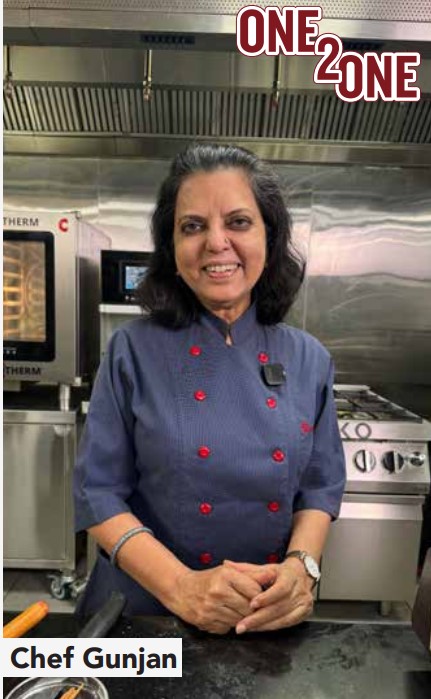
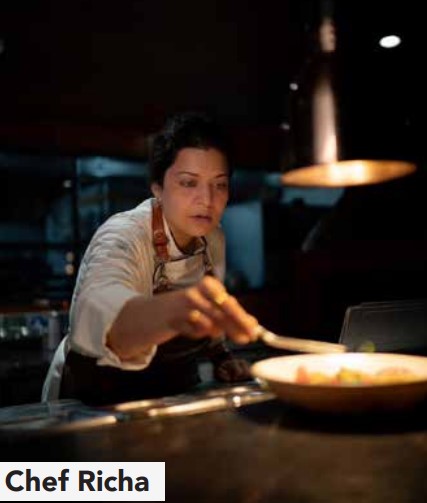
A: When I first stepped into a professional kitchen, it wasn’t just a new job — it felt like entering a completely different universe. The pace was intense, the heat was literal and metaphorical, and nearly every station was dominated by men. Back then, it was almost unheard of for a woman to pursue this path professionally. I remember feeling a mixture of excitement, fear, and curiosity, all swirling together like the aromas around me.
But there was something inside me, a spark I couldn’t ignore. I loved how a simple ingredient could transform into something extraordinary, how a carefully prepared dish could bring people joy, comfort, and even memories. I vividly recall the first time I plated a dish with intention and care, and and someone’s eyes lit up with delight at the first bite.
That was the defining instant when I realized, “This is my calling.” The kitchen wasn’t just a workplace; it became my canvas, my sanctuary, and the place where my creativity, patience, and heart could all find purpose. Over time, every challenge, the long hours, the high pressure, the skepticism became part of the journey that strengthened my love for this craft.
It’s funny how, looking back, the very things that seemed intimidating at first the heat, the chaos, the competition are now what I cherish most. They taught me resilience, focus, and courage. And that first spark, the one that told me I belonged here, has never dimmed.
Q: You have worked your way through kitchens that were once almost entirely male domains. Was there a moment when you felt you had truly broken that barrier, when your apron felt like both armour and achievement?
A: The journey through male-dominated kitchens was never easy, especially back when I started, female professionals in professional kitchens were unheard of. There was constant pressure to prove myself, not just as a capable chef, but as a woman in a space where authority was questioned. My turning point came during one hectic service when I focused completely on each plate, each garnish. In that moment, I realised respect was being earned not from novelty or sympathy, but from skill, discipline, and consistency.
A: The seed for “Baniya Legacy of Old Delhi” was planted in my earliest memories, where I remember sitting on a low stool in my grandmother’s kitchen, watching her hands move deftly between grinding spices, kneading dough, and stirring simmering curries. She didn’t just cook, she wove history, culture, and care into every dish. A simple breakfast of ‘torai pulao’(bottlegourd and rice) stayed with me for the care and love behind it. Each bite held memories, lessons, even some gentle scoldings, showing me how food connects people across time and preserves tradition and identity.
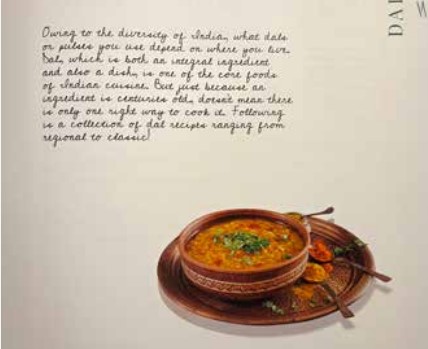
A: Baniya cuisine always reflects a deep respect for simplicity, discipline, and the philosophy of balance, irrespective of what part of the country. Ingredients are never used randomly. For example, in Old Delhi, the meals emphasise layering flavours carefully, with a delicate balance of sweetness, spice, and texture. In Marwar, the approach leans towards preservation using methods that allow food to last longer, given the arid climate. Even in Kolkata, where regional flavours are bolder and more robust, Baniya kitchens maintain that subtlety and discipline in combining tastes.
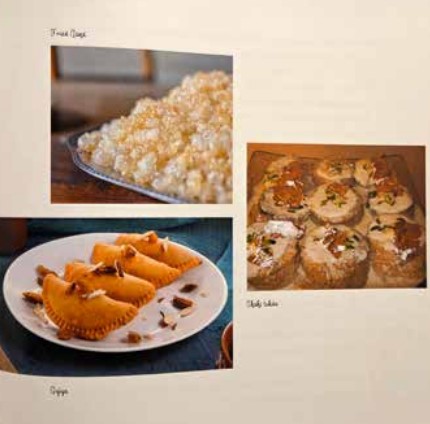
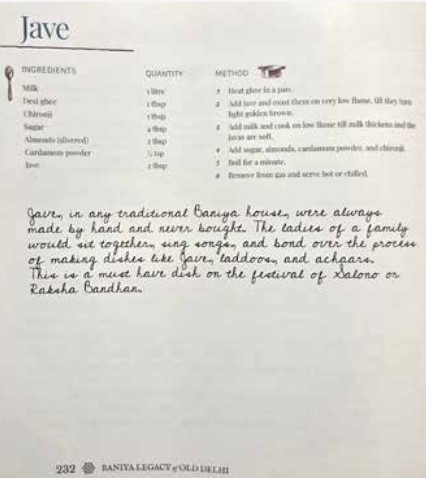
A: Baniya cuisine has travelled just like its people; quietly, through trade, migration and marriage. Its food philosophy of restraint, balance and precision left a subtle but lasting impact across India. Take Pista Lauj, a simple two-ingredient pistachio fudge that requires immense skill. This minimalistic approach later shaped many everyday dishes:
A: Yes, there was one, the ‘Chutki ki Roti’(wheat flour dough mixed in ghee and a pinch of salt). In our family, it wasn’t just a recipe; it was an art form, a ritual, and a test of patience. I remember it being made on on special occasions, the dough was soft yet firm, and with quick, rhythmic pinches around the edges, they would create delicate circular patterns that looked like lace. As time passed, I realised that very few people made it anymore. It was disappearing not because it was difficult, but because ourmodern pace no longer allows that kind of quiet, meditative cooking.
A: Yes, there were two meals that changed how I understand food, one in Italy and another in Japan. In Italy, I was invited to a modest home-cooked lunch. The woman who cooked it spoke of her ingredients the way we speak of family, with respect andaffection. There was no rush, no garnish for effect, only sincerity on a plate. That meal taught me that authenticity isn’t about grandeur; it’s about truth and emotion. Years later in Japan, I experienced the same philosophy in a different language: a bowl of perfectly steamed rice, a piece of grilled fish, a clear soup, and pickles. Each element was humble, yet the harmony between them felt spiritual. Though our flavours differ, the soul is shared.
A: To recreate the Old Delhi Baniya experience, you must capture its spirit, not just its recipes. For Baniyas, cooking was seva-pure, disciplined and heartfelt. Their kitchens were like small temples: clean, balanced, nothing wasted, every ingredient meaningful. A restaurant echoing that era must bring back the fragrance of ghee, the warmth of sharing, and the quiet dignity of doing simple things perfectly. It’s less about grandeur and more about grace, sincerity, and gratitude.
