
FALLING IN LOVE WITH
JAPANESE WINE: FROM
BEAUNE TO TOCHIGI

Mohona Chowdhrey
- the_winedian_girl
Two years ago, I attended the Salon des Vins
Japonais in Beaune, Burgundy, an event that
would quietly transform my relationship with
wine. As a sommelier living in the heart of
French viticulture, surrounded by centuries of
winemaking heritage, I didn’t expect a
tasting of Japanese wines to move me so
deeply.
Its subtle aromas of yuzu, white peach, and
mineral purity carried a grace I hadn’t
experienced before. It wasn’t trying to impress, it whispered instead of shouting.
That day marked the beginning of my
fascination with Japanese wines which led
me on a journey of curiosity, humility, and
rediscovery. And for that, I have to thank
Genki-san, whose warmth and generosity
opened the doors to a world I might never
have known.
The Origins of Japanese Wine
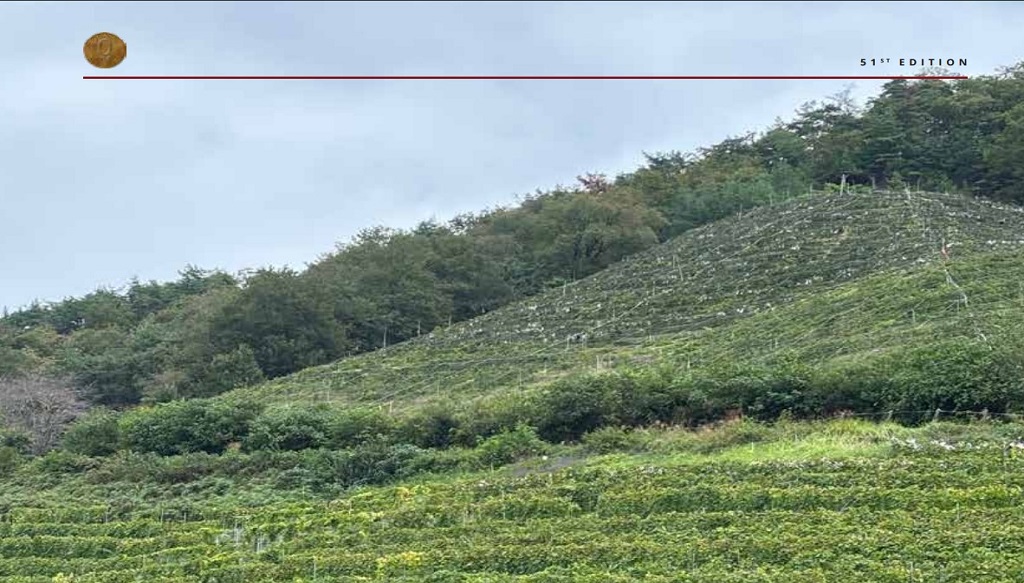
Japan’s winemaking story began in late 19th century, in Yamanashi Prefecture, northwest of Tokyo. Nestled at the base of Mount Fuji, this region became the birthplace of Japanese viticulture. Its landscape of misty mountains, volcanic soils, and cool river valleys offered both beauty and challenge in equal measure. Missionaries and traders introduced European grape varieties, but the country’s humid climate and abundant rainfall made grape growing a formidable challenge.
Japan’s winemaking story began in late 19th century, in Yamanashi Prefecture, northwest of Tokyo. Nestled at the base of Mount Fuji, this region became the birthplace of Japanese viticulture. Its landscape of misty mountains, volcanic soils, and cool river valleys offered both beauty and challenge in equal measure. Missionaries and traders introduced European grape varieties, but the country’s humid climate and abundant rainfall made grape growing a formidable challenge.
Instead of emulating European styles,
Japanese winemakers began adapting,
choosing grapes and techniques suited to
their unique environment. The result was a
new, distinctly Japanese expression of wine:
delicate, balanced, and harmonious.
Two grapes have since come to define
Japan’s identity in the global wine world
Koshu and Muscat Bailey A.
Koshu: The Spirit of Subtlety
For centuries, Koshu was consumed as a table grape, until producers in Yamanashi began realizing its potential for fine and sparkling wine. Today, it yields wines of exceptional finesse that are dry, lightly aromatic, and profoundly mineral. Its citrus, pear, and yuzu notes are lifted by a salinity that feels almost maritime, a natural companion to Japanese cuisine.
For centuries, Koshu was consumed as a table grape, until producers in Yamanashi began realizing its potential for fine and sparkling wine. Today, it yields wines of exceptional finesse that are dry, lightly aromatic, and profoundly mineral. Its citrus, pear, and yuzu notes are lifted by a salinity that feels almost maritime, a natural companion to Japanese cuisine.

Muscat Bailey A: Japan’s Red Identity
Created in the 1920s by Zenbei Kawakami in Niigata, it’s a hybrid of Muscat of Hamburg and Bailey, bred specifically to thrive in Japan’s humid conditions.
Created in the 1920s by Zenbei Kawakami in Niigata, it’s a hybrid of Muscat of Hamburg and Bailey, bred specifically to thrive in Japan’s humid conditions.
Muscat Bailey A produces light to medium
bodied reds, typically showing red cherry,
strawberry, and gentle spice. When vinified
thoughtfully, often with partial carbonic
maceration or careful oak aging it can
achieve an elegance reminiscent of Pinot
Noir and Gamay, yet with its own expressive
charm.
A Different Kind of Vineyard
One of the first things that struck me while exploring Japanese vineyards was how visually different, they are from European ones. Instead of the vertical shoot positioning (VSP) typical in France or Italy, many Japanese vineyards use the pergola system , where vines are trained to grow horizontally overhead, forming a leafy canopy.
One of the first things that struck me while exploring Japanese vineyards was how visually different, they are from European ones. Instead of the vertical shoot positioning (VSP) typical in France or Italy, many Japanese vineyards use the pergola system , where vines are trained to grow horizontally overhead, forming a leafy canopy.
This isn’t just an aesthetic choice but it’s
survival. The pergola structure protects
grapes from heavy rainfall, improves air
circulation, and helps prevent rot in Japan’s
humid summers. It’s a practical, almost
poetic response to nature’s temperament.
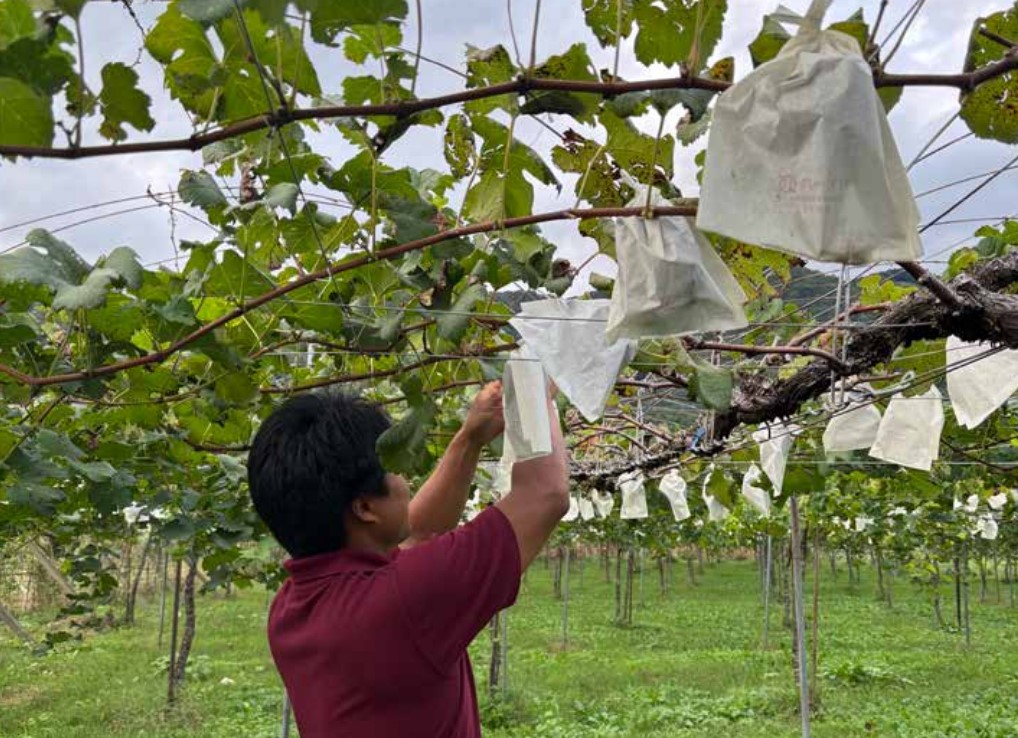
Then there’s a uniquely Japanese touch that
you’d never see in Burgundy or Bordeaux:
tiny paper umbrellas placed delicately over
each grape bunch. These small “kasa”
(umbrellas) shield the grapes from direct rain
and sun, preventing water from diluting the
juice and protecting the delicate skins from
splitting.
Walking through such vineyards feels like
entering a living work of art that every bunch
individually cared for, every detail considered.
Where Europe trains vines to seek sunlight,
Japan trains them to live in harmony with
rain.
My Visit to Tochigi: Lessons in Resilience
During my most recent trip to Japan, I visited Tochigi Prefecture, a lesser known but fast emerging wine region. The weather there was unpredictable, heavy rains one day, humid warmth the next. I walked through vineyards glistening from overnight showers, where workers meticulously adjusted the pergola canopies to let in just enough airflow to dry the grapes.
During my most recent trip to Japan, I visited Tochigi Prefecture, a lesser known but fast emerging wine region. The weather there was unpredictable, heavy rains one day, humid warmth the next. I walked through vineyards glistening from overnight showers, where workers meticulously adjusted the pergola canopies to let in just enough airflow to dry the grapes.
It was in these quiet, rain drenched vineyards
that I saw the heart of Japanese viticulture,
patience and respect. Winemakers here
don’t fight nature; they adapt to it.
patience and respect. Winemakers here don’t
fight nature; they adapt to it. They work with
precision, monitoring every vine and every
bunch, ensuring the balance is never lost.
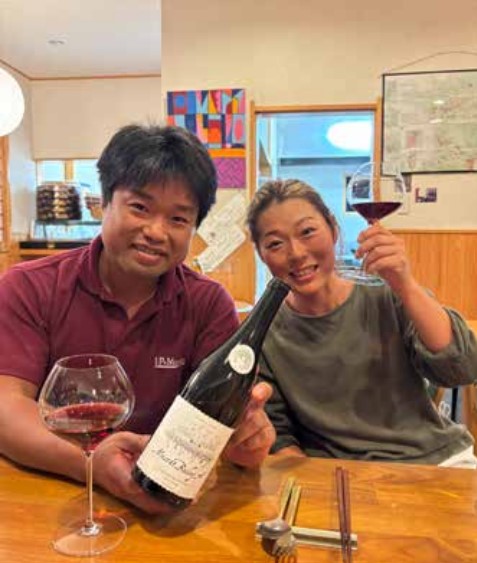
Despite the climatic challenges, the wines I
tasted in Tochigi were beautifully refined,
crisp Koshu with a touch of salinity, and
elegant Muscat Bailey A produced by Genki
san himself which was the perfect fruitiness
required after a long da y of winery visits. It
was a vivid reminder that great wine is born
from perseverance, not perfection.
A New Definition of Elegance
My journey into Japanese wine has redefined what I consider “great wine.” It’s not about concentration, oak, or opulence. It’s about emotion. Japanese wines capture the essence of restraint that they invite you to listen closely, to appreciate nuance and purity over power.
My journey into Japanese wine has redefined what I consider “great wine.” It’s not about concentration, oak, or opulence. It’s about emotion. Japanese wines capture the essence of restraint that they invite you to listen closely, to appreciate nuance and purity over power.
As someone trained in the French tradition,
discovering Japanese wine felt like learning a
new dialect of a familiar language, one that
speaks through silence, precision, and grace.
