THE UNSUNG INGREDIENT:
HOW ICE SHAPES
EVERY SIP

Dushyant Tanwar
Portfolio Advocate – North India
Beam Suntory
“Can I have a mojito without the ice.” –
These words have haunted bartenders for
years now. It took away all the skill that their
mentors had slapped (look up slapping mint)
into them and left the guest with a bubbly
cool liquid with lime and mint floating in it
like the gods had beaten them up and left
them to drown. In a lineup of drinks it looked
like a war trodden soldier, who without any
grooming joined the parade.
In this little piece, we will explore where ice came from into the world of drinks, its
importance, how it evolved over the years
while it made its way into drinks in various
shapes and sizes.
History of ice in drinks
Ice in today’s time and date is a common ingredient in all bars and households but not too long ago it was an elusive treat, only for the wealthy. It was used to preserve food and chill drinks. It is such an important ingredient, that it also appeared in the first definition of a cocktail.
Ice in today’s time and date is a common ingredient in all bars and households but not too long ago it was an elusive treat, only for the wealthy. It was used to preserve food and chill drinks. It is such an important ingredient, that it also appeared in the first definition of a cocktail.
Around 1000BC, the Chinese were using ice
from cold streams and blocks of snow as a
means of preserving food. Around 500 BC,
the Egyptians and Indians used rapid
evaporation to cool water in clay pots and on
straw beds. This combined with the cool
temperatures of the night also helped in freezing the water.
By 400 BC, the Persians
had developed the Yakhchal (ice pit), a dome
shaped building about 2 stories high with the
same amount of space under ground. The
walls of this Ice pit were made of sand, clay,
egg whites, lime, goat hair and ash, a
combination that was water resistant and
also resistant to heat transfer helping create
insulation.
Around the 5th century BC, the Greeks were
enjoying nectar and honey flavored snow.
Alexander the great built the first Greek
icehouses and loved eating frozen milk and
honey along with fruits and wine. The
Romans were also not far behind, and
enjoyed ice and snow mixed with wine and
juices to cool themselves off. Emperor Nero
also had snow transported to Rome for these
purposes.
While empires fell taking away the
advancement of these techniques, ruins and
texts have helped gather and preserve this
knowledge on (of) Ice.

The American adopted the European style
pits for ice conservation. In the 17th century
the Americans used these pits with a hut on
top to trap cold air. It was mostly ice from
ponds that were cut and stored in late winter.
Thomas Moore in 1803 patented his
appliance the “refrigerator”, which was
nothing but an ice box he made with oval
shaped cedar wood which housed a
rectangular tin in it. Ice was put in between
the wood and the tin box before being
covered with cloth and rabbit skin. Thomas
used his invention to transport butter, giving
it an extended shelf life of about 4-5 days.
One of the notable figures in the history of
ice was Frederic Tudor, nicknamed the “Ice
King of the World”. He was the first man to
see the potential in ice as a product and took
it to all parts of the US and then to different
parts of the world. By 1820, he had devised a
brilliant way to use sawdust as insulation on
ships, which eventually helped him bring ice
to as far away as the Caribbean Islands and
Bombay. His vision and perseverance revolutionized the food and drinks industry.
People were drinking cold mint juleps in
summers, and ice had become the second
largest export of the US, after cotton.
The journey of mechanical ice production
began in 1847 with Dr. John Gorrie, who
developed a prototype refrigeration
machine to cool his patients suffering from
malaria and yellow fever. Despite receiving a
patent in 1851, Gorrie’s invention was
ridiculed by the ice-shipping industry,
leading to his business failure and the
shelving of his concept. Progress resumed in
1853 when Alexander Twining patented the
first commercial refrigeration system,
followed by James Harrison’s high-capacity
ice machine, which earned an Australian
patent in 1855. In 1873, Andrew Muhl’s
ice-making machine in Texas paved the way
for the world’s first commercial icemakers,
manufactured by Columbus Iron Works. By
1917, the National Association of Ice
Industries was formed as mechanically
produced ice gained popularity in the food
and beverage industry.
Innovations continued with Henry Vogt’s
1938 Tube-Ice Machine, which introduced
automatic ice production in vertical tubes,
and Charlie Lamka’s 1968 invention of
volumetric plastic-bag packaging,
revolutionizing ice storage and distribution.
The industry evolved with organizational
rebranding, culminating in the International
Packaged Ice Association (IPIA) in 1998,
which now represents over 400 global ice
producers and promotes the mission that
“Ice is a Food.”
Ice in Modern Day drinks.
“The more the ice the better it is” – Zbigniew Zapert (Zibi) was the first person to tell me these golden words.
“The more the ice the better it is” – Zbigniew Zapert (Zibi) was the first person to tell me these golden words.
When it comes to ice, it’s the quality and
consistency that matters. And before you
even have ice, you have water which has to
be neutral, without any flavors or odors.
When it comes to ice it is important to see
what the application of the ice is. Different
types of ice are used for shaking, stirring and
for service of a drink.
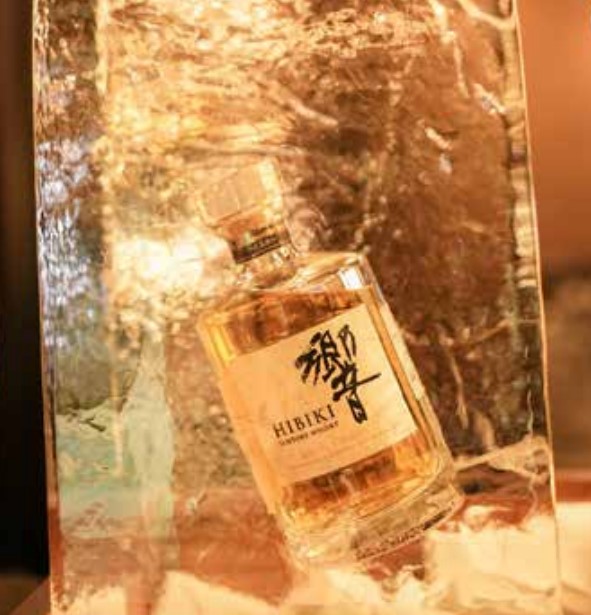
When making a drink, use the same quality of
ice, same size and same shape for the same
dilution and consistency in your cocktail. To
geek out on this, new bartenders are urged
to measure the amount of liquid ingredients
before you put into the shaker or the stirring
glass and then post processing measure it
again. One has to know the amount of
dilution the ice causes in a drink. For
cocktails 20 – 40 % dilution is the key
depending on the type of drink and the ABV
of all the ingredients involved. It is also a
useful piece of information when one is
batching drinks and storing them in the
fridge. Pour and serve is the quickest way of
service.
The idea is also to be intentional with
temperature. Be it the temperature of the
glass, the ingredients or the ice itself. Ice
straight out of the freezer is dryer as
compared to ice that has been sitting outside
cause it becomes wet and both affect the
dilution at a different pace.

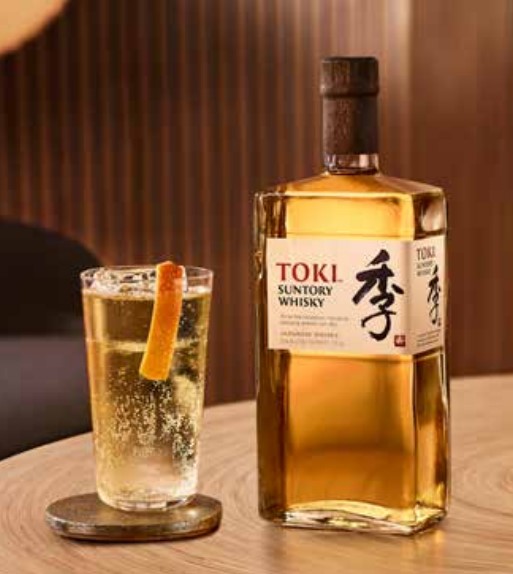
Ice Clarity
Sasha Petraske from the bar Milk & Honey can be extended the credit to unintentionally bring the clear ice revolution to the industry. Because of financial issues he could not afford an ice machine and began freezing big blocks of ice for his drinks, creating the first custom ice program. The idea initially was not to have clear ice but ice of big size. The more the surface area of ice in contact with the drink, the more the drink stays cold and of course there is less dilution over time.
Sasha Petraske from the bar Milk & Honey can be extended the credit to unintentionally bring the clear ice revolution to the industry. Because of financial issues he could not afford an ice machine and began freezing big blocks of ice for his drinks, creating the first custom ice program. The idea initially was not to have clear ice but ice of big size. The more the surface area of ice in contact with the drink, the more the drink stays cold and of course there is less dilution over time.
In a modern-day bar, ice is given the same
amount of respect that we give to any other
ingredient. Clear ice shows that the ice is free
from impurities because it is those impurities
like air bubbles and tiny particles, which
cause that haziness in it. Clear Ice melts at a
slower rate and who does not like the appeal
of seeing through it.
Even 5 years ago bartenders dedicated time,
effort and substantial space in their freezers
to make clear ice. Theoretically the process was easy, freeze water in a small cooler with
the lid taken off.
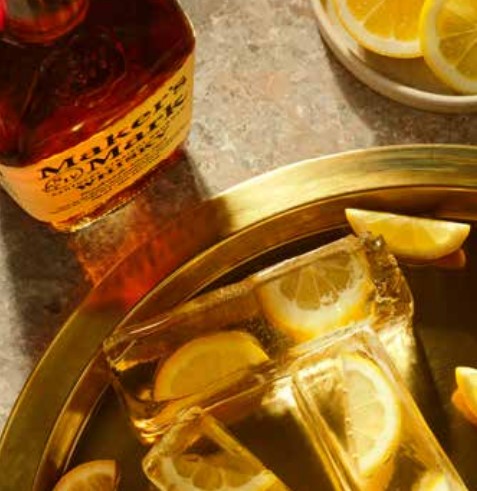
This helps in directionally
freezing the water from top to bottom as the
sides provided insulation. While the water
starts to freeze at the top, it pushes the
impurities down and concentrates them
towards the bottom. So, all one has to do is
not let it freeze completely, and you have a
big clear block of ice without impurities. A
point to remember is to have your freezer set
to close to 0C, as you don’t want it to freeze
too quickly because then process won’t
work.
Once you have that big block, one has to cut
out shapes from the big clear block, which in
itself is a task on its own. Time and
dedication is needed to unlock/master that
skill on your beverage skill tree.
But this painstaking gap was identified by
bartenders and some entrepreneurs who
also took some technological leaps (look up
the Clinebell Ice Machine), mastered the
craft and now supply all shapes and sizes of
clear ice to bars and consumers.
Some bar owners also invest in ice machines
that make clear ice, elevating the
dependency on such vendors.
Now bars that invest resources for that right
kind of ice are considered to have an edge
over the others.
A big lookout when using ice is the volume of
ice one uses. Less amount of ice will cause
more dilution as it will melt faster. To easily
comprehend this fact, imagine a boulder of
ice vs a cube of ice in your home fridge.
Types of ice used in the bar
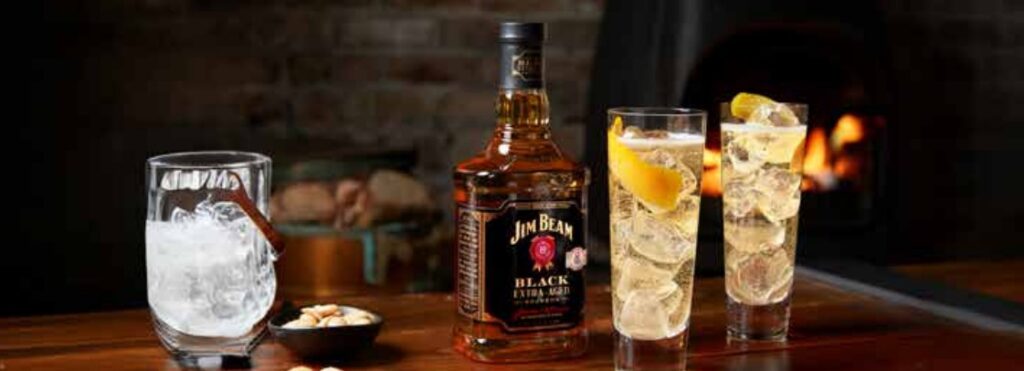
Ice cubes – The most common type of ice out there. You see it in ice machines, in your home ice trays and in the plastic packets that we pick up for all our parties and soirees. It is widely used for service, shaking, stirring and putting in someone’s shirt to make them bounce on a hot day. Standard 1×1 inch ice cubes are all purpose, use them for sour style drinks, carbonated beverages and when serving something on the rocks. When you want more dilution this becomes perfect.
Ice cubes – The most common type of ice out there. You see it in ice machines, in your home ice trays and in the plastic packets that we pick up for all our parties and soirees. It is widely used for service, shaking, stirring and putting in someone’s shirt to make them bounce on a hot day. Standard 1×1 inch ice cubes are all purpose, use them for sour style drinks, carbonated beverages and when serving something on the rocks. When you want more dilution this becomes perfect.
Ice blocks – The big block that fills up the
whole old-fashioned glass. Like Shasha’s
original idea these dilute slowly and provide
a bigger surface to the liquid of your drink,
keeping it cooler for a longer period of time.
This shape and size are not ideal for shaking
drinks as the idea while shaking is to rapidly
chill the liquid and aerate it. Although one
might use it for stirring a stiff Manhattan.
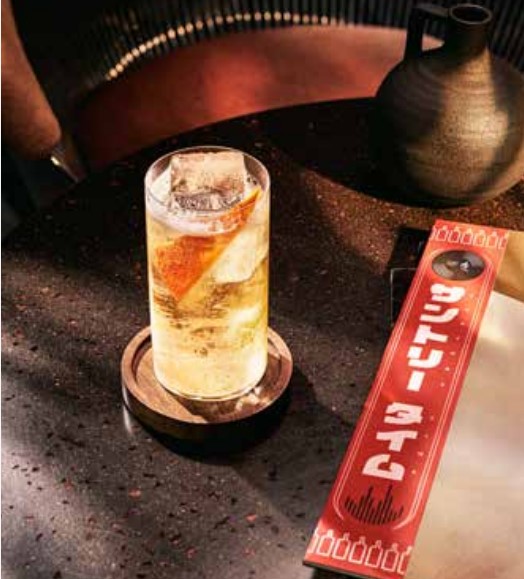
Collins Spears/Ice sticks – The long clear
spears the fill up a Hi-ball or Collins glass.
The shape and size of the long spear dilute
slowly. One long spear is not ideal for
carbonated drinks. In the case of carbonated
drinks edges and serrations are required to
hold on to the carbonation. The long smooth
surface of a spear cannot hold onto it and
may lead to the drink losing its carbonation
at a faster rate. Although colder liquids hold
carbonation for longer periods, the surface
areas and the edges also have a role to play.
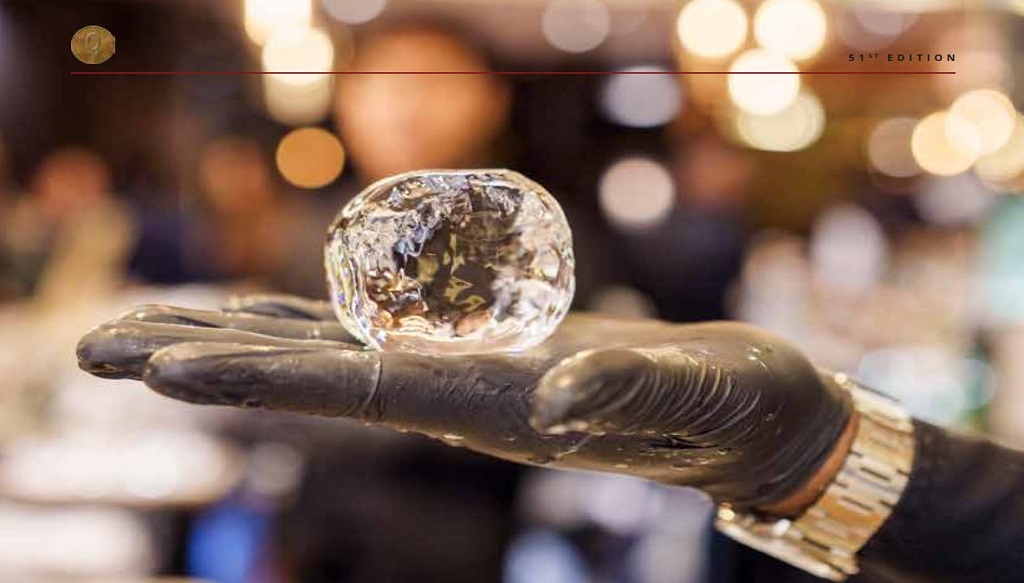
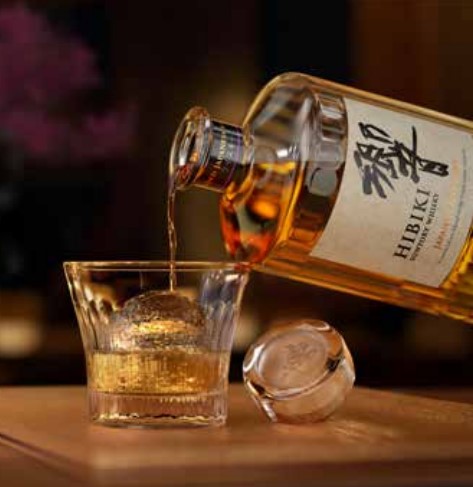
Ice spheres – The big ball of ice. When
drinking something on the rocks, this shape
is ideal. The sphere, without any edges,
dilutes at a slower pace and keeps the liquid
chilled for longer as this shape provides the
lowest surface area.
Perfect for serving a complex spirit like the Hibiki Harmony, as the
sphere will slowly dilute, opening up the
layers of the fantastic spirit.
Crushed Ice or Pebble ice – This style of ice is
used when you want more dilution in your
glass. There are a lot of tropical drinks,
swizzles and drinks that have a higher ABV
that benefit from the use of this ice. Never
recommended for shaking or stirring drinks,
as the increased surface area will cause a lot
of dilution. One can easily use a mold, a
Lewis bag or an ice crusher to make these.
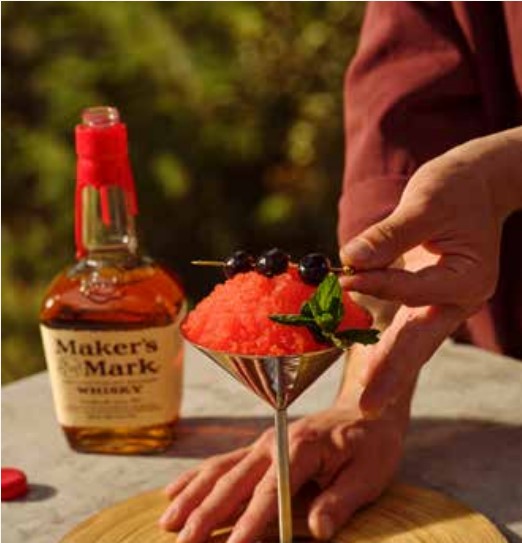
Shaved Ice – The fine powder type ice that is
even finer than crushed ice. An integral part
of the traditional mint julep, this can also be
used to make a playful boozy snow cone.
One can just shave the ice off an ice block or
brat ice in a Lewis bag till it turns to powder.
In conclusion, whatever is in the ice is going
to land inside your drink, now as a bartender
you have to choose this water and the shape
of the ice to govern what and how much of it
goes into that palatable goodness that you
are serving or drinking. So please don’t be
ignorant, choose wisely, because this is what
can make your good drink, great.